
24/7 Emergency · Chino Hills, CA
Water Heater Leak Cleanup in Chino Hills, CA
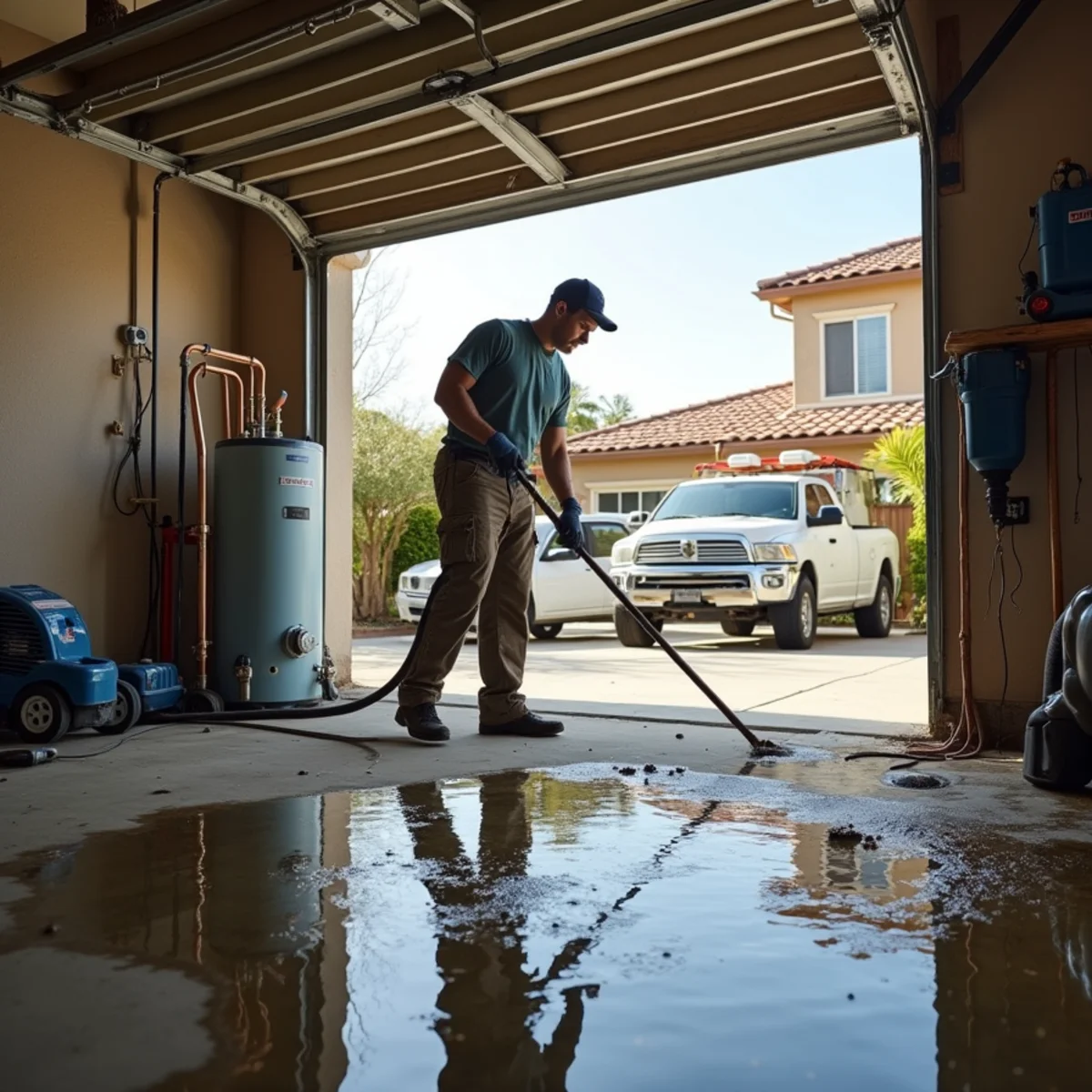
A water heater holds 40 to 50 gallons, and when the tank corrodes through or a fitting fails, all of it ends up on the floor — usually in the garage or a hallway closet, and often while nobody's home. Hard Inland Empire water shortens tank life here, so these failures are common.
Serving Chino Hills & the Inland Empire · Open 24 hours — 7 days a week
We clean up the flood, dry out the drywall, baseboards, and anything the water reached, and check for water that migrated into adjoining rooms. If the heater sits on a slab, we make sure moisture didn't wick under nearby flooring.
Water heater trouble signs
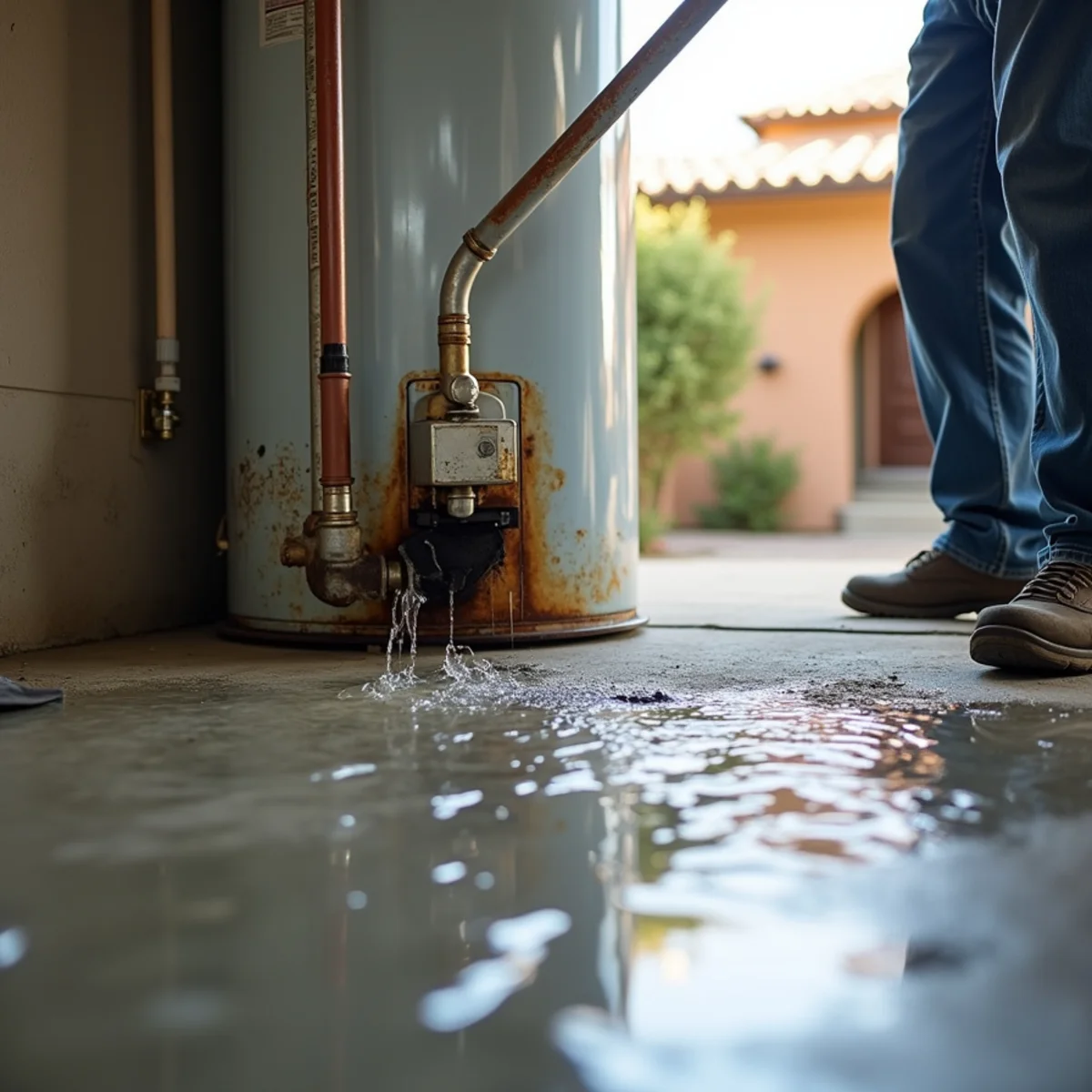
- Water pooling around the base of the tank
- Rust-colored water, corrosion, or moisture on the tank and fittings
- A flooded garage floor or a soaked closet
- Water spreading toward the door into the house
- A tank more than 8–12 years old (past typical lifespan here)
Our water heater leaks process
Water heater cleanup is quick but shouldn't skip hidden moisture:
- 1
Stop & assess
We confirm the water and gas/power to the heater are off, then map how far the water traveled.
- 2
Extract the water
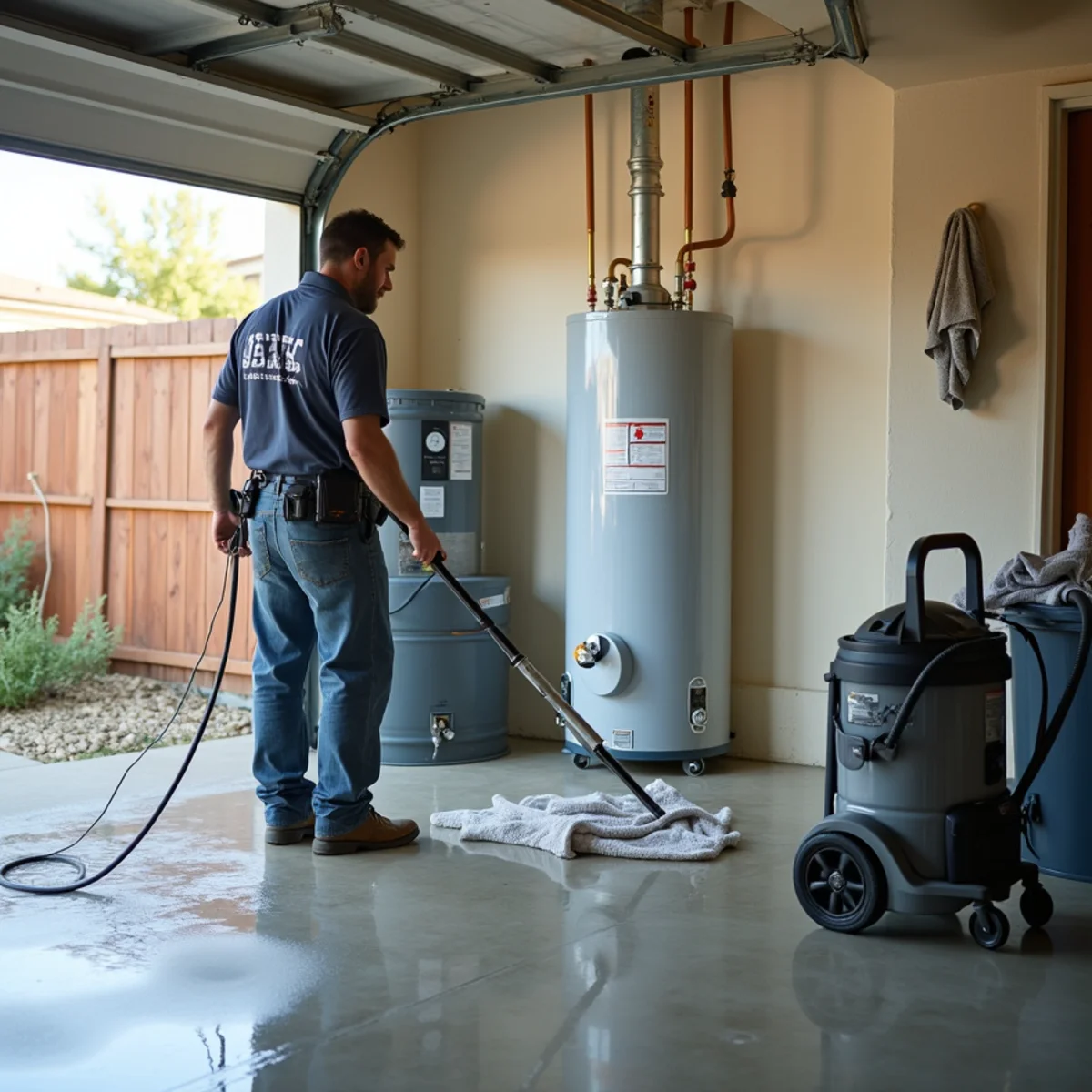
The garage or closet is cleared of standing water, along with any that reached adjoining rooms.
- 3
Dry affected materials
Wet drywall, baseboards, and framing are dried to standard; we check under nearby flooring on slab.
- 4
Restore
We repair the water-damaged materials and coordinate replacement of the heater with your plumber.
What affects the cost
Cleanup cost depends on where the water went:
- Water spread
- A contained garage flood is minor; water that reached carpeted living space is more involved.
- Materials affected
- Soaked drywall, baseboards, and any adjoining flooring drive the drying and repair scope.
- Standing time
- A tank that let go days ago while you were away means more secondary damage.
We never quote a water loss sight-unseen. Call (201) 277-9344 for an honest, on-site assessment.
Need water heater leaks in Chino Hills?
Tell us what happened — a live person answers any hour and gets a crew moving.
Answering 24/7 60-min response target Licensed & insured
What usually gets ruined when a garage water heater fails
Garages double as storage, and a ruptured water heater usually finds all of it — holiday decorations in cardboard boxes, tools left on a low shelf, photo albums someone meant to move inside eventually, sometimes a second refrigerator or freezer sitting right in the flood path. Cardboard and paper are a total loss almost immediately; what survives usually comes down to how high it was stored off the floor and how fast the leak was actually caught. A rupture that happens overnight or over a weekend away tends to do the most damage to what's stored nearby.
We sort through what's salvageable rather than writing off the whole garage by default — plastic totes often protect their contents even when submerged, while boxes sitting on the floor rarely do. It's worth having a second look before anything gets discarded. Going forward, storing anything you'd hate to lose a few inches off the floor, on a shelf or a pallet, is a simple habit that saves things the next time a water heater or hose lets go without warning.
Interior closet water heaters carry more risk than garage units
A water heater tucked in a hallway or interior closet sits much closer to living space than one in the garage, and that changes how fast a failure becomes a real problem. Water spreads under the closet door before anyone notices anything's wrong, reaching hallway flooring, adjoining bedrooms, or carpet within a short window — there's no garage floor acting as a buffer. We treat interior closet failures with more urgency because the exposure is bigger from the very first minute.
If your water heater is in an interior closet, a catch pan plumbed to a drain line, or a leak-detection shutoff valve, is worth asking a plumber about — it's a modest cost that specifically addresses the scenario where a failure right next to your living space could otherwise soak carpet, drywall, and flooring before anyone's home to catch it. It's the kind of upgrade that pays for itself the very first time it's actually needed, often covering its own cost in a single avoided cleanup.
Slow drip or full failure: how to tell if it's urgent
A water heater that's weeping slowly around a fitting, with a small, contained puddle that isn't growing, can usually wait for a same-day or next-day appointment — shut off the cold-water supply valve above the tank if you can reach it safely, and it'll likely hold until we get there. A tank that's actively gushing, has a visible split, or has water spreading fast across the garage floor toward the door into the house is a different situation entirely. When in doubt, treat any water heater failure you can hear or see moving as the more urgent kind.
If you smell gas anywhere near a gas water heater, that overrides every other consideration — leave the area, don't flip any switches, and call your gas utility's emergency line before anything else. For electric units, water anywhere near the power connection at the top of the tank means staying clear and shutting off power at the breaker rather than approaching it, even if the leak itself looks minor from a few feet away. Neither situation is one to handle solo — both are reasons to clear the area and let the right professional take the next step.
Containing the cleanup so it doesn't spread past the closet or garage
Water heaters usually sit in a garage, a hallway closet, or a small utility space, and our first move is containing the water right there before it travels further. In a garage, that often means a quick barrier at the door threshold into the house. In an interior closet, it means getting extraction equipment in fast, since there's no concrete garage floor buffering the spread toward carpet and drywall in the rooms next door. Every minute matters more in that setup, which is why interior closet calls get treated with extra urgency on our end.
We also protect what's still dry nearby — storage boxes on a garage shelf, items in an adjacent closet — with plastic sheeting or by relocating them briefly rather than letting overspray or foot traffic put them at risk during cleanup. Once extraction and drying equipment are in place, we keep the work area as contained as the space allows, so a water heater failure stays a water heater failure instead of becoming a whole-hallway job. That containment mindset is the difference between a half-day cleanup and one that stretches into your living room.
Why Chino Hills chooses us for water heater leaks
When water heater leaks is on the line, the details decide the outcome. Here’s what you get with our local crew:
24/7 live response
A real person answers any hour, with a 60-minute arrival target across Chino Hills.
Licensed, insured & IICRC-certified
A California restoration contractor with trained technicians and full coverage.
Dried to a verified standard
Daily moisture logs prove the job was done right — not dried by guesswork.
Insurance claim advocates
We document the loss and deal with your adjuster directly, Xactimate estimates included.
Local to Chino Hills
We know these hillside slab homes, the hard water, and the Santa Ana storms firsthand.
Where we provide water heater leaks
We’re based in Chino Hills and deliver water heater leaks across the Inland Empire and North Orange County — from Chino Hills and Chino to Diamond Bar, Corona, Yorba Linda, Brea, and the neighborhoods in between. Fast local dispatch means the water spreads less and your loss stays smaller.
Water Heater Leaks FAQs
My water heater flooded the garage — what first?
Why do water heaters fail so often here?
The water heater is in a hallway closet, not the garage — does that change the cleanup?
Should I put my water heater on a catch pan or automatic shutoff?
Does drywall the water heater soaked need to be replaced?
Can a leaking water heater damage the room on the other side of the wall it's against?
Related Services
Need water heater leaks in Chino Hills?
Our Chino Hills crews are on call 24/7 with a 60-minute response target. Call now or request your free estimate.