
24/7 Emergency · Chino Hills, CA
Slab Leak Water Damage Restoration in Chino Hills, CA
Most Chino Hills homes sit on a concrete slab, with water lines running through or beneath it. When one of those lines fails — and aging copper in 1980s–90s homes increasingly does — water escapes under your floor, where you can't see it. That's a slab leak, and it can undermine flooring and feed mold before you ever spot standing water.
Serving Chino Hills & the Inland Empire · Open 24 hours — 7 days a week
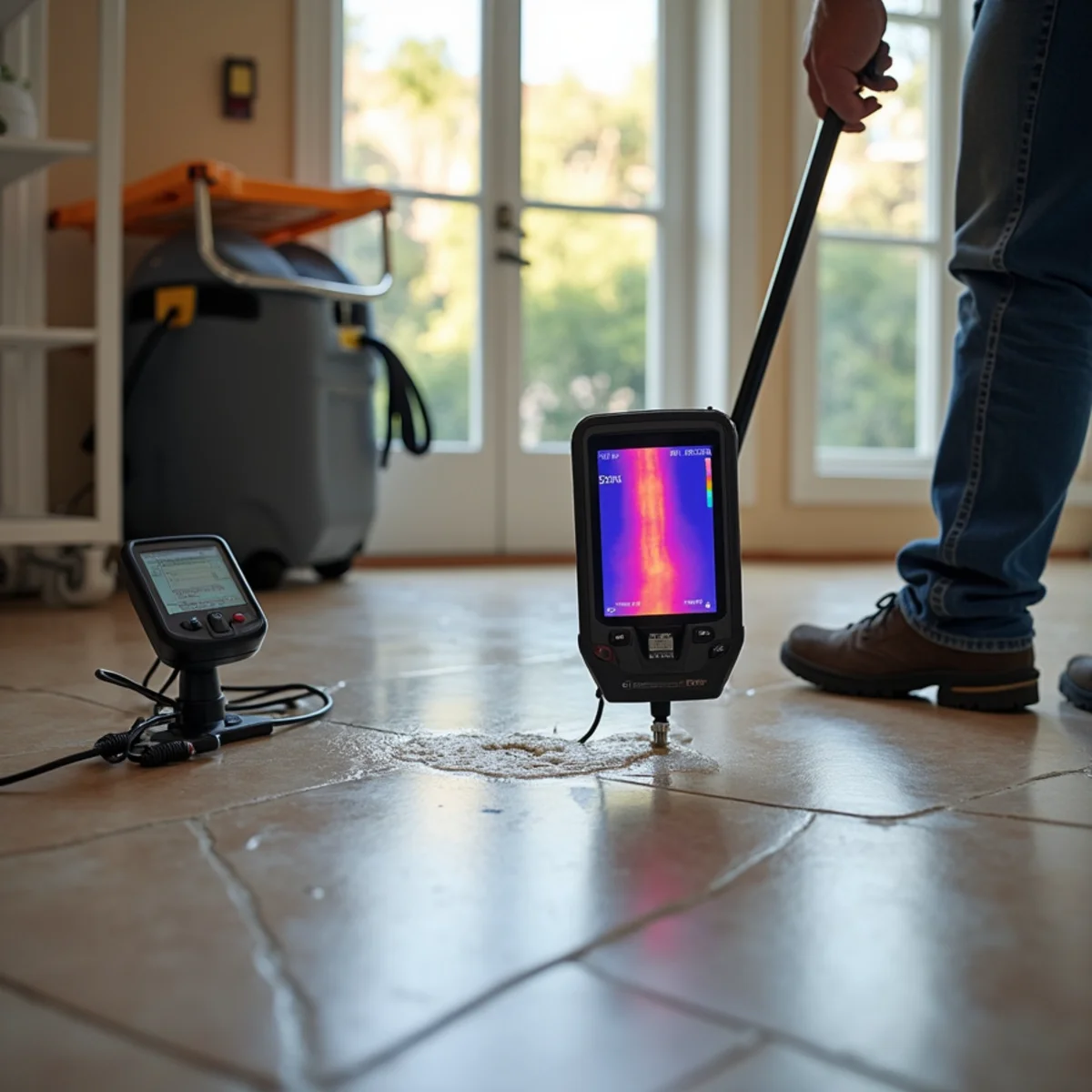
We confirm the leak with non-invasive detection, coordinate the repair with as little demolition as possible, and dry and restore the water damage it caused — flooring, baseboards, and the moisture that wicked up your walls.

Slab leak warning signs
- A warm or hot spot on the floor (a hot-water line leak)
- The sound of running water with every fixture shut off
- An unexplained jump in your water bill
- Cracked, buckling, or loose flooring over the slab
- Damp carpet or baseboards with no visible source
- Low water pressure throughout the house
Our slab leak damage process
Slab leaks demand precision to avoid needless demolition:
- 1
Confirm & locate
Acoustic and pressure testing confirm the leak and pinpoint it under the slab, so access is targeted, not exploratory.
- 2
Repair coordination
We coordinate the plumbing repair — spot repair, reroute, or repipe — matched to your home and the failure.
- 3
Dry the structure
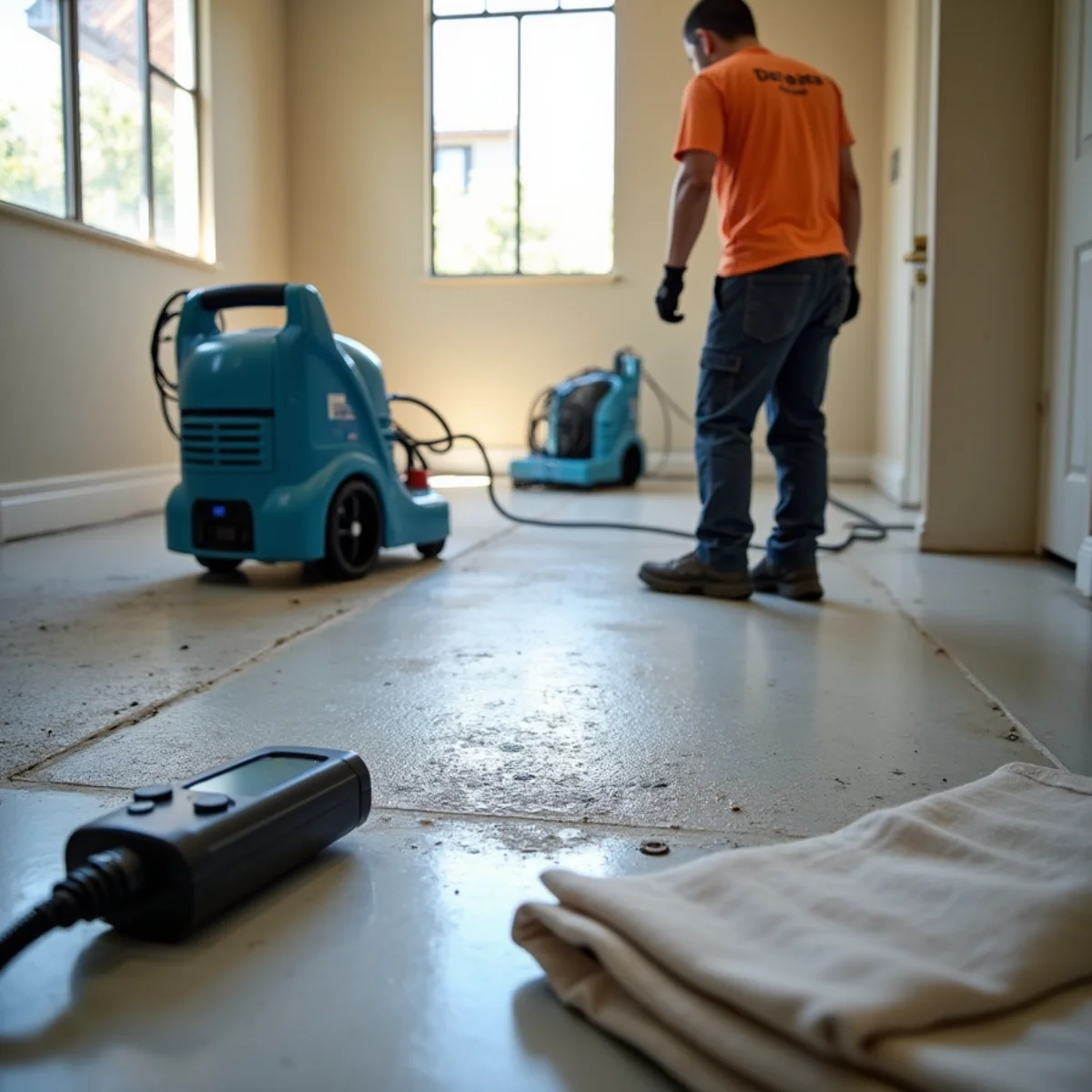
Water that wicked into flooring, subfloor, and walls is dried to standard with monitored equipment.
- 4
Restore
Flooring, baseboards, and finishes are restored, and we document the loss for your insurer.
What affects the cost
Slab leak restoration cost is driven by:
- Repair method
- A spot repair, a reroute, or a full repipe carry very different scopes.
- Leak location & access
- A leak under a slab in the center of the house is harder to reach than one near a wall.
- Flooring type
- Restoring tile, hardwood, or a poured floor over the repair costs more than carpet.
- Extent of water migration
- How far moisture spread through the slab and up the walls sets the drying scope.
We never quote a water loss sight-unseen. Call (201) 277-9344 for an honest, on-site assessment.
Need slab leak damage in Chino Hills?
Tell us what happened — a live person answers any hour and gets a crew moving.
Answering 24/7 60-min response target Licensed & insured
Why Chino Hills sees so many slab leaks
The math is simple: much of Chino Hills was built in the 1980s and 1990s on slab-on-grade foundations with copper supply lines, and that copper is now 30–40 years old — squarely in the window where pinhole corrosion and slab leaks appear. Hard Inland Empire water accelerates the corrosion from the inside, and some hillside lots add soil movement that stresses the lines. If your neighbors are dealing with slab leaks, your home is the same age and the same construction.
Why slab leak damage shows up in your flooring first
Most water damage announces itself from above — a ceiling stain, a wet carpet from a spill. A slab leak works the opposite direction, pushing moisture up from underneath through the concrete and into whatever's glued or laid on top of it. That's why the earliest signs are often in the flooring itself: tile that suddenly sounds hollow when tapped, hardwood that starts cupping along a specific strip rather than the whole room, or carpet that's damp in one area with no explanation from above.
That upward path also means the damage pattern doesn't look like a typical leak. Instead of a spreading wet circle, you might see a straight line of affected flooring that traces the pipe route underneath, or one section of a room behaving differently from the rest of it. Recognizing that pattern early — and knowing it points down, not sideways — is often what gets a slab leak caught and confirmed before it's done a lot more damage to the home.
The moisture that hides under new flooring after the repair
Fixing the pipe doesn't automatically mean the slab underneath your flooring is dry. Concrete holds moisture for a while after a leak stops, and if new flooring goes down over a slab that's still carrying residual dampness, that moisture has nowhere to go — it gets trapped under the adhesive or the new material, which is exactly the setup for a mold problem you won't see until the flooring is already ruined again, this time from underneath rather than above.
We verify moisture levels in the slab before recommending flooring goes back down, using the same meters and reference readings we use on any drying job, just applied to concrete instead of drywall. It sometimes means a short waiting period between the plumbing repair and the flooring install that homeowners don't expect, but it's a lot shorter than redoing a whole floor a second time because it went down over the slab too soon after the repair. We'd rather deliver that news early than let it surprise you months later as a buckling floor.
How we document the access-versus-repair split for your claim
Once your slab leak claim is open, the paperwork works better when the two pieces of the job stay visibly separate: what it cost to access the pipe — cutting and later restoring flooring or slab — and what it cost to actually fix the pipe. We invoice those as distinct line items from day one, with photos and notes tied to each, so your adjuster isn't left guessing which dollar amount belongs to which part of the job — that separation is often what keeps a claim moving instead of stalling on a follow-up question.
We also photograph the exposed pipe before it's covered back up — the corrosion, the failure point, the condition of the slab — because that evidence disappears the moment flooring goes back down. If your policy language depends on how the failure happened, that documentation is often the difference between a straightforward claim and a drawn-out back-and-forth. We're glad to send that file directly to your adjuster or your plumber if it helps move things along. It's a five-minute step for us and it can save you weeks of back-and-forth on a disputed claim.
Hot-line leaks versus cold-line leaks: which is more urgent
A slab leak on the hot water line tends to announce itself faster — a distinctly warm patch of floor, a water heater running constantly to keep up, and a noticeable jump in both your water and energy bills. Because hot water accelerates the damage to flooring and moves heat into the slab and subfloor continuously, we treat a suspected hot-line leak as same-day, not schedule-when-convenient, even if the visible symptoms still look minor. The energy loss alone from a hot line running under a slab adds up fast, on top of the structural damage.
A cold-line leak is quieter — no warm spot, sometimes just a higher water bill or a faint sound of running water — and the damage tends to progress more slowly. It still needs attention, but if you're choosing between calling right now and calling first thing tomorrow, a cold-line leak gives you a little more room than a hot one does. When you're not sure which you're dealing with, that's exactly what the first call is for. We'll ask a few quick questions on the phone to help sort out which situation you're actually in.
Why Chino Hills chooses us for slab leak damage
When slab leak damage is on the line, the details decide the outcome. Here’s what you get with our local crew:
24/7 live response
A real person answers any hour, with a 60-minute arrival target across Chino Hills.
Licensed, insured & IICRC-certified
A California restoration contractor with trained technicians and full coverage.
Dried to a verified standard
Daily moisture logs prove the job was done right — not dried by guesswork.
Insurance claim advocates
We document the loss and deal with your adjuster directly, Xactimate estimates included.
Local to Chino Hills
We know these hillside slab homes, the hard water, and the Santa Ana storms firsthand.
Where we provide slab leak damage
We’re based in Chino Hills and deliver slab leak damage across the Inland Empire and North Orange County — from Chino Hills and Chino to Diamond Bar, Corona, Yorba Linda, Brea, and the neighborhoods in between. Fast local dispatch means the water spreads less and your loss stays smaller.
Slab Leak Damage FAQs
Do you have to jackhammer my floor?
Is a slab leak covered by insurance?
What happens if I ignore a slab leak?
My tile floor sounds hollow in one spot — is that a slab leak?
Do I need to replace all my flooring after a slab leak, or just the damaged spot?
Can a slab leak affect my home's foundation if it goes on long enough?
Related Services
Need slab leak damage in Chino Hills?
Our Chino Hills crews are on call 24/7 with a 60-minute response target. Call now or request your free estimate.