
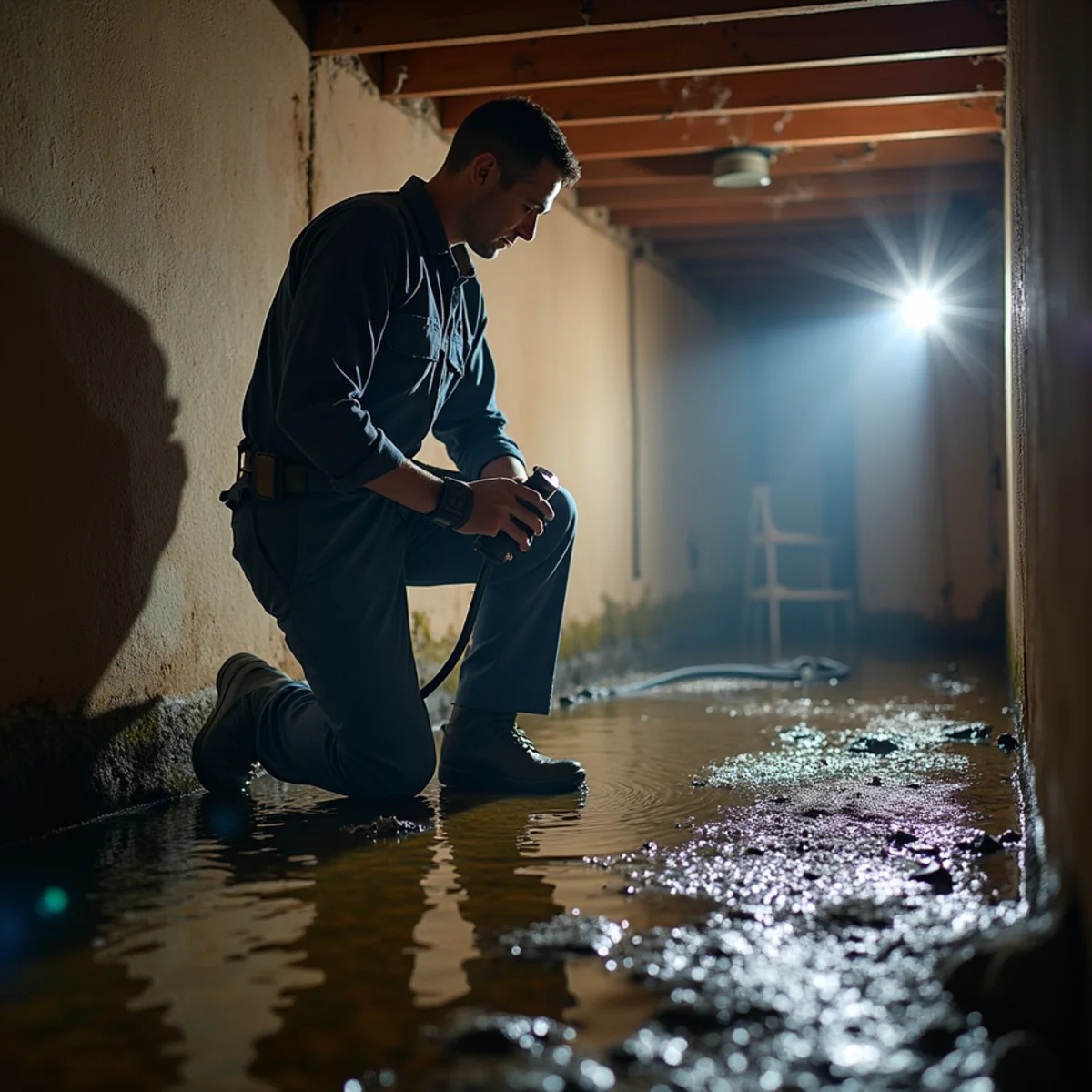
24/7 Emergency · Chino Hills, CA
Flooded Basement & Crawl Space Cleanup in Chino Hills, CA
Water always finds the lowest point. In Chino Hills that's usually a crawl space or a below-grade room, where standing water can sit unnoticed and quietly feed mold, rot framing, and raise the humidity in the whole house above it.
Serving Chino Hills & the Inland Empire · Open 24 hours — 7 days a week
We pump out the water, remove saturated debris and vapor barrier, and dry the space to standard — then address why it flooded so it doesn't become a recurring problem every rainy season.
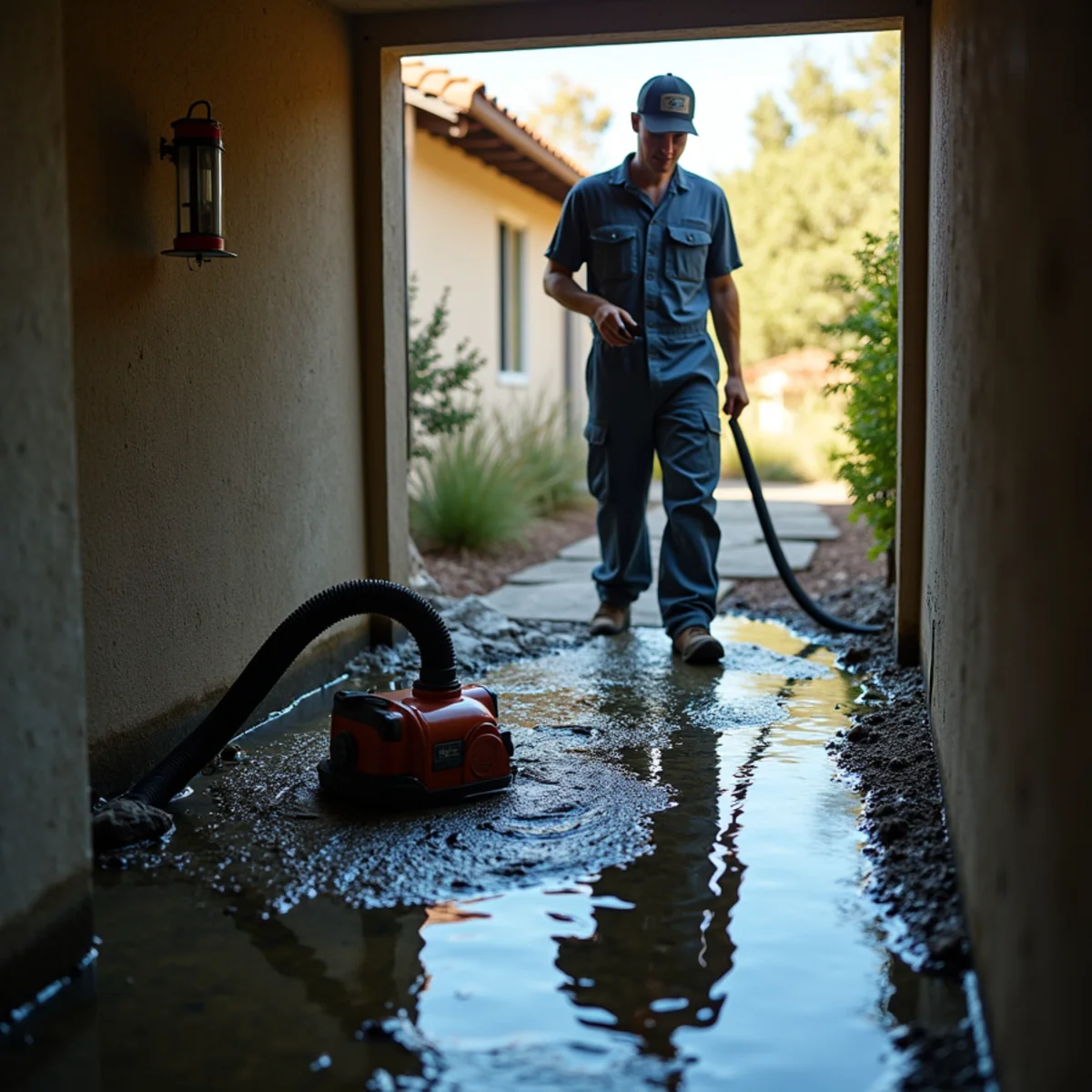
Signs of a crawl space or lower-level water problem
- Standing water or saturated soil in the crawl space
- A musty smell rising into the living space above
- Higher indoor humidity, condensation, or cupping floors on the level above
- Efflorescence (white mineral staining) on foundation walls
- Visible mold on joists, subfloor, or a torn vapor barrier
Our basement & crawl space process
Lower-level drying is about getting water out and keeping vapor from rising:
- 1
Pump-out & extraction
Sump pumps and extractors clear standing water from the crawl space or lower level.
- 2
Debris & vapor barrier removal
Saturated insulation and contaminated vapor barrier are removed so they don't trap moisture and mold.
- 3
Dry & dehumidify
We dry the space and control humidity so moisture doesn't migrate up into the framing and rooms above.
- 4
Prevention
We identify the water's path — drainage, grading, sump failure — and recommend fixes to keep it from recurring.
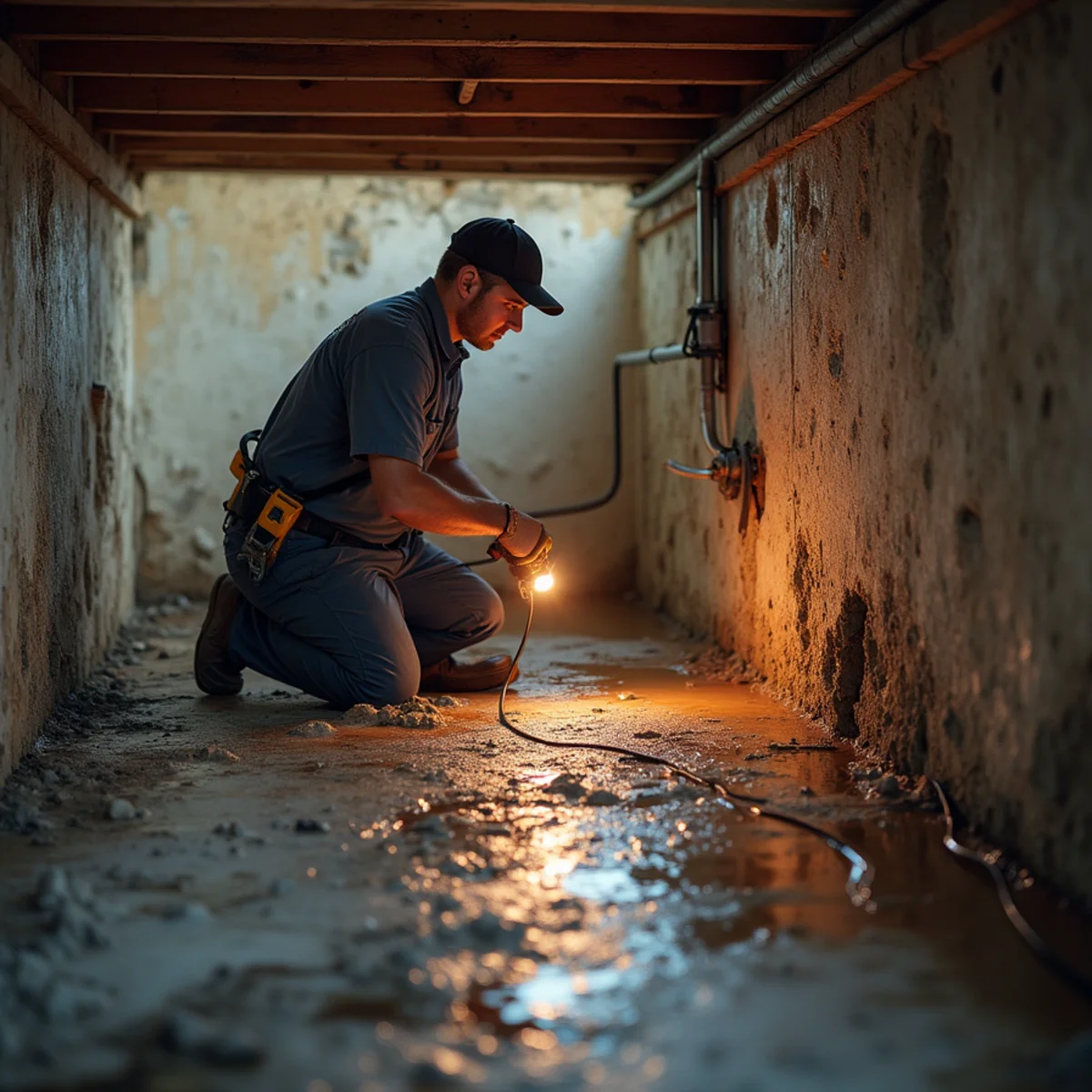
What affects the cost
Crawl space and lower-level work varies with:
- Water volume & standing time
- Long-standing water means more removal, decontamination, and drying.
- Access & clearance
- Tight crawl spaces are slower and more labor-intensive to work in.
- Materials affected
- Saturated insulation, vapor barrier, and subfloor may need removal and replacement.
- Recurrence prevention
- Drainage or sump improvements to stop repeat flooding are a separate scope.
We never quote a water loss sight-unseen. Call (201) 277-9344 for an honest, on-site assessment.
Need basement & crawl space in Chino Hills?
Tell us what happened — a live person answers any hour and gets a crew moving.
Answering 24/7 60-min response target Licensed & insured
What repeated crawl space moisture does to your floor joists
A pump-out fixes the water that's there today; it doesn't undo what standing moisture has already done to the wood above it. Floor joists and subfloor that sit in damp conditions for extended periods start to soften, and you may notice it as a bouncy or slightly springy feeling when you walk across the room above — not a dramatic sag, just a floor that doesn't feel as solid as it used to. That's a structural conversation, not just a moisture one.
Southern California's climate also means a chronically damp crawl space can attract wood-destroying insects, not just mold — termites and other pests are drawn to consistently moist wood in a way they wouldn't be to a dry one. If your crawl space has flooded more than once, it's worth a look at both the framing condition and a pest inspection, since the two problems often show up together and neither one gets better on its own over time. Catching softened framing early is also just cheaper — replacing a joist is a far smaller job than replacing a section of floor.
Replacing the vapor barrier the right way
A vapor barrier that's been sitting under standing water isn't doing its job anymore, even after the water's gone — it's usually torn, shifted, or holding moisture against the soil instead of blocking it. Patching a few feet of damaged plastic sheeting over the wet spot looks like a fix but leaves the rest of the old barrier doing exactly what let this happen in the first place. A proper repair means pulling the old barrier out, not covering it up and hoping.
The replacement gets sealed at the seams and run up the foundation walls, not just laid loose across the ground, so vapor from the soil actually stops instead of finding the gaps. It's a bigger job than a pump-out alone, and it's the difference between fixing this flood and setting yourself up for the same call next rainy season. We'll tell you plainly if your situation calls for it or if the existing barrier is still salvageable as it stands.
Judging urgency in a crawl space or lower level
A crawl space with a little dampness after a heavy rain, no standing water, and no odor can usually wait for a scheduled inspection rather than an emergency call. Actual standing water — even an inch or two — is a different situation, especially if it's been there more than a day, because that's already enough time for the space to start feeding moisture and odor up into the living area above it through the subfloor. If you're catching a whiff of that musty smell from inside the house, treat it as confirmation the water's been sitting a while.
Treat it as urgent if the water is actively rising, if there's any chance of electrical equipment sitting in or near it, or if you can already smell dampness from inside the house above. A crawl space that floods a little every single rainy season and always drains on its own is worth fixing at the source eventually, but it's the kind of thing you can schedule — a crawl space that's never flooded before and suddenly has standing water deserves a same-day look.
Keeping crawl space work from becoming a house-wide job
The access hatch to a crawl space is often inside a closet or through a small door on an exterior wall, and every trip in and out is a chance to track dirt and moisture into the house if nobody's paying attention. We run floor protection from the access point to the nearest exit and keep our equipment and materials staged near the hatch rather than spread through hallways and rooms that have nothing to do with the job. It's a small courtesy that matters more than it sounds like, especially in a home where the hatch sits inside a finished closet.
Odor is the other thing we manage carefully. A damp crawl space can carry a musty smell up into the house through gaps around plumbing penetrations and the subfloor, so we run air scrubbers in the crawl space itself during the work rather than letting the smell migrate upstairs while we're down there. By the time we're done, the goal is a crawl space that's dry and a house above it that never had to smell the process happening below it.
Why Chino Hills chooses us for basement & crawl space
When basement & crawl space is on the line, the details decide the outcome. Here’s what you get with our local crew:
24/7 live response
A real person answers any hour, with a 60-minute arrival target across Chino Hills.
Licensed, insured & IICRC-certified
A California restoration contractor with trained technicians and full coverage.
Dried to a verified standard
Daily moisture logs prove the job was done right — not dried by guesswork.
Insurance claim advocates
We document the loss and deal with your adjuster directly, Xactimate estimates included.
Local to Chino Hills
We know these hillside slab homes, the hard water, and the Santa Ana storms firsthand.
Where we provide basement & crawl space
We’re based in Chino Hills and deliver basement & crawl space across the Inland Empire and North Orange County — from Chino Hills and Chino to Diamond Bar, Corona, Yorba Linda, Brea, and the neighborhoods in between. Fast local dispatch means the water spreads less and your loss stays smaller.
Basement & Crawl Space FAQs
Do crawl spaces really need professional drying?
Why does my crawl space keep getting wet?
Could termites or other pests become a problem after a wet crawl space?
My floors feel bouncy since the crawl space flooded — is that serious?
Should I encapsulate my crawl space after it floods?
Can your equipment fit into a low-clearance crawl space, or is access sometimes too tight?
Related Services
Need basement & crawl space in Chino Hills?
Our Chino Hills crews are on call 24/7 with a 60-minute response target. Call now or request your free estimate.