
24/7 Emergency · Chino Hills, CA
Ceiling Water Damage Repair in Chino Hills, CA
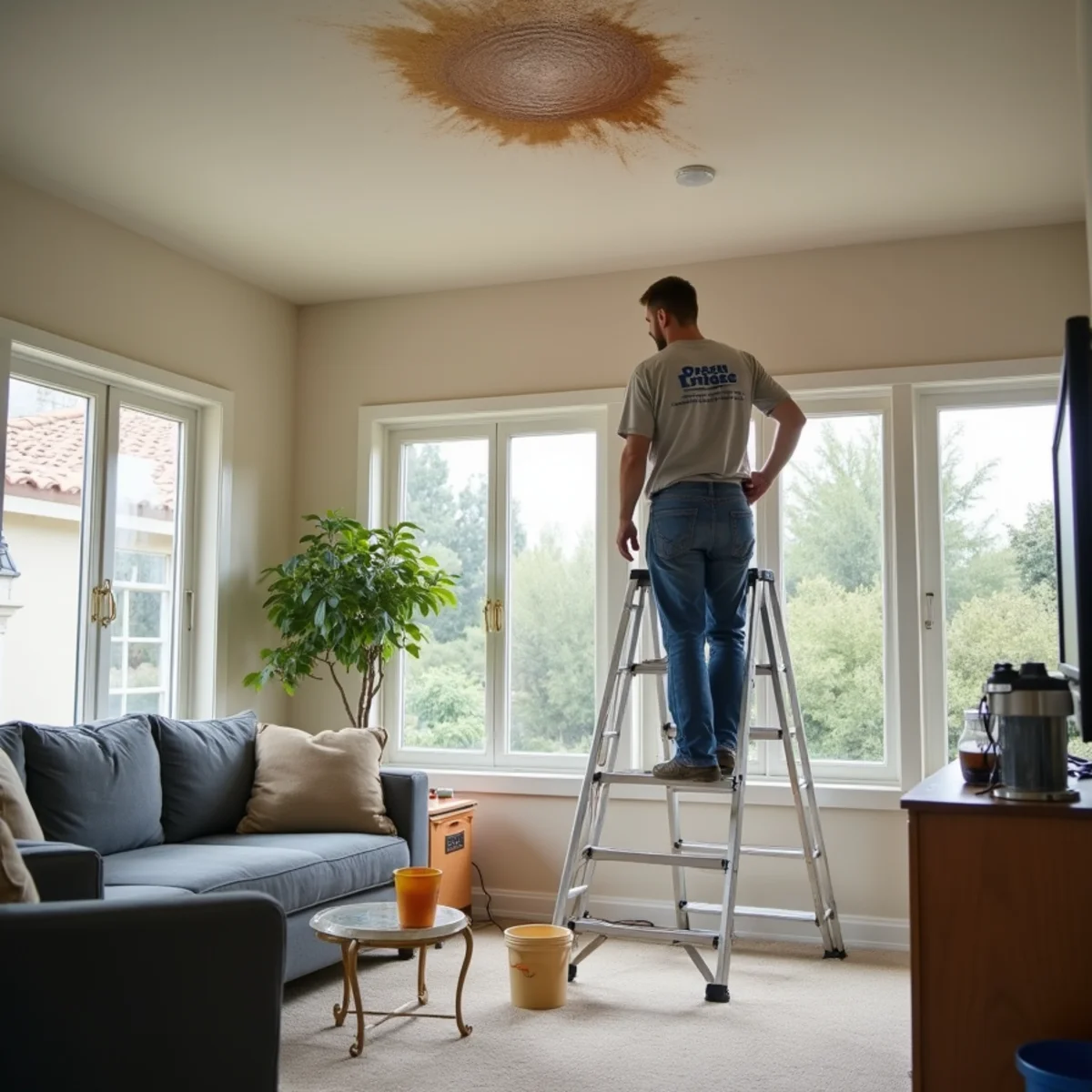
A brown ring on the ceiling is never just cosmetic — it means water is coming from somewhere above: a roof leak, a failed supply line, an overflowing upstairs bathroom, or an HVAC condensate problem. A sagging or bulging ceiling means water is pooling and the drywall is at risk of coming down.
Serving Chino Hills & the Inland Empire · Open 24 hours — 7 days a week
We trace the leak to its source, dry the ceiling cavity and the space above, and restore the drywall, texture, and paint so it looks like it never happened — after we've made sure it won't happen again.
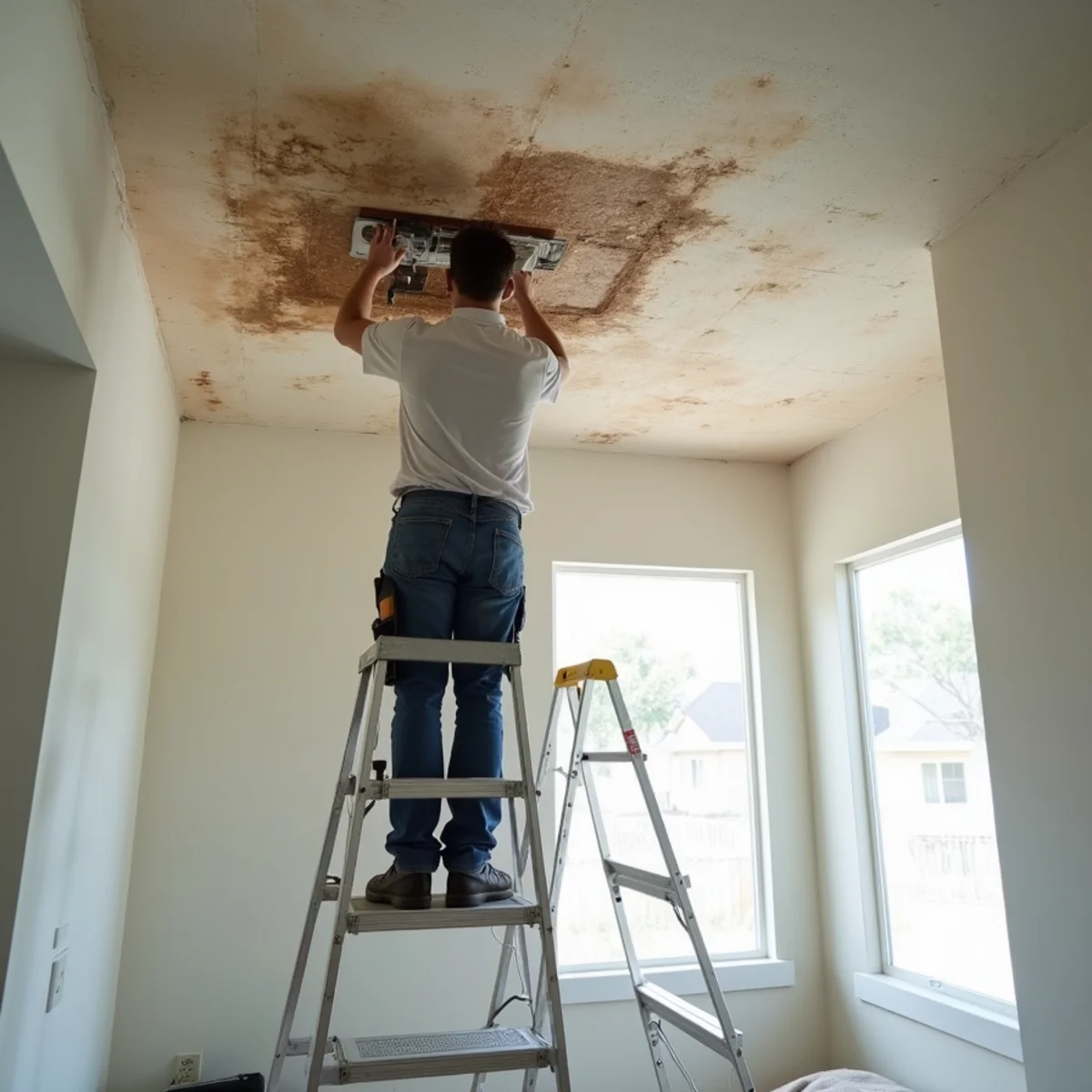
Ceiling warning signs
- Brown or yellow rings and stains on the ceiling
- A ceiling that sags, bulges, or feels soft (pooling water — urgent)
- Peeling paint, cracking, or drooping drywall tape
- Active dripping during rain or when an upstairs fixture runs
- A damp or musty smell in an upstairs room or hallway
Our ceiling water damage process
Ceiling repair starts above the stain, not at it:
- 1
Find the source
We trace the water to its origin — roof, plumbing, or appliance above — because patching the ceiling without fixing the source just repeats the stain.
- 2
Relieve & dry
If the ceiling is holding water, we relieve it safely, then dry the cavity and framing to standard.
- 3
Repair drywall & texture
We replace damaged drywall, match the texture, and prime the stain so it won't bleed through.
- 4
Paint & finish
A finished, color-matched ceiling — with the underlying leak resolved.
What affects the cost
Ceiling repair cost depends on:
- Source of the leak
- A simple supply-line fix differs from tracing and repairing a roof leak.
- Extent of the damage
- A small stain versus a section of drywall that must be removed and replaced.
- Texture & finish matching
- Matching existing ceiling texture and paint adds finishing labor.
- Hidden moisture
- Drying the cavity and any insulation above the ceiling can add to the scope.
We never quote a water loss sight-unseen. Call (201) 277-9344 for an honest, on-site assessment.
Need ceiling water damage in Chino Hills?
Tell us what happened — a live person answers any hour and gets a crew moving.
Answering 24/7 60-min response target Licensed & insured
How we safely relieve a water-loaded ceiling
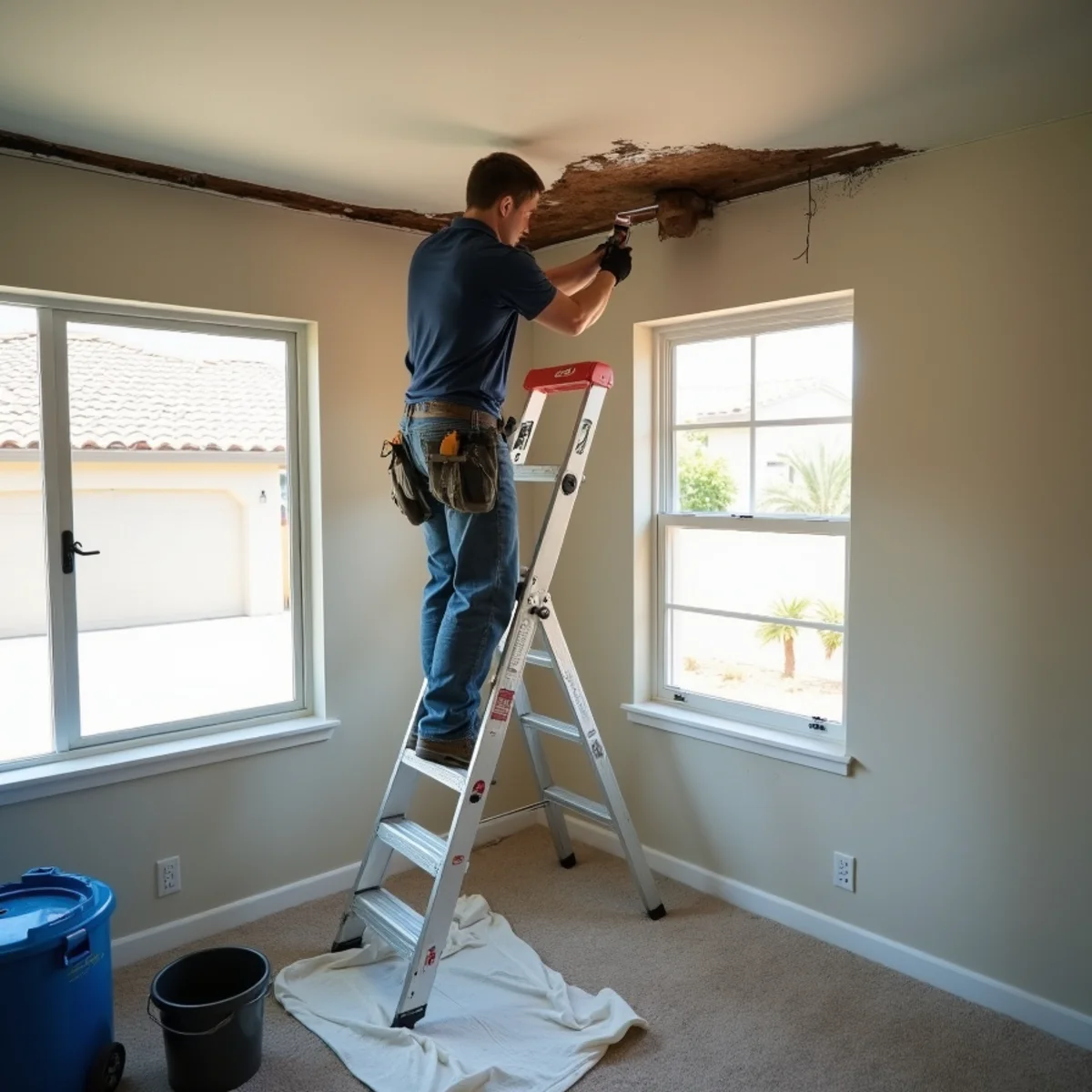
A ceiling that's bulging or feels soft is holding pooled water above the drywall, and that weight doesn't resolve itself — it either gets released in a controlled way or it eventually lets go on its own, usually without warning and often through a larger area than necessary. We relieve it deliberately: a small puncture at the lowest point of the sag, positioned over a container, lets the trapped water drain in a way we control instead of one that controls us.
Before we touch anything, furniture and flooring underneath get moved or covered, because a controlled release still means water coming down, just on our terms instead of the ceiling's. It's a small, almost anticlimactic step compared to what it prevents — an uncontrolled collapse can bring down insulation, broken drywall, and whatever was pooled above it all at once, onto whatever's underneath it. Once the immediate weight is relieved, we move into drying the cavity and assessing how much of the drywall itself actually needs to be replaced versus simply dried and repainted.
What's happening above the stain
The visible stain is the ceiling drywall telling you what's already happened above it — usually insulation that's soaked up water like a sponge and is now sitting heavier than it should against the framing, sometimes compressing or matting down in a way that reduces how well it insulates even after it dries. We check what's above every stain we're asked to fix, because patching the drywall without addressing what's sitting on top of it just delays the same repair.
We also check anything electrical living in that ceiling — recessed can lights, a fan, a fixture box — before power stays on in the area. Wet insulation or drywall around an electrical fixture is a real shock and fire concern, not a minor detail, and we'd rather shut off the circuit and confirm it's dry and safe than assume it's fine just because the light still turns on. That check happens before any cosmetic repair, every single time, and we'll tell you plainly if an electrician needs to look at anything before we move forward.
Older plaster and popcorn ceilings versus newer drywall
Many Chino Hills homes from the 1980s and early '90s have textured or popcorn ceilings, and those older textures sometimes contain asbestos, depending on when and how the home was built. We don't assume either way — if your ceiling is original and the home is from that era, testing before we sand, scrape, or heavily disturb the texture is a smart precaution, and we'll walk you through that step before starting any repair that goes beyond a simple patch. It's a quick, inexpensive test with a fast turnaround.
Newer homes with smooth or knockdown drywall ceilings don't carry that concern, but they come with their own quirk: the texture is often sprayed in large, continuous sections, so matching a small patch seamlessly takes more skill than it looks like it should. We match texture pattern and spray technique as closely as the original allows, and we're upfront if a ceiling's age or a discontinued texture style means the patch will be very close but not microscopically identical. Most homeowners are satisfied with "very close" once the paint is on and the room is lived in again.
What the finished ceiling repair documentation includes
Once a ceiling repair is done, you get more than a painted patch. We provide before-and-after photos of the affected area, moisture readings confirming the cavity above the ceiling dried to standard, and notes on what was replaced versus what was salvaged and simply cleaned. If asbestos testing was part of the job, that report is included too, since it's the kind of document you may need again if you ever sell the home. We hand you a physical or digital copy at the walkthrough, whichever you'd rather keep on file.
If texture or paint was matched, we note the products and technique used, so a future touch-up — yours or another contractor's — can match what's already there instead of guessing. And if the underlying leak required plumbing or roof work by another trade, we keep that coordination on record as part of your file, so the whole story of what happened and what fixed it stays in one place, not scattered across different invoices. It's a small habit that pays off the one time you actually need to find that paperwork again.
Why Chino Hills chooses us for ceiling water damage
When ceiling water damage is on the line, the details decide the outcome. Here’s what you get with our local crew:
24/7 live response
A real person answers any hour, with a 60-minute arrival target across Chino Hills.
Licensed, insured & IICRC-certified
A California restoration contractor with trained technicians and full coverage.
Dried to a verified standard
Daily moisture logs prove the job was done right — not dried by guesswork.
Insurance claim advocates
We document the loss and deal with your adjuster directly, Xactimate estimates included.
Local to Chino Hills
We know these hillside slab homes, the hard water, and the Santa Ana storms firsthand.
Where we provide ceiling water damage
We’re based in Chino Hills and deliver ceiling water damage across the Inland Empire and North Orange County — from Chino Hills and Chino to Diamond Bar, Corona, Yorba Linda, Brea, and the neighborhoods in between. Fast local dispatch means the water spreads less and your loss stays smaller.
Ceiling Water Damage FAQs
My ceiling is sagging — is that an emergency?
Can you just paint over the stain?
Is it safe to leave a ceiling fan or light on if the ceiling above it is wet?
Will the texture and paint match after my ceiling is repaired?
Will the water stain bleed back through fresh paint?
Do you repair vaulted or high ceilings, or is that a specialty job?
Related Services
Need ceiling water damage in Chino Hills?
Our Chino Hills crews are on call 24/7 with a 60-minute response target. Call now or request your free estimate.