

24/7 Emergency · Chino Hills, CA
Storm Damage Cleanup & Restoration in Chino Hills, CA
Chino Hills takes weather from two directions: powerful Santa Ana winds from October through March that lift shingles and drop limbs, and atmospheric-river storms that dump most of the area's ~16 inches of annual rain in a few winter months. Both drive water into homes fast.
Serving Chino Hills & the Inland Empire · Open 24 hours — 7 days a week
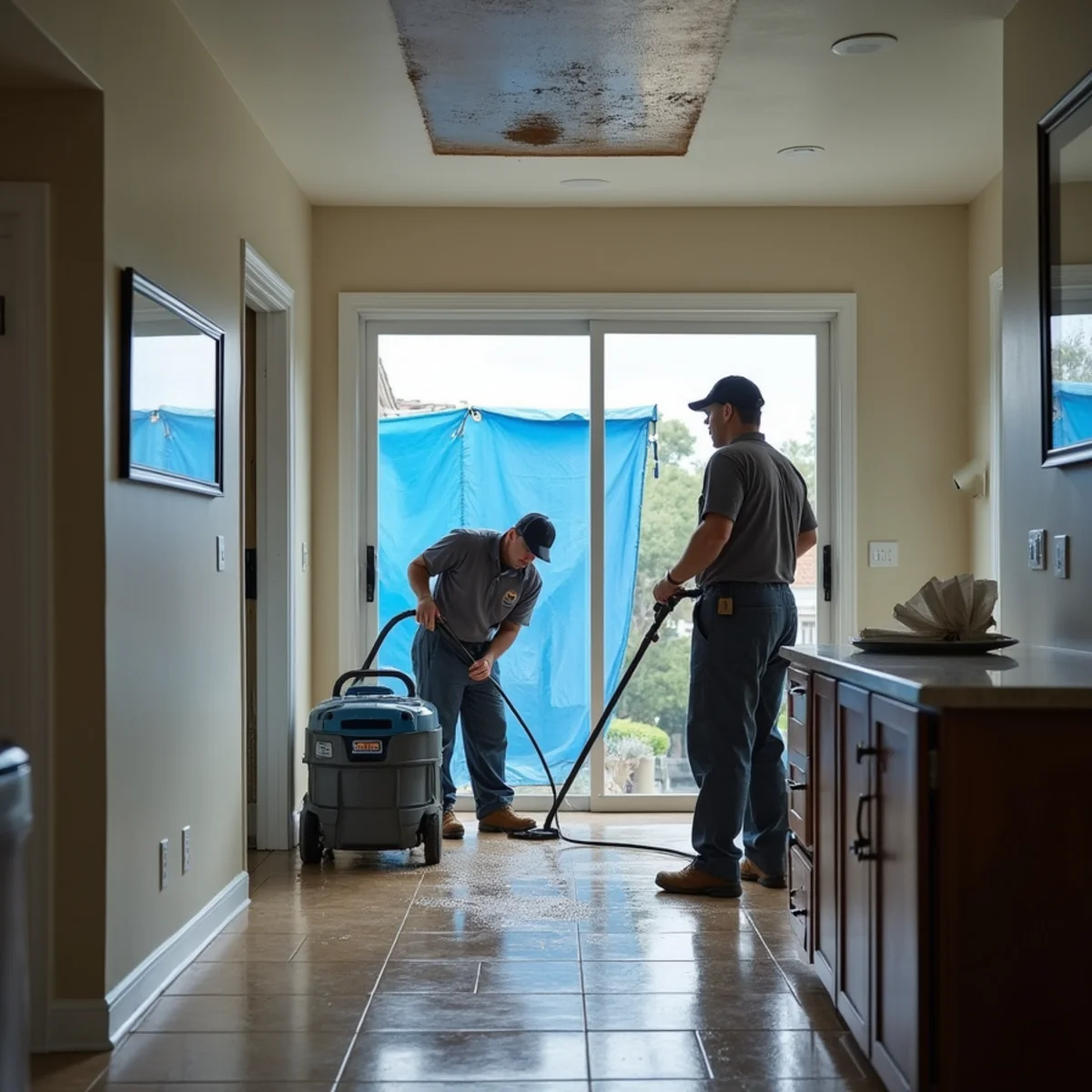
When wind opens your roof or a storm pushes water inside, we respond around the clock — emergency tarping to stop the intrusion, water cleanup, and structural drying — then restore the interior damage the weather caused.

After a storm, look for
- Missing or lifted shingles and a roof leak into the attic or ceiling
- Water stains spreading across a ceiling during or after rain
- Wind-driven rain intrusion around windows, doors, or vents
- A fallen limb or debris that breached the roof or a wall
- Runoff or mud that flowed in from a hillside lot
Our storm damage cleanup process
Storm response stabilizes first, then dries and restores:
- 1
Emergency tarping & board-up
We stop the water coming in — tarping compromised roofing and boarding openings — before more damage is done.
- 2
Water extraction & debris removal
Standing water and storm debris come out so drying can begin.
- 3
Structural drying
Attic, ceilings, and walls are dried to standard with monitored equipment.
- 4
Restoration
We repair interior water damage and coordinate roof and exterior repairs, documenting everything for your claim.
What affects the cost
Storm-damage cost depends on the breach and the water:
- Point of entry
- A small roof breach differs from an open section letting rain into the attic and ceilings.
- Interior water spread
- How far water traveled through the ceiling and walls sets the drying scope.
- Emergency stabilization
- Tarping and board-up to stop ongoing intrusion is an immediate, separate step.
- Exterior repairs
- Roof and envelope repairs are coordinated alongside interior restoration.
We never quote a water loss sight-unseen. Call (201) 277-9344 for an honest, on-site assessment.
Need storm damage cleanup in Chino Hills?
Tell us what happened — a live person answers any hour and gets a crew moving.
Answering 24/7 60-min response target Licensed & insured
Wildfire, wind, and water go together here
Homes near Chino Hills State Park and along Carbon Canyon carry an added risk: after a wildfire like the 2020 Blue Ridge Fire, burned hillsides shed water instead of absorbing it, and the first storms bring debris flows and flooding to slopes that used to drain. If you're on the wildland edge, storm season and fire season are connected — and we plan for both.
Slope drainage: the hidden storm risk on hillside lots
A lot of storm water damage in Chino Hills has less to do with the roof and more to do with where a hillside lot sends water during a heavy rain. Swales, French drains, and retaining walls are doing quiet, unglamorous work every time it rains, and when one of them is clogged, cracked, or was never graded correctly, water gets redirected toward a foundation or a downhill wall instead of away from it. That's often the real story behind water entering at ground level with no roof leak involved at all.
Between storms is the right time to notice this, not during one — a swale filling with silt, a downspout dumping water right next to the foundation instead of a few feet away, or a retaining wall with a damp streak are all early warnings. When we clean up storm intrusion at ground level, we look at where the water actually came from, not just where it ended up inside, because drying the room without addressing the drainage just resets the clock until the next storm arrives.
Between the tarp and the permanent fix
An emergency tarp is built to buy time, not to be a long-term solution. It's rated to shed water and hold up to moderate wind for a matter of weeks, not an entire rainy season, and Santa Ana gusts or a second storm system can work a tarp loose at the edges even when it was installed correctly. We treat tarping as the first move in a two-part plan, not the finished repair, and we say so clearly instead of letting it seem more permanent than it is.
That's why we stay in the loop between the tarp going up and the roof getting permanently repaired — checking in after significant wind events, coordinating timing with your roofer, and being straightforward if a tarp needs to be reset or reinforced before the permanent fix happens. If you notice flapping, a corner lifting, or new water intrusion after a tarp's been up, tell us right away rather than waiting for the next scheduled check-in — a loose tarp in the next storm can undo the protection the first one bought you.
Sorting a real emergency from damage that can wait for morning
Active water coming through the ceiling, a section of roof open to the sky, or a window that's failed during the storm — all of that is a call-now situation, storm still going or not, because every additional hour of exposure adds interior damage that tarping could have stopped. A few missing shingles you noticed after the wind died down, with no evidence of water inside, is worth a prompt inspection but doesn't need a 2 a.m. crew. The honest test is simple: is water actively getting into the house right now, or is it just wind and debris outside?
The judgment gets harder with cosmetic-looking exterior damage during an ongoing storm — a loose gutter, a fence panel down, debris on the roof. None of that alone means water is getting in, but we'd still rather you call and describe it than guess wrong in the dark during active weather. If you're ever unsure whether to wait until the wind dies down to check the roof yourself, don't climb up — call us and let us make that call safely.
Protecting the rest of your home during storm response
Emergency tarping happens on the roof, but the work to get there runs through your house — up an attic hatch, through a hallway, sometimes across a ceiling that has to come down for access. We lay floor protection along that entire path and use drop cloths below any interior work, so storm cleanup doesn't add a second mess of tracked-in debris and dust to rooms the weather never touched. It's a short walk in most Chino Hills floor plans, but skipping the setup for a "quick" trip is exactly when debris ends up somewhere it shouldn't.
Outside, we're mindful of what's still standing — landscaping, patio furniture, anything near the work area — while moving ladders, tarps, and debris around the property. Fallen branches or storm debris near our access points get cleared carefully rather than shoved aside, and we coordinate timing with you if equipment needs to sit in a driveway or side yard for a day or two while the interior work continues. Your home stays livable and your yard stays intact while we work.
Why Chino Hills chooses us for storm damage cleanup
When storm damage cleanup is on the line, the details decide the outcome. Here’s what you get with our local crew:
24/7 live response
A real person answers any hour, with a 60-minute arrival target across Chino Hills.
Licensed, insured & IICRC-certified
A California restoration contractor with trained technicians and full coverage.
Dried to a verified standard
Daily moisture logs prove the job was done right — not dried by guesswork.
Insurance claim advocates
We document the loss and deal with your adjuster directly, Xactimate estimates included.
Local to Chino Hills
We know these hillside slab homes, the hard water, and the Santa Ana storms firsthand.
Where we provide storm damage cleanup
We’re based in Chino Hills and deliver storm damage cleanup across the Inland Empire and North Orange County — from Chino Hills and Chino to Diamond Bar, Corona, Yorba Linda, Brea, and the neighborhoods in between. Fast local dispatch means the water spreads less and your loss stays smaller.
Storm Damage Cleanup FAQs
Can you tarp my roof tonight?
Does insurance cover storm and wind damage?
When is Santa Ana wind season?
A tree branch punched a hole in my roof — is that the same as storm water damage?
How many storms can a tarp actually survive?
Do you clean up yard debris and fallen branches, or only the water damage inside?
Related Services
Need storm damage cleanup in Chino Hills?
Our Chino Hills crews are on call 24/7 with a 60-minute response target. Call now or request your free estimate.