
24/7 Emergency · Chino Hills, CA
Structural Drying & Dehumidification in Chino Hills, CA
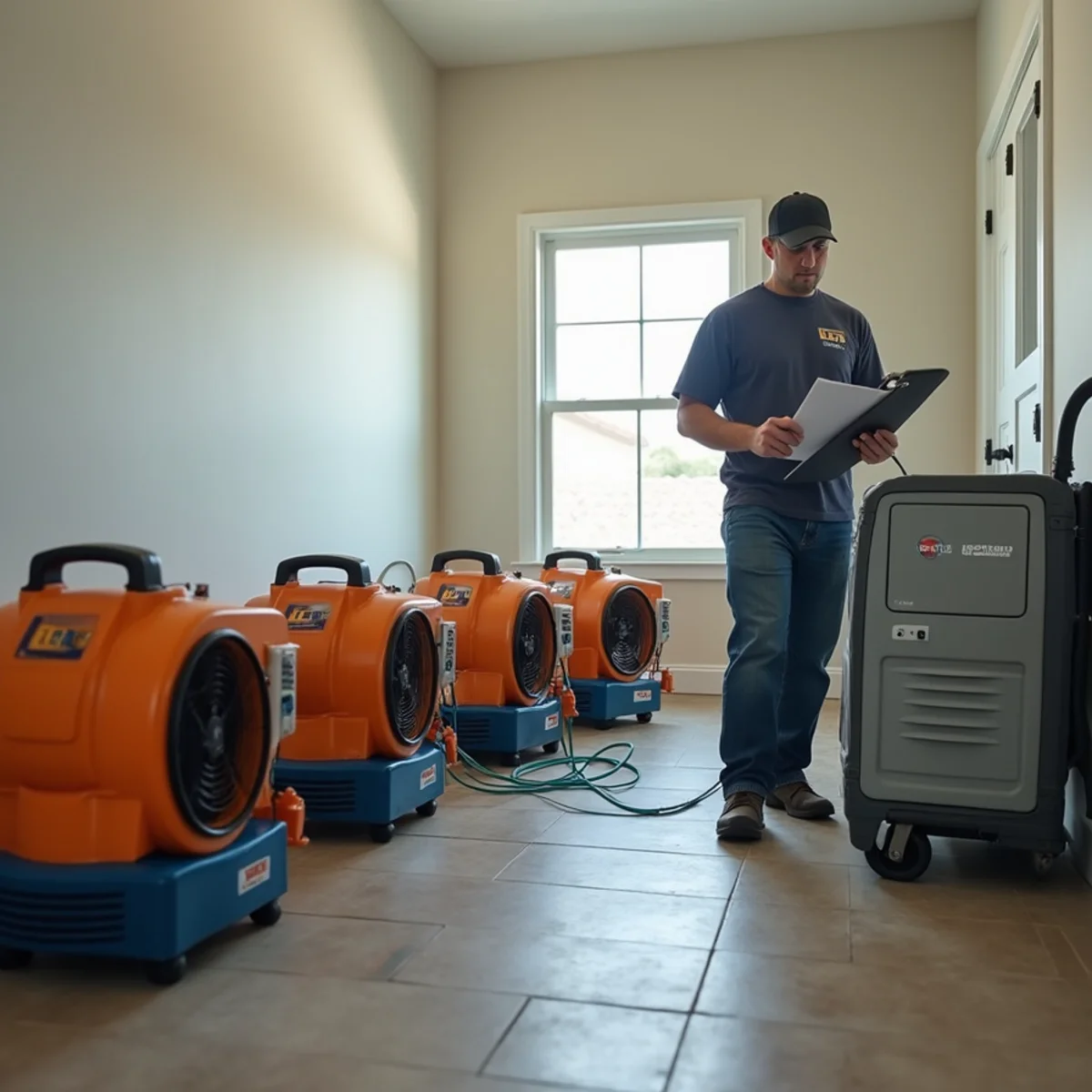
Removing the standing water is only half the job. The moisture soaked into drywall, framing, and subfloor is what grows mold and warps materials — and you can't see it. Structural drying is the science of getting those materials back to a safe, verified dry standard.
Serving Chino Hills & the Inland Empire · Open 24 hours — 7 days a week
We don't guess. We calculate how many air movers and dehumidifiers a space needs, place them deliberately, and document daily moisture readings so you have proof the property was dried correctly — the record insurers and future buyers both want.
Why professional drying matters
- Materials look dry on the surface but read wet on a meter
- A damp or musty smell lingering days after a leak
- Condensation on windows or cool, clammy air in a closed room
- Baseboards, drywall, or trim that stay cool to the touch
- Hardwood beginning to cup or crown at the edges
Our structural drying process
Drying is measured, not eyeballed. Our IICRC-aligned process looks like this:
- 1
Moisture assessment
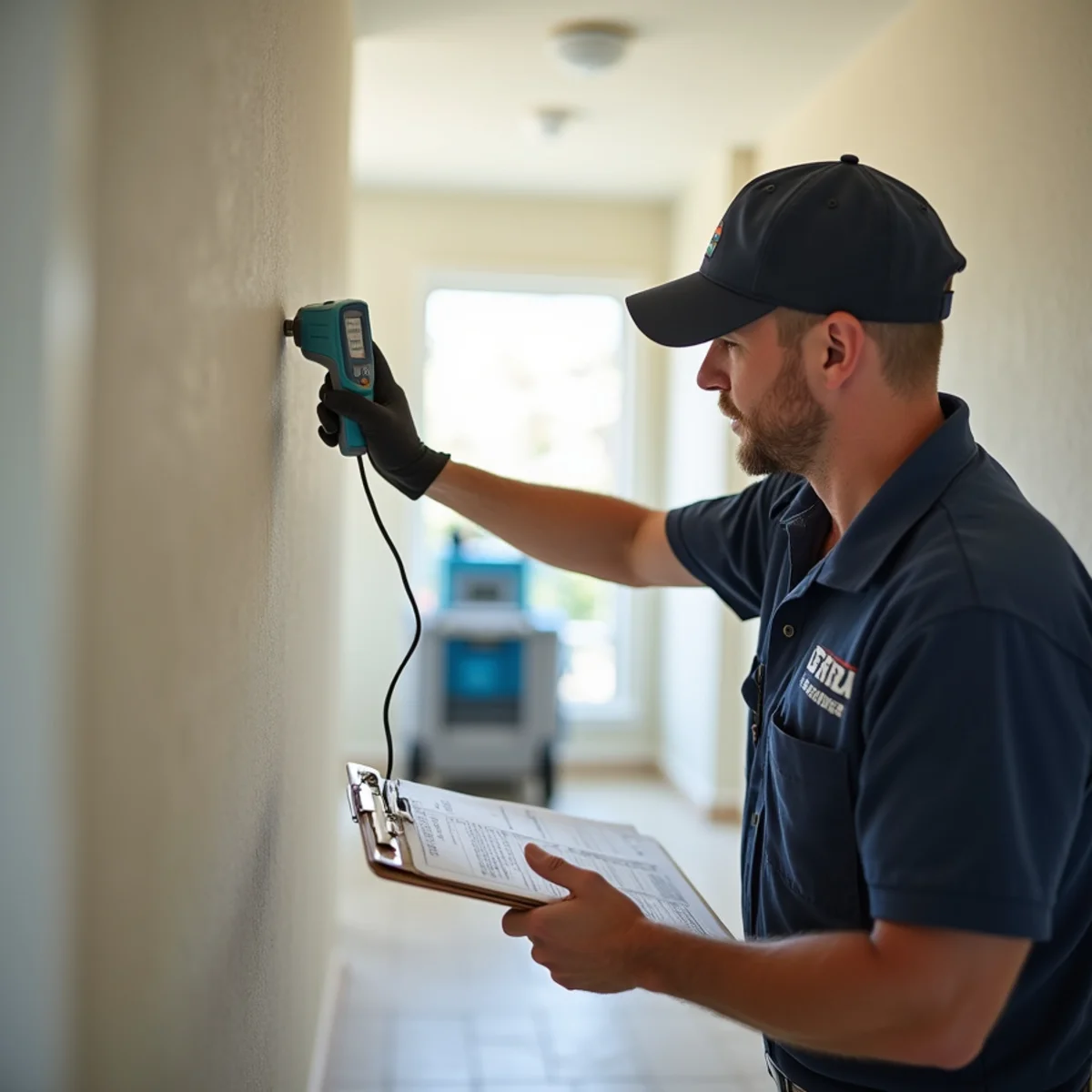
We establish a dry standard from unaffected areas and map every wet material so we know the target and the starting point.
- 2
Drying plan & equipment placement
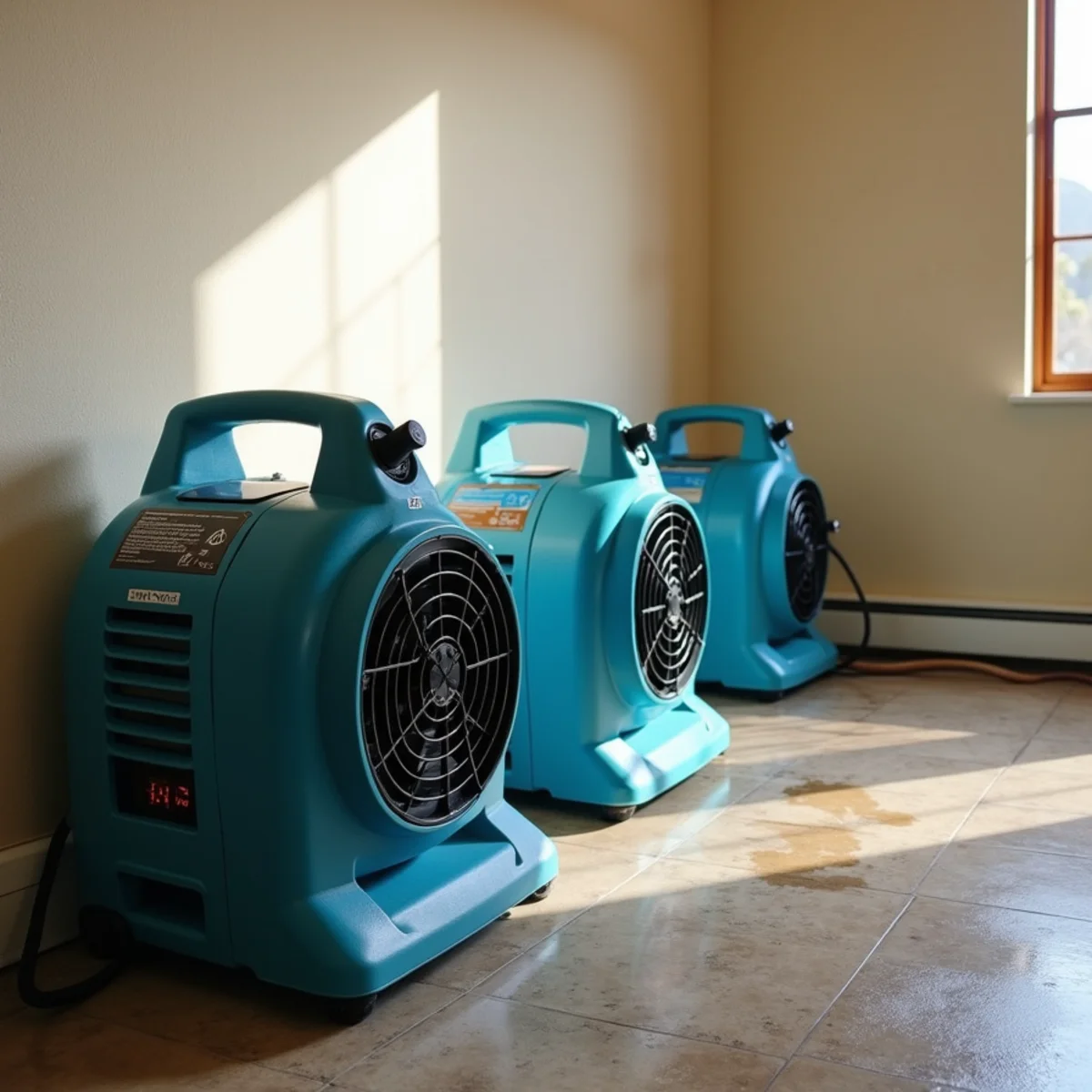
Air movers create evaporation, dehumidifiers pull that moisture out of the air. We size and place both for the specific room, not a one-size setup.
- 3
Daily monitoring & logs
We return daily, record readings, and adjust equipment. You get a documented drying log — proof the job was done to standard.
- 4
Verification & teardown
When materials reach dry standard, we pull equipment. If something isn't drying, we investigate hidden moisture rather than declaring victory early.
What affects the cost
Drying cost tracks the size of the loss and how long equipment has to run:
- Area and number of rooms
- More wet square footage means more air movers and dehumidifiers.
- Equipment days
- Most jobs run 3–5 days; dense materials like plaster and hardwood take longer.
- Material type
- Drywall and carpet release moisture faster than hardwood, plaster, or concrete.
- Humidity conditions
- A closed, humid space needs stronger dehumidification to hit target.
We never quote a water loss sight-unseen. Call (201) 277-9344 for an honest, on-site assessment.
Need structural drying in Chino Hills?
Tell us what happened — a live person answers any hour and gets a crew moving.
Answering 24/7 60-min response target Licensed & insured
The science behind the fans: airflow, heat, and humidity
Drying works on a simple triangle: airflow moves moisture out of a wet material into the air, warmth speeds that evaporation, and dehumidifiers pull the moisture back out of the air before it resettles somewhere else. Skip any one leg — turn off the dehumidifier but leave the fans running, say — and you're just pushing humid air around the room, which can spread dampness to materials that were never wet to begin with. That's why we run this equipment as a system, not as individual machines doing their own thing.
It's also why we ask you to keep windows closed and the air conditioning on during the dry-out, even though it feels like it should help to air the place out. Chino Hills summer air carries plenty of its own moisture, and opening a window can add humidity back into a room we're actively trying to dry. The household AC, set to a normal temperature, works with our equipment instead of against it. Small thing, but it affects how many days the equipment has to stay.
What a moisture meter reading actually means
A number on a moisture meter means nothing on its own — what matters is the comparison to a dry reference reading taken from an unaffected part of the same material in your home. Drywall in a hallway that was never touched by water becomes the benchmark; the wet drywall in the affected room has to come down close to that number, not to some fixed industry figure that ignores what your house is actually built from. That's the standard we're drying to, and it's why two houses with the same leak can have different drying timelines.
This is also why we don't pull equipment the moment a room feels dry to the touch. Surfaces dry faster than what's inside them, and framing or subfloor can still be reading wet on the meter days after the drywall feels normal. Stopping early on a feel-good guess is how a job that looked finished turns into a mold callback a month later. We keep measuring until the numbers, not our hands, say the material has actually reached that reference point.
Drying an older Chino Hills home versus a newer one
A house built in the 1980s or '90s often has different bones than one built in the last fifteen years, and that changes how we dry it. Older homes are more likely to have some original plaster or lath sections, denser original drywall, and less consistent insulation — all of which hold moisture longer and dry more slowly than materials in newer construction. We adjust equipment placement and expect a longer timeline on these homes rather than applying a one-size drying plan.
Newer Chino Hills homes bring a different challenge: tighter building envelopes. Energy-efficient construction seals air leaks well, which is great for utility bills but means humidity has fewer places to escape on its own, so trapped moisture can linger in a closed-up newer home just as long as it does in an older, leakier one — just for a different reason. Either way, we're not guessing based on the home's age; we're reading the meters and adjusting the plan to what the readings actually show.
What you get once the equipment comes out
We don't pull equipment and disappear. Before we leave, we take final moisture readings at every point we originally marked as wet and compare them against the dry-standard reference we set on day one, so you can see the before-and-after in real numbers, not just take our word for it. If any reading is still borderline, equipment stays a little longer rather than being removed on a schedule instead of a result. We'd rather run a dehumidifier for one more day than sign off on a room that isn't actually finished drying.
You get a written drying log covering every visit, a final verification summary, and dated photos of the equipment setup and teardown — the same package your insurer will ask to see if there's any question about the claim. It's also worth keeping for yourself: if you ever sell the house, that documentation shows a buyer or their inspector the water damage was dried to a verified standard, not just left to air out on its own. We keep our own copy on file too, so it's available years later if a question about that room ever comes up again.
Why Chino Hills chooses us for structural drying
When structural drying is on the line, the details decide the outcome. Here’s what you get with our local crew:
24/7 live response
A real person answers any hour, with a 60-minute arrival target across Chino Hills.
Licensed, insured & IICRC-certified
A California restoration contractor with trained technicians and full coverage.
Dried to a verified standard
Daily moisture logs prove the job was done right — not dried by guesswork.
Insurance claim advocates
We document the loss and deal with your adjuster directly, Xactimate estimates included.
Local to Chino Hills
We know these hillside slab homes, the hard water, and the Santa Ana storms firsthand.
Where we provide structural drying
We’re based in Chino Hills and deliver structural drying across the Inland Empire and North Orange County — from Chino Hills and Chino to Diamond Bar, Corona, Yorba Linda, Brea, and the neighborhoods in between. Fast local dispatch means the water spreads less and your loss stays smaller.
Structural Drying FAQs
How long does structural drying take?
Do the fans and dehumidifiers really need to run that long?
Why ask for drying logs?
The air movers are loud — can I turn them off at night?
Do you dry behind cabinets and baseboards, or just the open room?
Will drying equipment affect sensitive items in nearby rooms, like a piano or fine wood furniture?
Related Services
Need structural drying in Chino Hills?
Our Chino Hills crews are on call 24/7 with a 60-minute response target. Call now or request your free estimate.