

24/7 Emergency · Chino Hills, CA
24/7 Emergency Water Removal in Chino Hills, CA
Water emergencies don't keep business hours. A line lets go at midnight, a heater ruptures over the weekend, a storm pushes water in before dawn. When it happens, minutes matter — so we answer the phone live, any hour, every day.
Serving Chino Hills & the Inland Empire · Open 24 hours — 7 days a week
Our target is a 60-minute arrival across Chino Hills and the surrounding cities, with extraction starting the moment we're on site. The faster we pull the water, the less it spreads into your floors, walls, and belongings — and the smaller your loss.
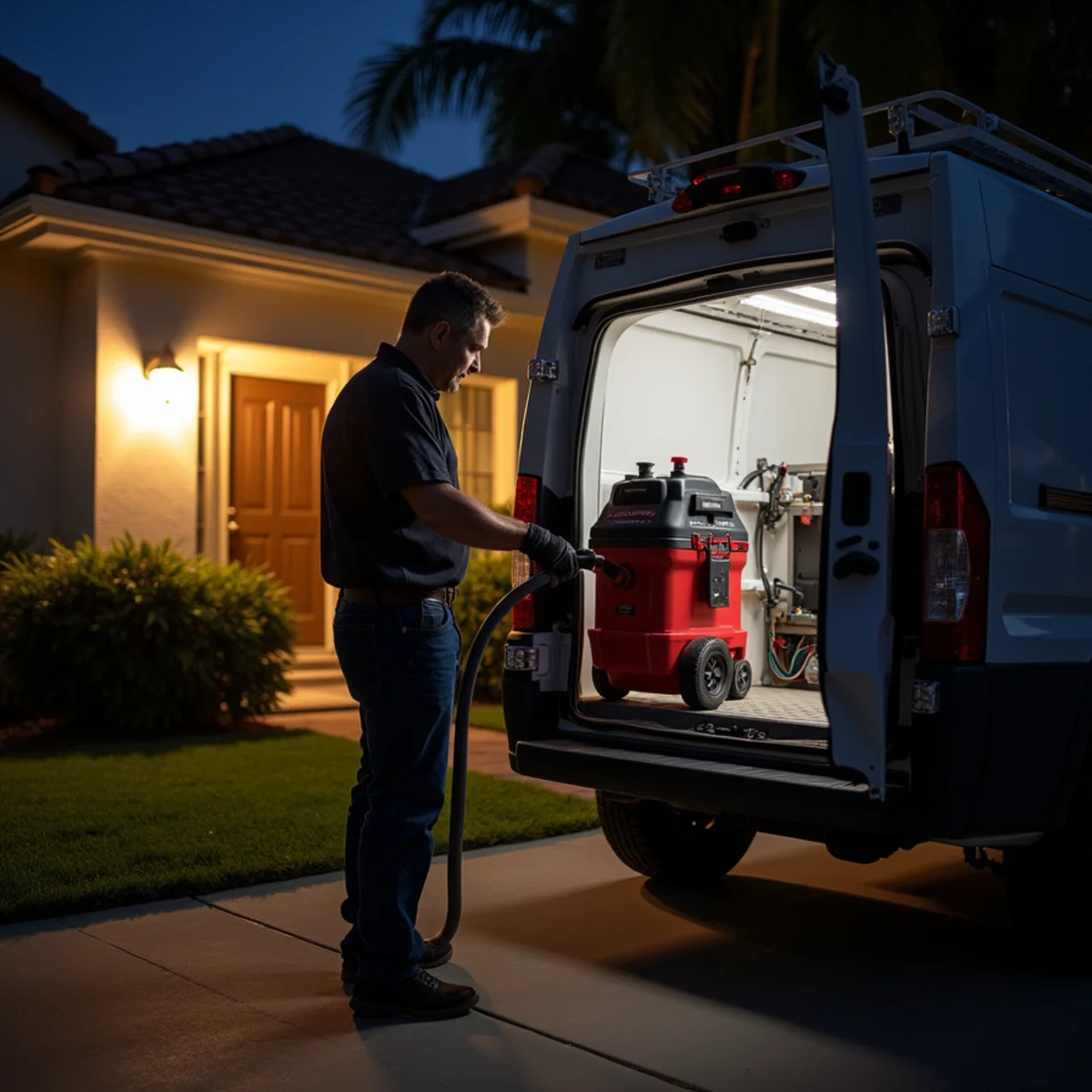
Call immediately if you have
- A burst or leaking pipe actively releasing water
- A water heater that ruptured and flooded the garage or closet
- An overflowing toilet, tub, or appliance you can't stop
- Storm water or runoff entering the home
- Any standing water spreading across floors right now
Our emergency water removal process
When you call, here's exactly what happens:
- 1
Live answer & guidance
A real person picks up, asks for your address and water source, and talks you through shutting off water and power safely if you haven't.
- 2
Rapid dispatch
The nearest Chino Hills crew heads your way immediately — target arrival within about 60 minutes.
- 3
On-arrival extraction
We start pulling standing water the moment we're on site, before it spreads any further.
- 4
Stabilize & plan
We stop the spread, protect what we can, and lay out the drying and restoration plan with you.
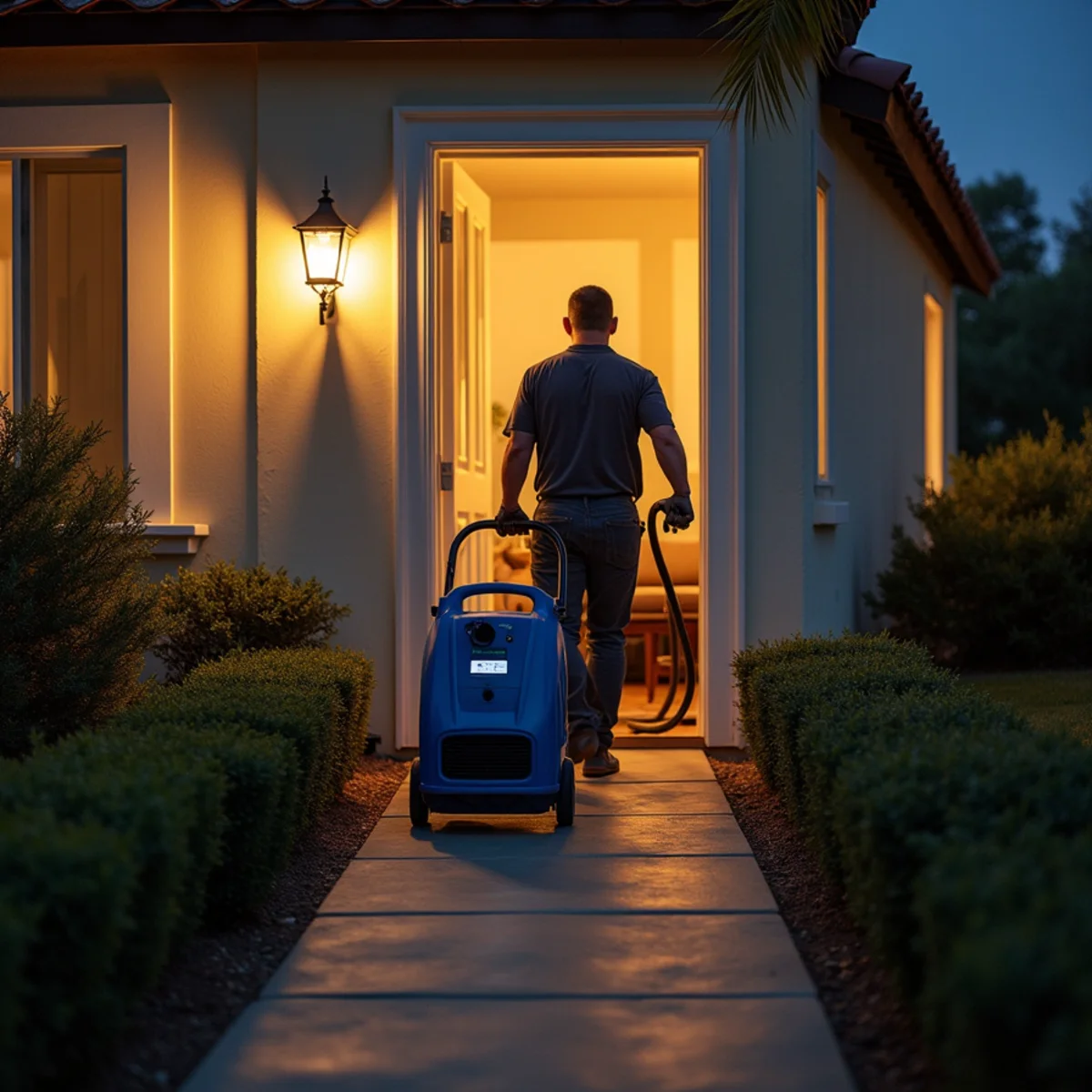
What affects the cost
Emergency response is about limiting the total loss. Cost factors include:
- Response and extraction time
- Fast extraction keeps damage — and cost — from multiplying overnight.
- Volume of water
- The amount of standing water sets how much equipment and labor the initial response needs.
- Category of water
- Clean, gray, or black water changes handling, PPE, and disposal.
- Follow-on drying
- Emergency removal is step one; structural drying continues over the following days.
We never quote a water loss sight-unseen. Call (201) 277-9344 for an honest, on-site assessment.
Need emergency water removal in Chino Hills?
Tell us what happened — a live person answers any hour and gets a crew moving.
Answering 24/7 60-min response target Licensed & insured
When a storm hits and the phones don't stop
During a major storm, we're rarely getting one call — we're getting many, all at once, all feeling like the most urgent thing happening in Chino Hills that hour. We triage: active, spreading water and anything involving electrical risk moves to the front of the line; a contained leak that's already stopped can safely wait a bit longer. That's not a brush-off, it's how we get water out of the most homes the fastest during the busiest hours, and we tell you honestly where you land in that order.
We also bring on more than one crew during weather events and coordinate so nobody who called gets lost in the shuffle. If your situation changes while you're waiting — the water starts spreading faster, it reaches an outlet, or someone in the house is affected by it — call back and tell us, because that can move you up the priority order immediately. Communication in both directions is what keeps a busy storm night organized instead of chaotic, and it's the fastest way to get a crew redirected to you sooner.
The first fifteen minutes on site
Before anyone touches the water, we do a fast safety sweep — checking for exposed wiring, standing water near outlets or panels, and anything structurally unstable like a sagging ceiling. That takes a minute or two and it's not optional, even when you're anxious to see extraction start immediately. Once the space is confirmed safe, we go straight to confirming the source is actually stopped, because pulling water out while more is still coming in just wastes the first useful minutes on site.
From there, extraction starts immediately, and in parallel we're moving furniture and rugs off wet flooring and blocking anything that's absorbing water it doesn't need to. We're also glancing at what's not affected yet — the next room, the level below — so we know if the problem is bigger than what's visible from the doorway. By the time the first pass of extraction is done, you'll have a real sense of scope, not just a wet floor and a lot of noise.
Your first 24 hours, roughly hour by hour
Hour zero is the call itself — a live person gets your address, the water source, and whether it's safe to stay, and starts a crew moving before you've even hung up. The next stretch, typically under an hour, is the part that feels longest: water's still spreading and help is en route. That's the window where shutting off the source and moving anything easy to lift off the floor actually changes the outcome. By the time we're pulling into the driveway, you should already know roughly what to expect for the rest of the day.
From arrival on, the crew is extracting and documenting, but the part most people don't picture is what happens after that first visit ends. Equipment keeps running through the evening and overnight — we don't shut it down at bedtime, because moisture doesn't pause either. The next morning, a technician is back for the first monitoring visit: checking readings, adjusting placement, and telling you honestly how the numbers are trending before the day gets going. That overnight stretch, unattended but still working, is doing as much of the drying as anything we do in person.
Mistakes people make in the gap between calling and our arrival
The most common one is waiting to see if the water "stops on its own" instead of shutting off the source the moment it's found — every extra minute is more water into the structure. A close second is leaving wet towels balled up on the floor; they hold moisture against carpet and hardwood rather than actually removing it, which can do more harm than good if left there for the hour before we arrive. If you want to do something useful with that time, take photos and start a list of what's been affected instead.
We also see people move wet electronics or unplug them after already touching water near an outlet, which is a real shock risk — if it's wet and near power, leave it and shut off that circuit at the panel instead. And don't pile dry items on top of wet carpet or furniture "to protect them"; it just adds weight and traps moisture underneath exactly where it needs to evaporate. Same goes for shoving a rug over a wet spot to hide it — it holds moisture against the floor instead of letting it evaporate.
Why Chino Hills chooses us for emergency water removal
When emergency water removal is on the line, the details decide the outcome. Here’s what you get with our local crew:
24/7 live response
A real person answers any hour, with a 60-minute arrival target across Chino Hills.
Licensed, insured & IICRC-certified
A California restoration contractor with trained technicians and full coverage.
Dried to a verified standard
Daily moisture logs prove the job was done right — not dried by guesswork.
Insurance claim advocates
We document the loss and deal with your adjuster directly, Xactimate estimates included.
Local to Chino Hills
We know these hillside slab homes, the hard water, and the Santa Ana storms firsthand.
Where we provide emergency water removal
We’re based in Chino Hills and deliver emergency water removal across the Inland Empire and North Orange County — from Chino Hills and Chino to Diamond Bar, Corona, Yorba Linda, Brea, and the neighborhoods in between. Fast local dispatch means the water spreads less and your loss stays smaller.
Emergency Water Removal FAQs
Are you really available at 2 a.m.?
What should I do while I wait for the crew?
How is the 60-minute response possible?
What information will you ask for when I call?
What if the water has reached a neighboring unit or the floor below in my condo or townhome?
Can I request the same crew that responded the first time for the follow-up visits?
Related Services
Need emergency water removal in Chino Hills?
Our Chino Hills crews are on call 24/7 with a 60-minute response target. Call now or request your free estimate.