
24/7 Emergency · Chino Hills, CA
Burst Pipe Cleanup & Water Damage Repair in Chino Hills, CA
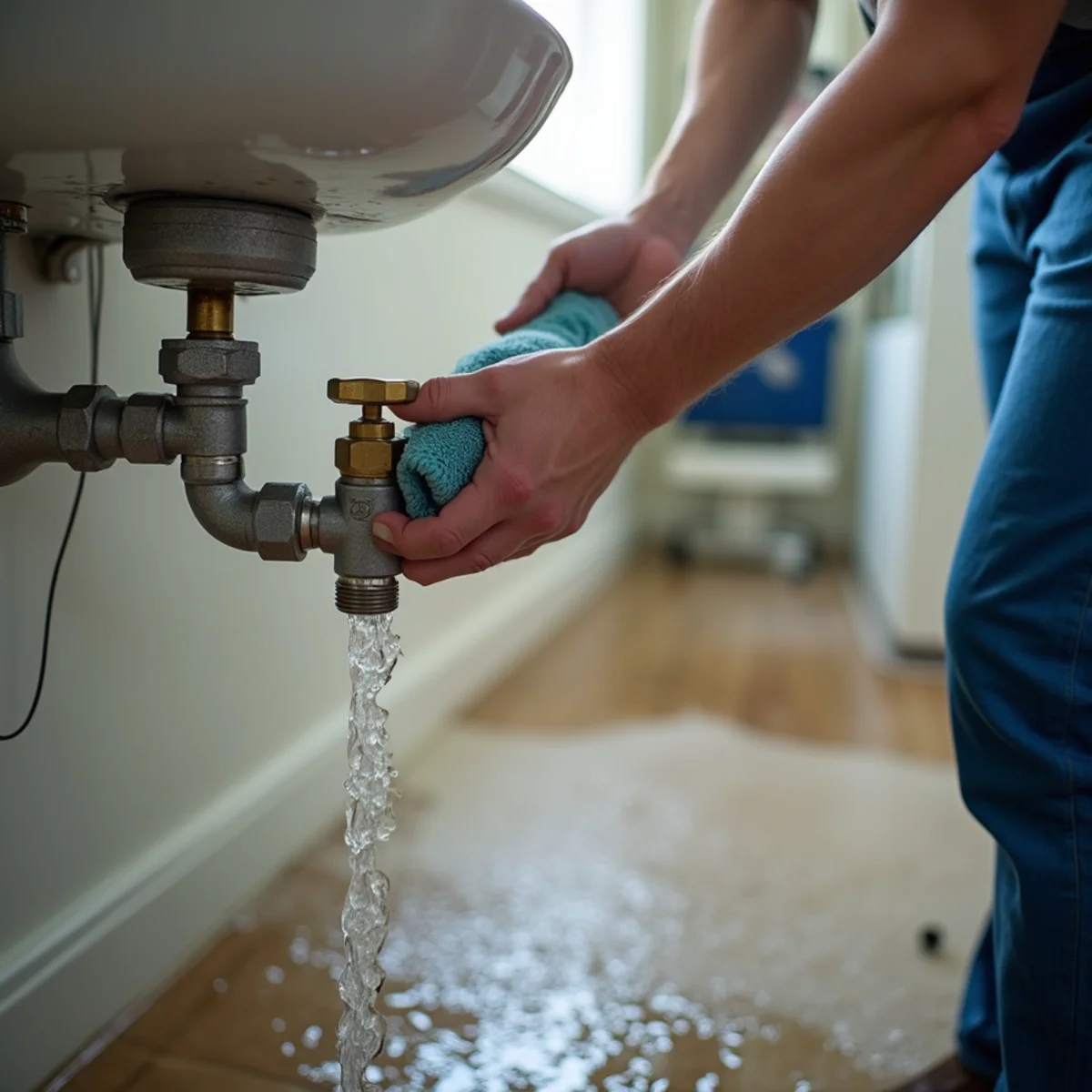
A burst pipe can release hundreds of gallons an hour. By the time you find it, water has usually reached the floor below, the wall cavities, and everything in between. The first move is to shut off your main water valve — then call us.
Serving Chino Hills & the Inland Empire · Open 24 hours — 7 days a week
We clean up after burst supply lines, angle stops, washing-machine hoses, and copper pinhole failures common in Chino Hills' aging slab homes. We extract the water, dry the structure to standard, and rebuild what got soaked — then document it all for your insurer.
After a pipe bursts, watch for
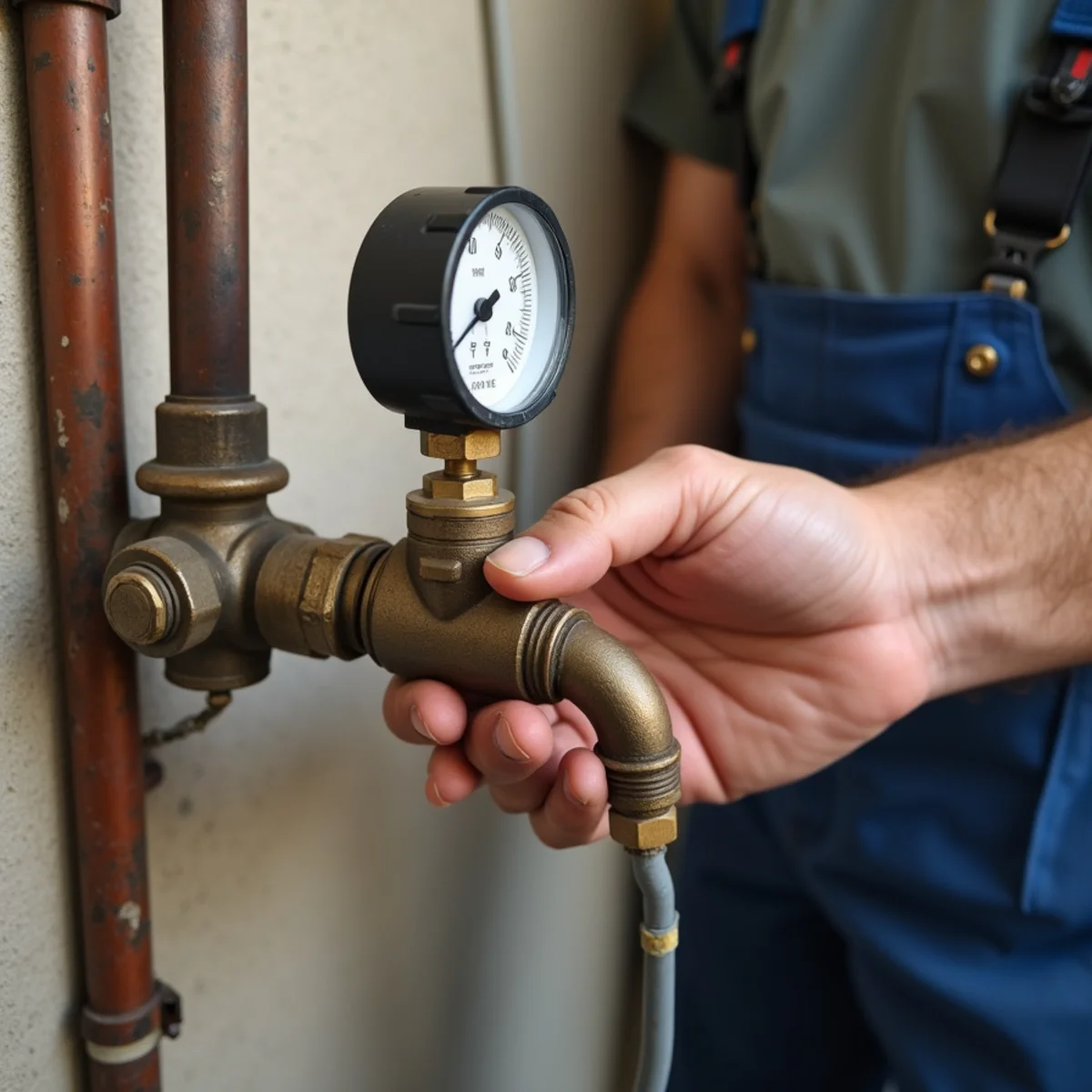
- Water spraying, dripping, or pooling from a supply line or fixture
- A sudden drop in water pressure
- Water staining a ceiling or running down a wall from above
- Soaked drywall, flooring, and baseboards near the failure
- Water reaching the level or room below the break
Our burst pipe cleanup process
Burst-pipe recovery moves from stopping the water to full repair:
- 1
Stop the source
We confirm the water is off at the main or the fixture, then check the extent — including the room or floor below.
- 2
Extraction
Standing water comes out fast with truck-mounted and portable units before it soaks deeper.
- 3
Open & dry hidden moisture
Water inside wall cavities and under floors is dried with targeted equipment; we make minimal, precise openings where needed.
- 4
Repair & restore
We coordinate the plumbing fix, then rebuild drywall, flooring, and trim back to pre-loss condition.
What affects the cost
The cost of a burst-pipe loss depends on:
- Water released & spread
- A pipe that ran for an hour behind a wall causes far more damage than one caught immediately.
- Floors affected
- Water that reached a lower level multiplies the drying and repair scope.
- Location of the break
- An in-wall or in-ceiling failure means opening and rebuilding, not just drying.
- Materials soaked
- Hardwood, cabinetry, and ceilings cost more to restore than carpet or tile.
We never quote a water loss sight-unseen. Call (201) 277-9344 for an honest, on-site assessment.
Need burst pipe cleanup in Chino Hills?
Tell us what happened — a live person answers any hour and gets a crew moving.
Answering 24/7 60-min response target Licensed & insured
When we have to open a wall — and when we don't
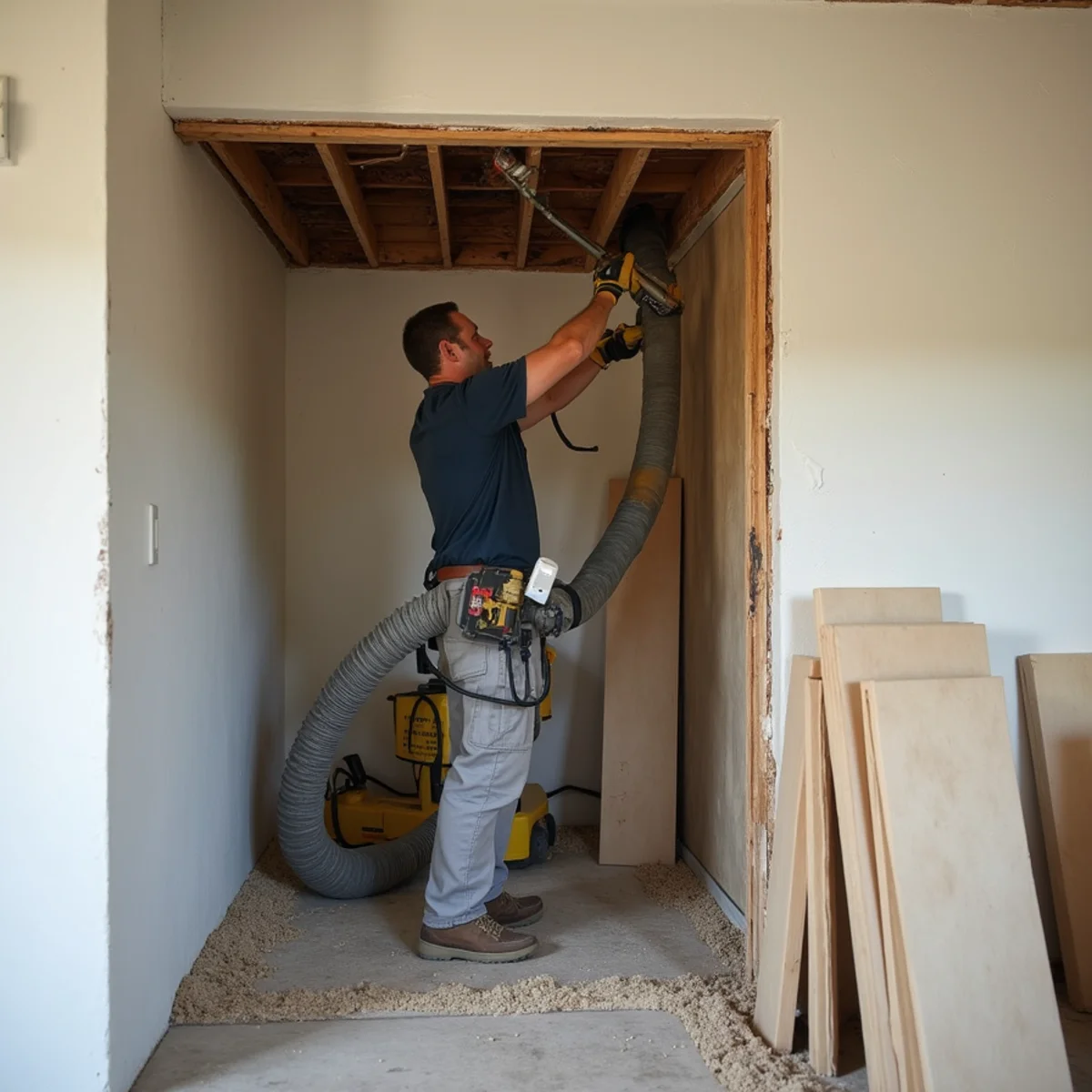
Opening drywall is a last resort, not a first move. We start with moisture meters and thermal imaging to map exactly how far water traveled inside the wall cavity, because in a lot of cases the cavity can be dried in place with targeted airflow through small access points rather than a full section removed. The decision comes down to how saturated the material actually is and whether air can reach it — not a blanket rule that every burst pipe means new drywall.
When we do open a wall, we cut only what the moisture map says is wet, in a shape that makes the drywall patch straightforward afterward — not a guess-sized hole. Insulation inside the cavity is the deciding factor as often as the drywall itself; wet fiberglass batt rarely dries well in place and usually has to come out even when the surrounding drywall can be saved. We explain the reasoning before we cut, so it's a decision you understand, not one made behind your back.
Why we always check the floor below
Water follows gravity, not the shortest path to a drain. A pipe that bursts in a second-floor bathroom routes straight down through the subfloor and ceiling assembly, often showing up as a stain in the kitchen below before anyone upstairs even notices standing water. That's why we check the space below any burst pipe as a standard step, regardless of how contained the damage looks at the source — skipping that check is how a homeowner gets a surprise ceiling stain a week later.
In a two-story home or a condo with a unit below, this also means coordinating beyond your own walls — checking in with whoever lives underneath, even if their ceiling still looks fine that day. Water can sit inside a ceiling cavity for a while before it's saturated enough to show through paint, so a clean-looking ceiling right after the burst doesn't rule out damage developing over the following days. We'd rather check early than leave that as a surprise for later.
Why older and newer Chino Hills homes burst differently
Homes from the 1980s and '90s are typically plumbed in copper, sometimes with galvanized steel fittings at transitions, and both materials fail the same general way: corrosion that thins the pipe wall over decades until it lets go, often without warning at a joint or a straight run that's been quietly weakening for years. These failures tend to be sudden and can release a large volume fast, because the whole pipe wall has been thinning evenly rather than failing at one weak point.
Newer homes plumbed in PEX fail differently — the tubing itself is flexible and resists the corrosion that kills copper, so bursts are more often at a fitting, a manifold connection, or a spot where the line was damaged during another repair or a remodel. That changes where we look first and how we approach the cleanup, since a newer-home burst is more likely to trace back to a single connection point than a length of failing pipe. That's actually good news for the repair — a single fitting is usually a faster fix than a full section of corroded copper.
Keeping the rest of your house out of the job
Once we know which wall or ceiling we're opening, we hang plastic sheeting and drop cloths around the work area before any cutting starts, so dust and debris stay contained instead of settling on furniture and flooring in the rest of the house. Floor protection goes down along the path from our work area to the door, the same as any other job, so equipment and materials moving in and out don't add a second mess to clean up later.
If the burst affected more than one room, or a floor below, we treat each space with its own containment rather than letting one large open work zone creep through the house. Rooms that aren't part of the repair stay closed off and usable while we work — you shouldn't have to relocate your whole household because one wall needs to come open. We'll tell you plainly which rooms are affected and which ones are simply not part of the job.
Why Chino Hills chooses us for burst pipe cleanup
When burst pipe cleanup is on the line, the details decide the outcome. Here’s what you get with our local crew:
24/7 live response
A real person answers any hour, with a 60-minute arrival target across Chino Hills.
Licensed, insured & IICRC-certified
A California restoration contractor with trained technicians and full coverage.
Dried to a verified standard
Daily moisture logs prove the job was done right — not dried by guesswork.
Insurance claim advocates
We document the loss and deal with your adjuster directly, Xactimate estimates included.
Local to Chino Hills
We know these hillside slab homes, the hard water, and the Santa Ana storms firsthand.
Where we provide burst pipe cleanup
We’re based in Chino Hills and deliver burst pipe cleanup across the Inland Empire and North Orange County — from Chino Hills and Chino to Diamond Bar, Corona, Yorba Linda, Brea, and the neighborhoods in between. Fast local dispatch means the water spreads less and your loss stays smaller.
Burst Pipe Cleanup FAQs
Where is my main water shut-off?
Why do pipes burst in Chino Hills?
Is burst-pipe damage covered by insurance?
Do all burst pipes mean the drywall has to be replaced?
The pipe broke in one room — why are you checking the ceiling in the room below?
What's the actual difference between a burst pipe and a slab leak?
Related Services
Need burst pipe cleanup in Chino Hills?
Our Chino Hills crews are on call 24/7 with a 60-minute response target. Call now or request your free estimate.