
24/7 Emergency · Chino Hills, CA
Mold Remediation in Chino Hills, CA
Mold is what water damage becomes when it isn't dried in time. It can start within 24–48 hours of a leak, and once it's established it spreads through spores you can't see. If you're seeing or smelling mold in your Chino Hills home, the goal is to remove it safely and — just as important — fix the moisture that's feeding it.
Serving Chino Hills & the Inland Empire · Open 24 hours — 7 days a week
We contain the work area so spores don't travel, remove the mold to standard, and correct the water source. Remediation that ignores the moisture just buys you a repeat problem in the same spot.
Signs you have a mold problem
- Visible black, green, or white growth on walls, ceilings, or baseboards
- A persistent musty, earthy smell — often the first sign
- Mold appearing weeks after a leak that was never dried properly
- Worsening allergy or respiratory symptoms indoors
- Warping, discoloration, or staining on drywall and trim
Our mold remediation process
Safe remediation follows containment-first principles so spores don't spread:
- 1
Inspection & moisture source
We find the mold and, critically, the water feeding it — a hidden leak, poor drying, or condensation — because removal without that fix fails.
- 2
Containment
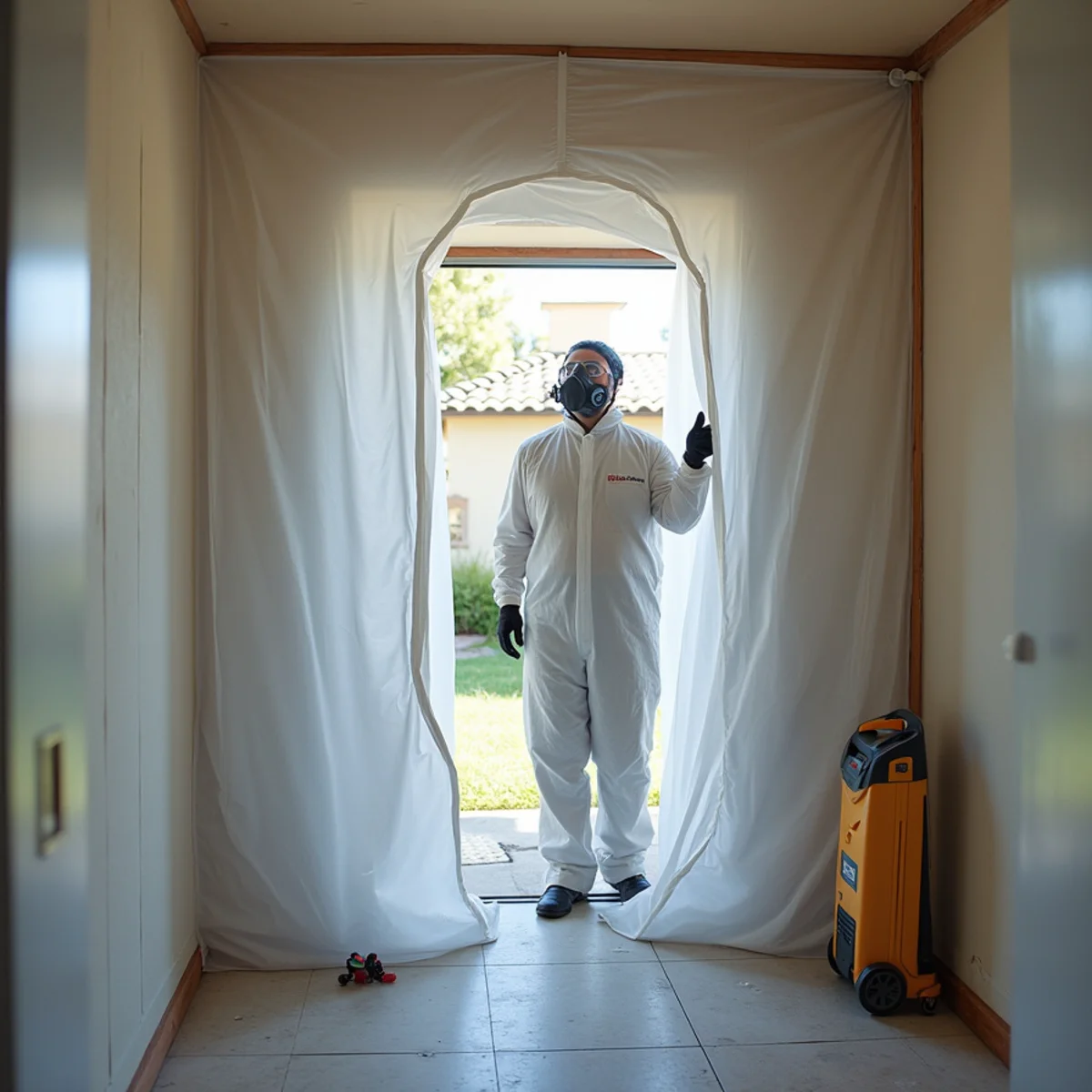
We seal the work area with barriers and negative air pressure so spores can't migrate to clean parts of the home.
- 3
Removal & HEPA filtration
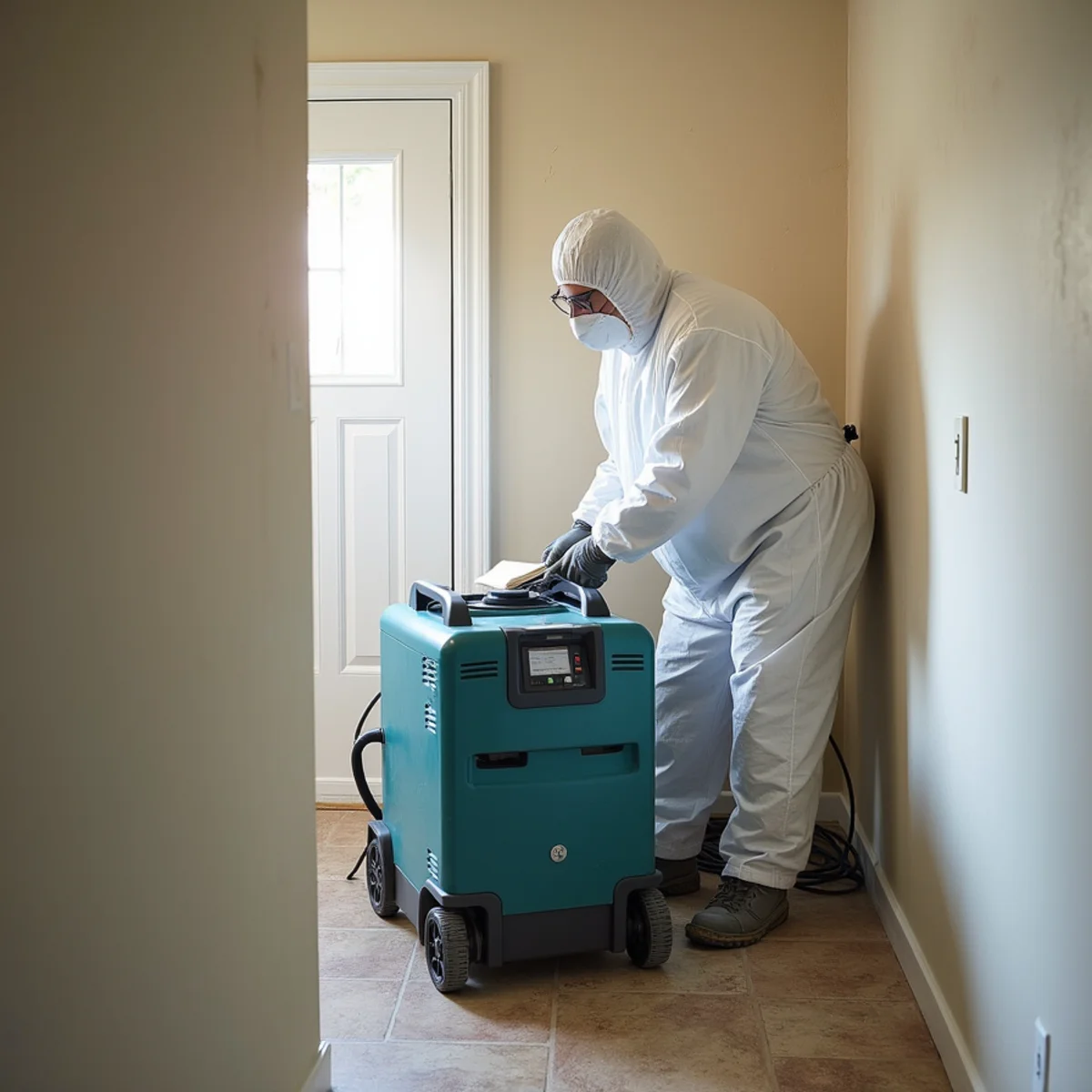
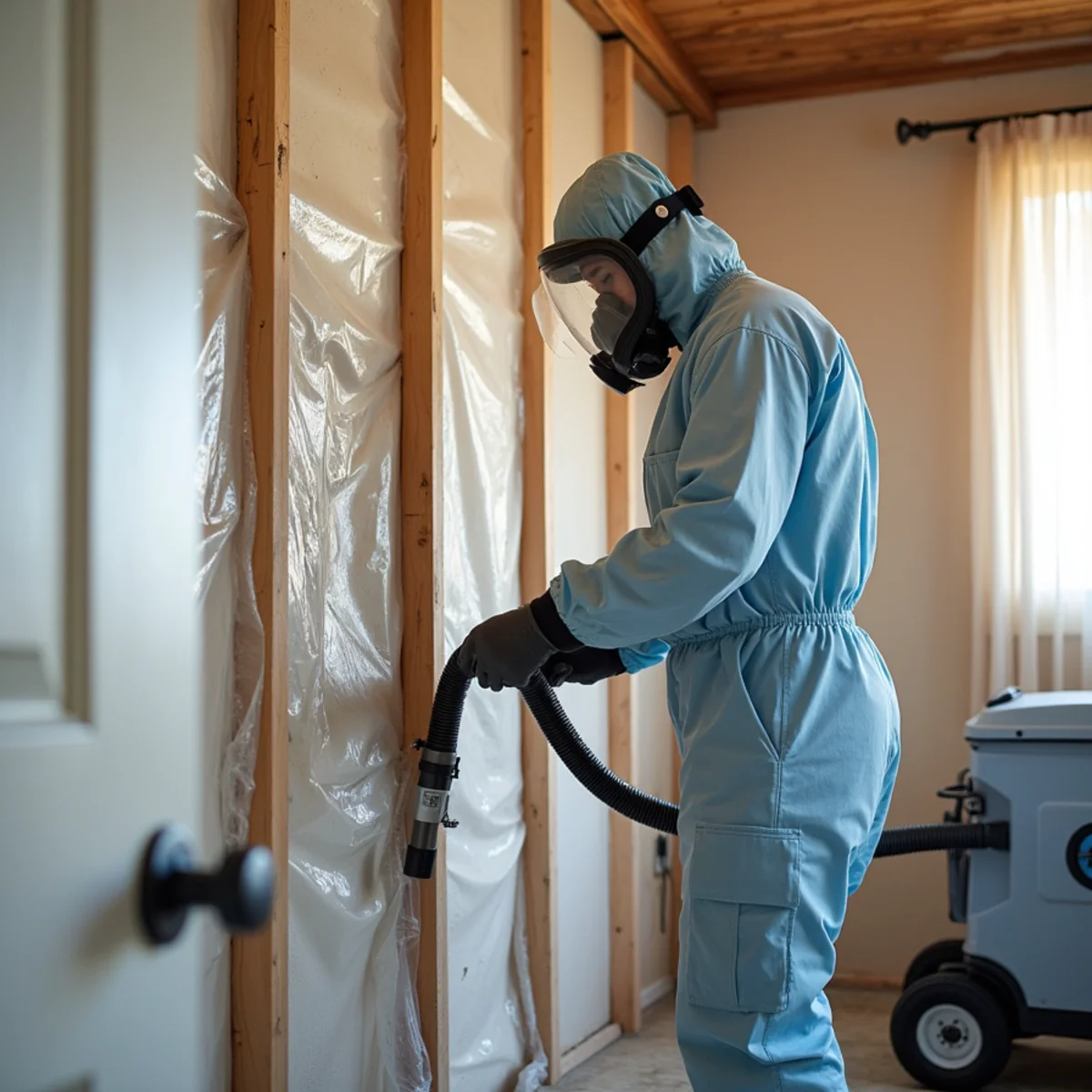
Affected porous materials are removed and bagged; HEPA air scrubbers and vacuums capture airborne spores.
- 4
Cleaning & antimicrobial treatment
Salvageable surfaces are cleaned and treated to inhibit regrowth.
- 5
Dry, restore & prevent
We resolve the moisture, dry the area, and rebuild — so the mold has no reason to return.
What affects the cost
Mold remediation is usually priced by the size and location of the growth:
- Size of the affected area
- A small closet patch is a very different job from mold across a wall cavity or ceiling.
- Location and access
- Mold inside wall cavities, HVAC, or a crawl space is harder to reach and contain.
- Materials involved
- Porous materials must be removed; non-porous surfaces can often be cleaned in place.
- Moisture source repair
- The underlying leak or humidity problem has to be corrected, or the mold returns.
We never quote a water loss sight-unseen. Call (201) 277-9344 for an honest, on-site assessment.
Need mold remediation in Chino Hills?
Tell us what happened — a live person answers any hour and gets a crew moving.
Answering 24/7 60-min response target Licensed & insured
Mold and your household — who should stay clear
Active mold work stirs up spores, which is exactly why containment exists — but it also means the work area isn't the place for anyone with asthma, allergies, a compromised immune system, or young kids while remediation is underway. We're not doctors and won't diagnose symptoms, but if anyone in the house has noticed worse coughing, congestion, or irritation since the mold showed up, that's worth mentioning to your physician, and it's a good reason to let us handle removal rather than tackling it yourself.
During the job, keeping pets and family out of the sealed work area isn't just about disturbing our setup — negative air pressure inside containment means spores are being pulled inward and filtered, and opening that boundary partway defeats the purpose. Once we're done, we run the air scrubbers a while longer, ventilate the space, and clear the area before calling it finished. If anyone in the home is especially sensitive, ask us about a post-remediation checkpoint and a slower re-entry before you move back into the space full time.
How we confirm the mold is actually gone
Removing visible growth isn't the same as confirming the job is finished. Before we call an area clear, we do a visual check for any missed growth, re-check moisture levels to confirm the source is truly resolved, and look at adjacent materials that could have been affected but weren't obviously discolored. We work off the same checklist on every job, not memory, so nothing gets skipped because a room seemed fine at a glance. Walking away because the wall looks clean, without checking what's behind or underneath it, is how remediation jobs turn into repeat calls a season later.
For situations where you need it on paper — selling the house, a landlord dispute, peace of mind for a sensitive family member — we can point you toward third-party clearance testing, done by an independent inspector rather than by us, since that's the version that carries real credibility. For most residential jobs, our documented visual and moisture verification is what closes out the work, with photos and notes you keep for your own records, and we're glad to walk through any of those readings with you before we call it finished.
Mistakes that make a mold problem worse
Bleach is the one we hear about most. It can lighten mold on a hard, non-porous surface, but on drywall or wood it doesn't reach the roots growing into the material — so it looks better for a week or two and comes right back, often larger. Painting over a stain without removing the mold underneath does the same thing: it hides the problem instead of solving it, and paint doesn't stop spores from spreading behind it. By the time paint blisters or a stain bleeds through, the mold underneath has usually spread further than a first proper removal would have allowed.
The other frequent mistake is disturbing mold without containment — scraping it off, running a fan on it, or vacuuming it with a household vacuum. All three do the same thing: they launch spores into the air where your HVAC system can carry them to rooms that were never affected before. If you've found mold, the safest move until we arrive is to leave it alone and close the door, not to start cleaning. It feels counterintuitive to do nothing, but disturbing it yourself almost always makes the eventual remediation bigger, not smaller.
Mold behaves differently in older and newer Chino Hills homes
Older homes here, with original stucco, less consistent insulation, and sometimes original single-pane windows, tend to get condensation-driven mold in predictable spots — closets on exterior walls, bathroom ceilings, and window sills where moisture collects and has nowhere to go. We know to check those spots first on an older home, even when the visible growth is somewhere else, because condensation problems are rarely limited to just the one wall you happened to notice. A full check of every exterior-facing closet and window sill in an older home often turns up a second spot nobody had reported yet.
Newer, tightly built homes trade that problem for a different one: less natural air exchange. Energy-efficient construction holds humidity inside more effectively, which is good for the utility bill but means a bathroom fan that's slightly undersized, or a shower that runs a little long every morning, can push humidity high enough to grow mold in a home that looks and feels perfectly modern. We check ventilation and humidity levels as part of every newer-home inspection for that reason. A small adjustment — a longer fan run-time, a slightly wider window crack after a shower — is often enough to keep it from returning.
Why Chino Hills chooses us for mold remediation
When mold remediation is on the line, the details decide the outcome. Here’s what you get with our local crew:
24/7 live response
A real person answers any hour, with a 60-minute arrival target across Chino Hills.
Licensed, insured & IICRC-certified
A California restoration contractor with trained technicians and full coverage.
Dried to a verified standard
Daily moisture logs prove the job was done right — not dried by guesswork.
Insurance claim advocates
We document the loss and deal with your adjuster directly, Xactimate estimates included.
Local to Chino Hills
We know these hillside slab homes, the hard water, and the Santa Ana storms firsthand.
Where we provide mold remediation
We’re based in Chino Hills and deliver mold remediation across the Inland Empire and North Orange County — from Chino Hills and Chino to Diamond Bar, Corona, Yorba Linda, Brea, and the neighborhoods in between. Fast local dispatch means the water spreads less and your loss stays smaller.
Mold Remediation FAQs
How fast does mold grow after water damage?
Is it black mold? Should I be worried?
Can't I just use bleach on it?
Can mold spread through my air ducts?
Do I need a mold report for selling my house or dealing with a landlord?
Do I need mold testing before remediation starts, or do you just remove what's visible?
Related Services
Need mold remediation in Chino Hills?
Our Chino Hills crews are on call 24/7 with a 60-minute response target. Call now or request your free estimate.