
24/7 Emergency · Chino Hills, CA
Water Extraction & Removal in Chino Hills, CA
Every hour that water sits, it moves deeper into your Chino Hills home — into the pad, under the boards, up the drywall. Fast, thorough extraction is the single most important step in limiting the damage and the cost.
Serving Chino Hills & the Inland Empire · Open 24 hours — 7 days a week
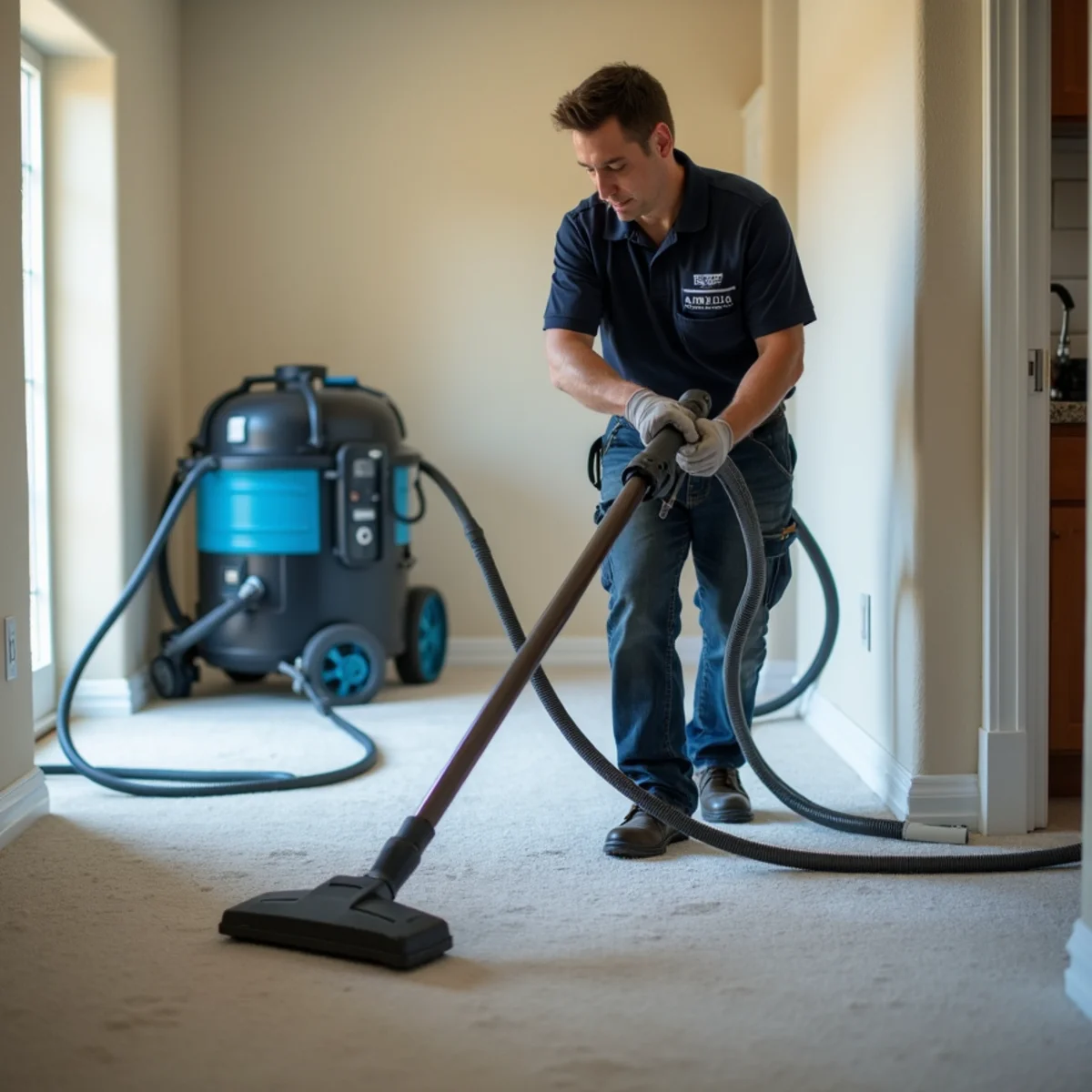
We remove standing water with truck-mounted and portable extraction units that pull far more moisture than any shop vac or mop can. Then we measure what's left, because water you can't see is what causes mold.
When you need professional extraction
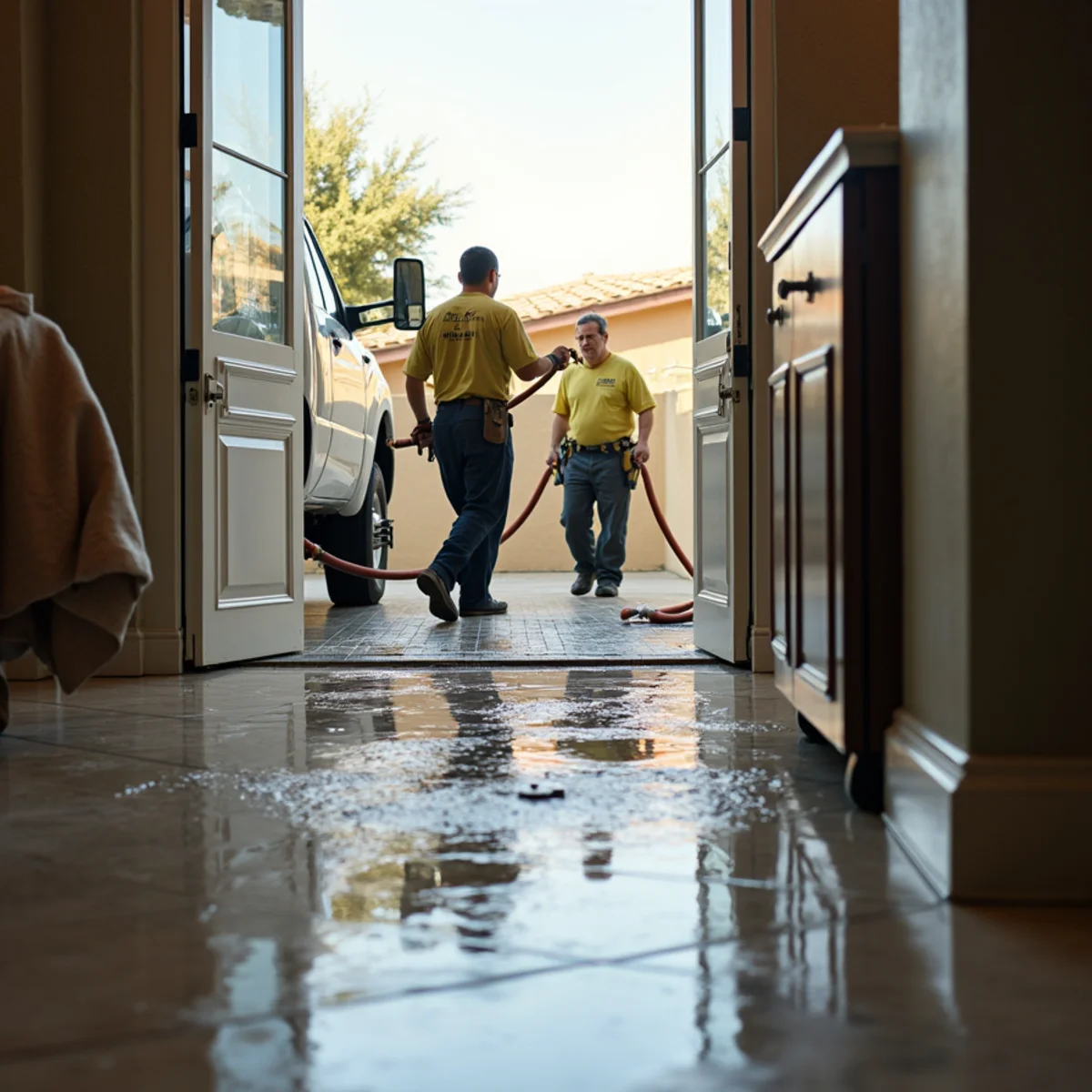
- Pooled or standing water on floors after a leak or overflow
- Carpet that squishes underfoot or feels cold and heavy
- Water spreading toward walls, cabinets, or adjoining rooms
- A finished space — office, den, media room — taking on water
- Any amount of water on hardwood, which soaks and cups quickly
Our water extraction process
Extraction is fast but methodical — the goal is to pull every gallon we can before drying begins:
- 1
Safety & source check
We confirm the power is safe and the water source is stopped, then identify the water category so we handle it correctly.
- 2
Standing-water removal
Truck-mounted extractors and portable units remove the bulk water from hard surfaces, carpet, and pad quickly.
- 3
Deep carpet & pad extraction
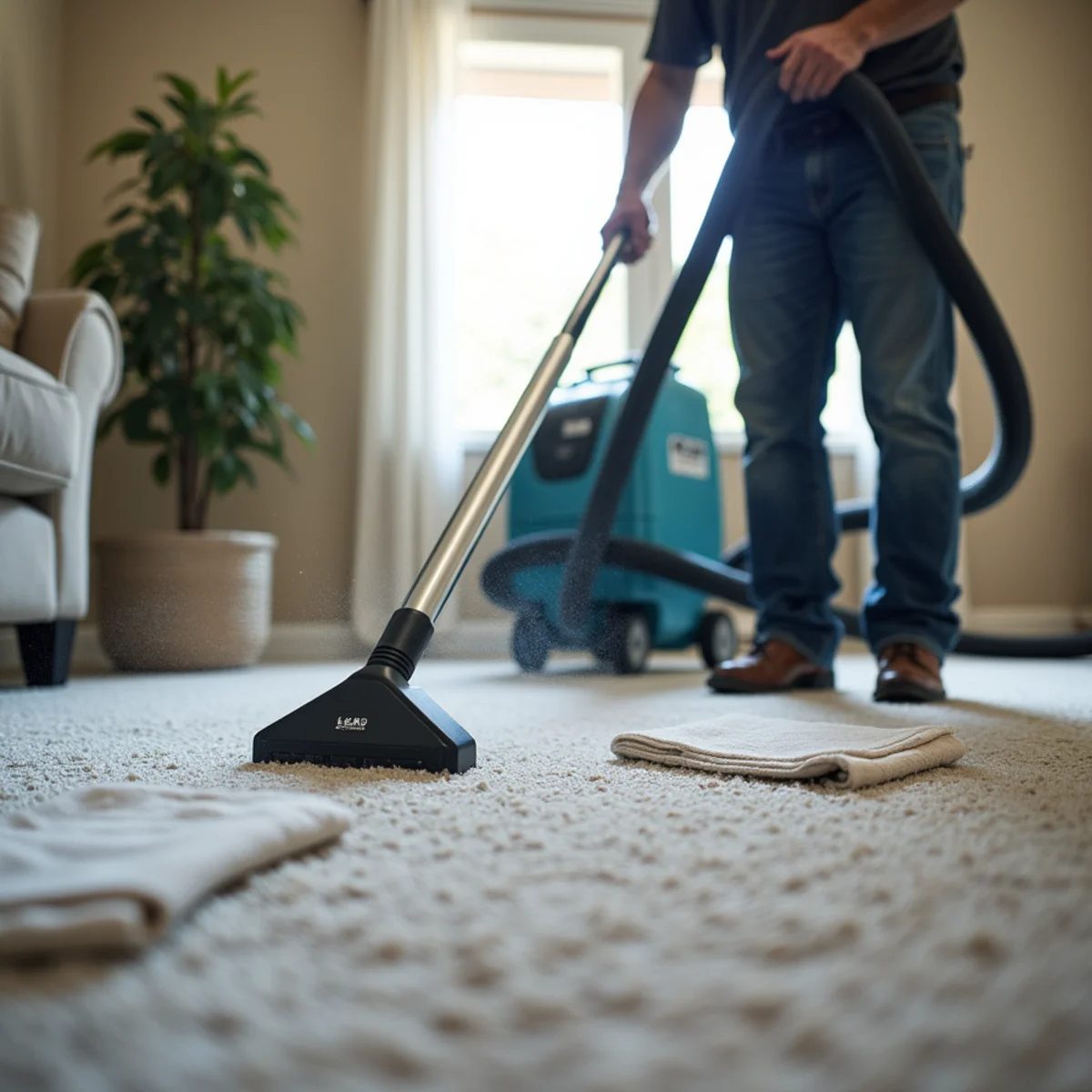
Weighted extraction tools press moisture out of the pad. When the pad is too far gone, we remove it rather than pretend it will dry.
- 4
Moisture verification
We map remaining moisture with meters so drying equipment is aimed where the water actually is — not just where it looks wet.
What affects the cost
Extraction is usually billed as part of the larger drying job. The scope depends on:
- Volume of water
- A slow appliance leak differs a lot from an inch of standing water across a floor.
- Surface type
- Tile extracts fast; carpet-over-pad and hardwood take more passes and time.
- Access
- Water under cabinets, behind built-ins, or in tight closets takes longer to reach.
- Water category
- Contaminated water requires containment and disposal, which adds labor.
We never quote a water loss sight-unseen. Call (201) 277-9344 for an honest, on-site assessment.
Need water extraction in Chino Hills?
Tell us what happened — a live person answers any hour and gets a crew moving.
Answering 24/7 60-min response target Licensed & insured
Where water hides after the surface looks dry
Extraction pulls the water you can walk on. It doesn't automatically reach the water that has already wicked sideways under a baseboard, up into the bottom few inches of drywall, or beneath a cabinet toe kick where a wet vac can't fit. That's the water that keeps a room reading damp on a meter for days after the floor looks fine, and it's exactly where mold gets started if nobody goes looking. A thorough extraction job always ends with a moisture map, not just a dry-looking floor.
Subfloor seams are another blind spot — water travels along the underside of plywood or OSB far past where it entered, especially under tile or vinyl where there's nowhere for it to evaporate quickly. We check moisture at the perimeter of the wet area, not just the center, because that's usually where the water traveled to next. If readings come back high somewhere the floor still looks normal, that's not a false alarm — it's telling us where to aim the drying equipment.
Extraction on hardwood, tile, and specialty flooring
Solid hardwood is the most time-sensitive floor we extract from. Water sitting on it for even a few hours starts the wood swelling at the seams, and once it cups, drying fast is what determines whether it flattens back out or has to be replaced. We use weighted extraction mats that press water up out of the wood through gentle suction, rather than just skimming the surface, and we start that process before anything else if hardwood is in the affected area.
Tile and stone hide water in the grout lines and the mortar bed underneath rather than on the surface, so we extract at the grout joints and check moisture in the substrate, not just the tile face. Engineered flooring and laminate fall somewhere in between — the wear layer can look untouched while the core material underneath is already swelling. We treat each flooring type differently on purpose, because the extraction approach that saves tile can ruin a laminate floor left wet too long underneath.
Is it worth a call, or can it wait?
A cup of clean water from a dropped ice tray isn't an emergency — towel it up and move on. Anything more than that deserves a second look. If water is spreading toward a wall, soaking into carpet, or sitting on hardwood for more than an hour, don't wait to see if it evaporates on its own. Hardwood starts absorbing at the seams almost immediately, and carpet pad holds moisture long after the surface looks fine, which is exactly the setup mold needs.
The other deciding factor is the water itself. Clean water from a supply line can reasonably wait for a same-day appointment if it's contained and shallow. Water from a drain, an appliance that's backed up, or anything with an odor should move you to call immediately, regardless of how small the puddle looks. When you're not sure which category you're dealing with, call and describe it — we'll tell you honestly whether it's a get-here-now situation or a schedule-it-today one.
Keeping extraction from spreading water into rooms it hasn't reached yet
Pulling water out of one room can easily spread it to the next if nobody's thinking about the path in between. Before extraction starts, we lay floor protection along the route from the door to the affected area, so equipment, hoses, and foot traffic don't drag moisture across carpet or hardwood that's still dry. Extractor tanks get emptied outside, not carried back through the house full, and cords get routed to avoid becoming a tripping hazard through rooms you're still using.
In multi-room losses, we set containment barriers at the doorway of the affected space so the wet zone stays defined instead of creeping into hallways and closets as we work. Furniture still standing in the room gets blocked up on foam blocks or tabs rather than left sitting in standing water while we extract around it. It's a small setup step that takes a few extra minutes and keeps your dry rooms from quietly becoming part of the job. We'd rather spend that time up front than explain later why a hallway that was never wet somehow needed drying too.
Why Chino Hills chooses us for water extraction
When water extraction is on the line, the details decide the outcome. Here’s what you get with our local crew:
24/7 live response
A real person answers any hour, with a 60-minute arrival target across Chino Hills.
Licensed, insured & IICRC-certified
A California restoration contractor with trained technicians and full coverage.
Dried to a verified standard
Daily moisture logs prove the job was done right — not dried by guesswork.
Insurance claim advocates
We document the loss and deal with your adjuster directly, Xactimate estimates included.
Local to Chino Hills
We know these hillside slab homes, the hard water, and the Santa Ana storms firsthand.
Where we provide water extraction
We’re based in Chino Hills and deliver water extraction across the Inland Empire and North Orange County — from Chino Hills and Chino to Diamond Bar, Corona, Yorba Linda, Brea, and the neighborhoods in between. Fast local dispatch means the water spreads less and your loss stays smaller.
Water Extraction FAQs
Isn't a shop vac good enough?
Can you save my carpet?
How soon should extraction happen?
Will extraction alone stop mold from starting?
Can water be extracted from under hardwood or tile without tearing it up?
Do you extract water from furniture cushions and upholstery, or just the floor?
Related Services
Need water extraction in Chino Hills?
Our Chino Hills crews are on call 24/7 with a 60-minute response target. Call now or request your free estimate.