
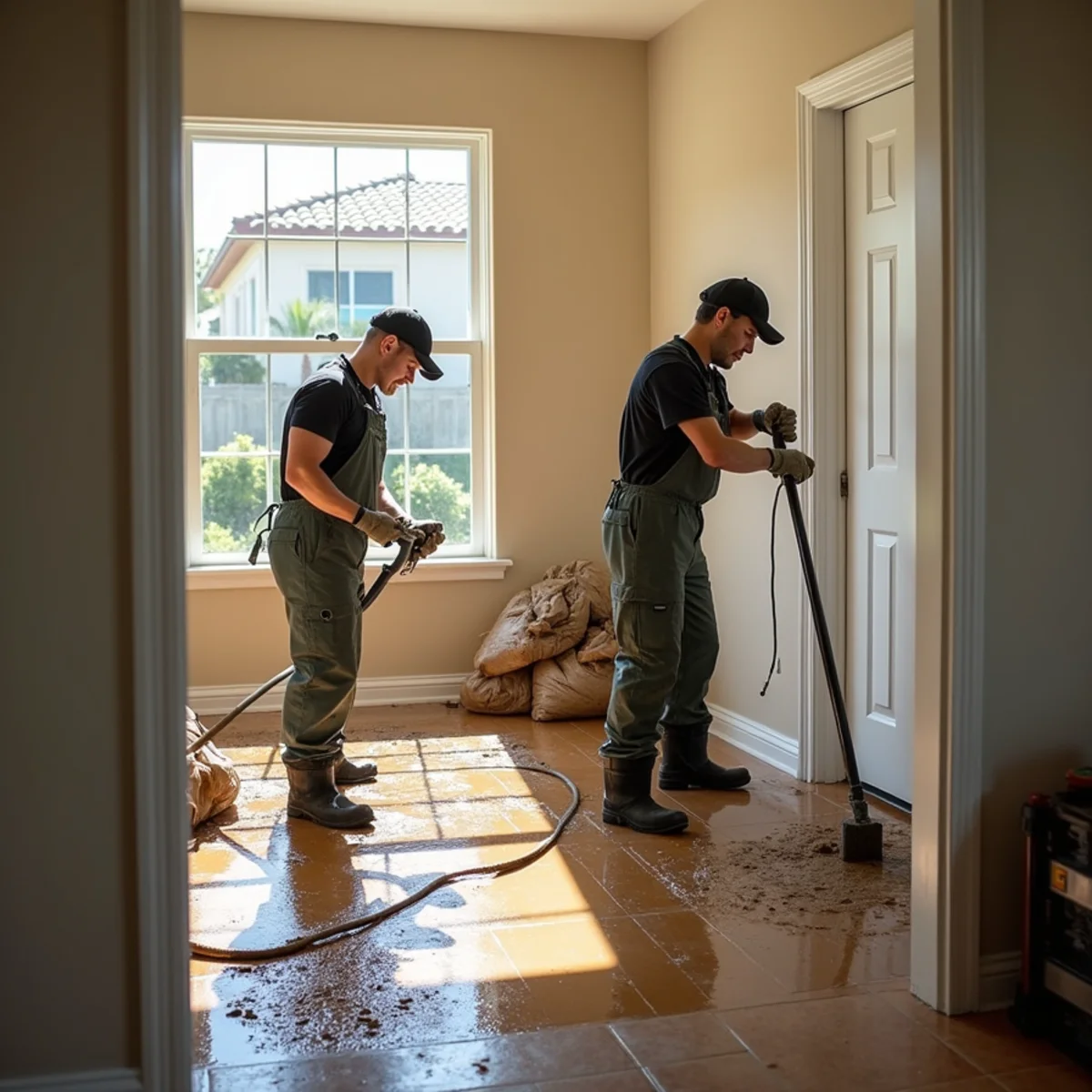
24/7 Emergency · Chino Hills, CA
Flood Cleanup Services in Chino Hills, CA
A flooded home is overwhelming — and the clock is against you. Whether it's storm runoff down a Chino Hills hillside, an interior line that let go while you were out, or water pushing in from outside, the response is the same: get it out, get it clean, get it dry.
Serving Chino Hills & the Inland Empire · Open 24 hours — 7 days a week
Flood water is rarely clean. It picks up soil, bacteria, and whatever it crosses on the way in, so cleanup is as much about sanitizing and safe disposal as it is about drying. We sort what can be saved from what has to go, and we don't guess with your family's health.
When to call for flood cleanup
- Water that entered from outside during a storm or from hillside runoff
- Several inches of standing water across one or more rooms
- Water that has soaked furniture, drywall, and flooring
- Contaminated or muddy water, or an unknown source
- A saturated garage, ground floor, or lower-level room
Our flood cleanup process
Flood recovery is a full muck-out-to-dry sequence, handled safely:
- 1
Assessment & safety
We check for electrical and structural hazards, identify the water category, and set up containment before anyone starts work.
- 2
Water & debris removal
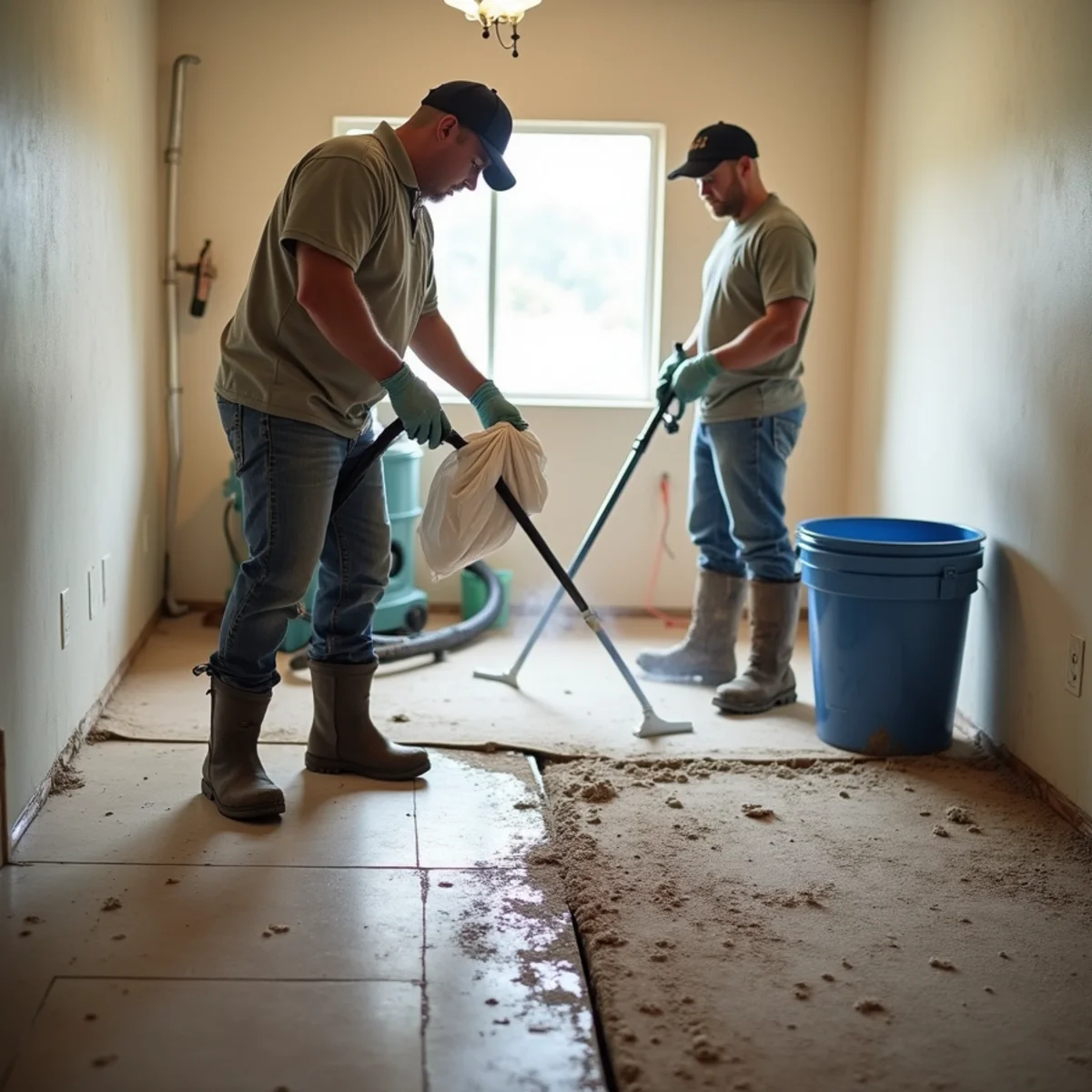
Pumps and extractors clear standing water; we remove mud, debris, and unsalvageable porous materials that trap contamination.
- 3
Cleaning & sanitizing
Every affected surface is cleaned and treated with antimicrobial agents; HEPA air scrubbers control airborne contaminants.
- 4
Drying & dehumidification
We dry the structure to standard with monitored equipment so mold can't follow the flood.
- 5
Restoration
We rebuild what was removed — drywall, flooring, trim — and document the whole loss for your claim.
What affects the cost
Flood cleanup cost depends heavily on contamination and how much has to be removed:
- Water contamination level
- Muddy or sewage-laden flood water requires more disposal, PPE, and disinfection.
- Depth and area flooded
- Inches across a whole floor means more extraction, tear-out, and drying.
- Materials lost
- Porous items that soaked contaminated water — carpet, pad, some drywall — usually can't be saved.
- Structural drying time
- Fully saturated framing and subfloor take longer to bring to dry standard.
We never quote a water loss sight-unseen. Call (201) 277-9344 for an honest, on-site assessment.
Need flood cleanup in Chino Hills?
Tell us what happened — a live person answers any hour and gets a crew moving.
Answering 24/7 60-min response target Licensed & insured
A note on flood insurance
This matters: standard homeowners policies usually cover sudden internal water (a burst pipe) but often exclude external flood water, which requires separate flood insurance. We document the source and cause carefully either way, and we'll walk you through what your policy is likely to cover before the work adds up.
Flood water isn't just wet — it's contaminated
Water that comes from outside the house — hillside runoff, street flooding, a storm surge under the door — picks up whatever it crosses on the way in: soil, fertilizer, oil off the pavement, and often bacteria from storm drains. That makes it fundamentally different from a clean supply-line leak, even when it looks like plain water on your floor. We treat every flood job as contaminated until we know otherwise, which means full protective gear for our crew and a cleanup that includes sanitizing, not just drying.
That matters for your family too. Keep kids and pets out of standing flood water, wash any skin that contacted it, and don't let anyone track it through the rest of the house on shoes or paws. Cuts or scrapes exposed to flood water should be cleaned and watched. None of this is meant to alarm you — it's the same practical caution we use on site, and it's a big part of why flood cleanup includes a disinfection step that a simple leak doesn't need.
The muck-out: what actually happens to the mud and debris
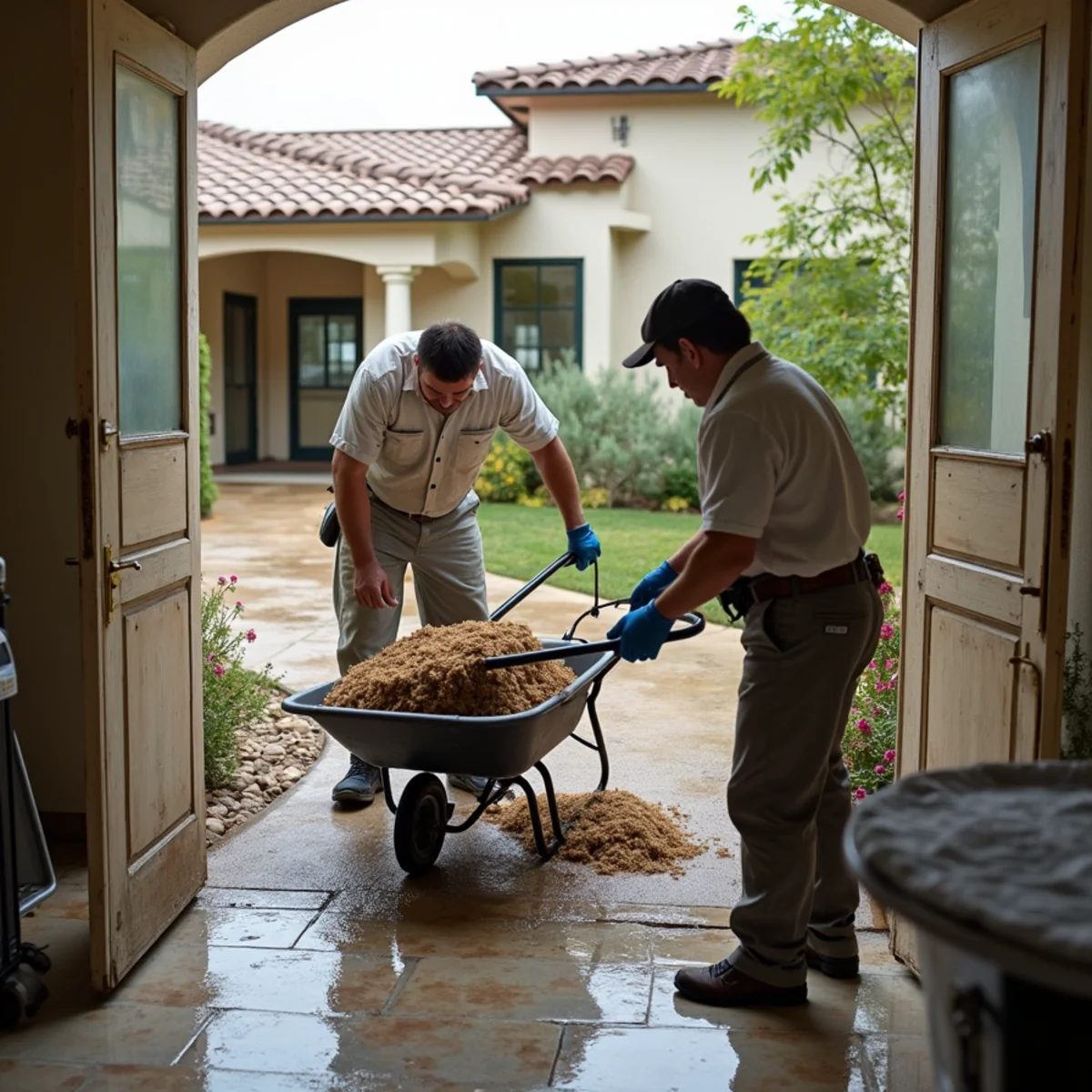
Muck-out is the unglamorous first stage of a flood job — hauling out the silt, debris, and ruined porous materials before any drying equipment goes in. Hillside runoff in Chino Hills often carries a surprising amount of soil and landscaping debris, and that layer has to come out of corners, under cabinet toe kicks, and out of carpet fiber, not just off the visible floor. Skipping ahead to drying with mud still in the walls or flooring just seals contamination in rather than removing it.
Hard surfaces get scrubbed and rinsed, not just wiped, and we sanitize as we go rather than saving it for the end. It's slower than a standard water job, and it looks messier before it looks better — buckets, shovels, and bagged debris headed to the curb are a normal part of day one. Once the muck-out and sanitizing are done, the rest of the process looks like any other drying job: equipment, daily readings, and a dry standard we confirm before we leave.
When to call now versus when it can wait until daylight
If water is actively rising, coming in from outside during an ongoing storm, or anywhere near an electrical panel or outlet, that's a call-now situation, full stop — don't wait for the storm to pass to see how bad it looks. If the water has already receded and what's left is standing in a contained area with no ongoing intrusion, it's still urgent, but you have a little more room to get everyone safe and photograph the scene before we arrive.
The judgment call gets harder with a partial flood — a few inches in a garage overnight, say. Our honest answer: contaminated flood water doesn't get safer by sitting longer, so even a "small" flood is worth a same-day call rather than a wait-and-see. What can genuinely wait is cosmetic cleanup — hosing off a patio, wiping down outdoor furniture. Anything that soaked into carpet, drywall, or your home's structure is on the clock the moment the water stops moving.
Mistakes that make flood cleanup harder than it needs to be
The biggest one is trying to save everything. It's an understandable instinct, but porous items that sat in contaminated flood water — cardboard boxes, upholstered furniture, carpet pad — usually can't be made safe again no matter how thoroughly they're cleaned, and holding onto them just gives mold a place to start. A close second is walking through flood water without boots or gloves, tracking contamination through parts of the house the flood never actually reached. Simple rubber boots and gloves, kept by the door for exactly this reason, stop most of that spread before it starts.
We also see people try to plug in or power up appliances and electronics that got wet, hoping they still work. That's a real safety risk with standing water anywhere nearby, and it can finish off equipment that a proper drying-out might have saved. The other frequent misstep is running the household HVAC to "air things out" while wet insulation or ductwork is still in the mix — that can spread contamination through the vents instead of clearing it. If the air smells off after a flood, leave the HVAC alone and ask us before you flip it back on.
Why Chino Hills chooses us for flood cleanup
When flood cleanup is on the line, the details decide the outcome. Here’s what you get with our local crew:
24/7 live response
A real person answers any hour, with a 60-minute arrival target across Chino Hills.
Licensed, insured & IICRC-certified
A California restoration contractor with trained technicians and full coverage.
Dried to a verified standard
Daily moisture logs prove the job was done right — not dried by guesswork.
Insurance claim advocates
We document the loss and deal with your adjuster directly, Xactimate estimates included.
Local to Chino Hills
We know these hillside slab homes, the hard water, and the Santa Ana storms firsthand.
Where we provide flood cleanup
We’re based in Chino Hills and deliver flood cleanup across the Inland Empire and North Orange County — from Chino Hills and Chino to Diamond Bar, Corona, Yorba Linda, Brea, and the neighborhoods in between. Fast local dispatch means the water spreads less and your loss stays smaller.
Flood Cleanup FAQs
Is it safe to stay in my flooded house?
What can be saved after a flood?
Does my homeowners insurance cover flooding?
My kids and pets were walking through the flood water before you arrived — should I be worried?
How is flood cleanup different from a regular water damage job?
Do you haul away and dispose of the ruined furniture and debris, or is that on me?
Related Services
Need flood cleanup in Chino Hills?
Our Chino Hills crews are on call 24/7 with a 60-minute response target. Call now or request your free estimate.