
Prevention
When to Replace Washing Machine Hoses, Water Heaters, and Supply Lines (The Ages That Matter)
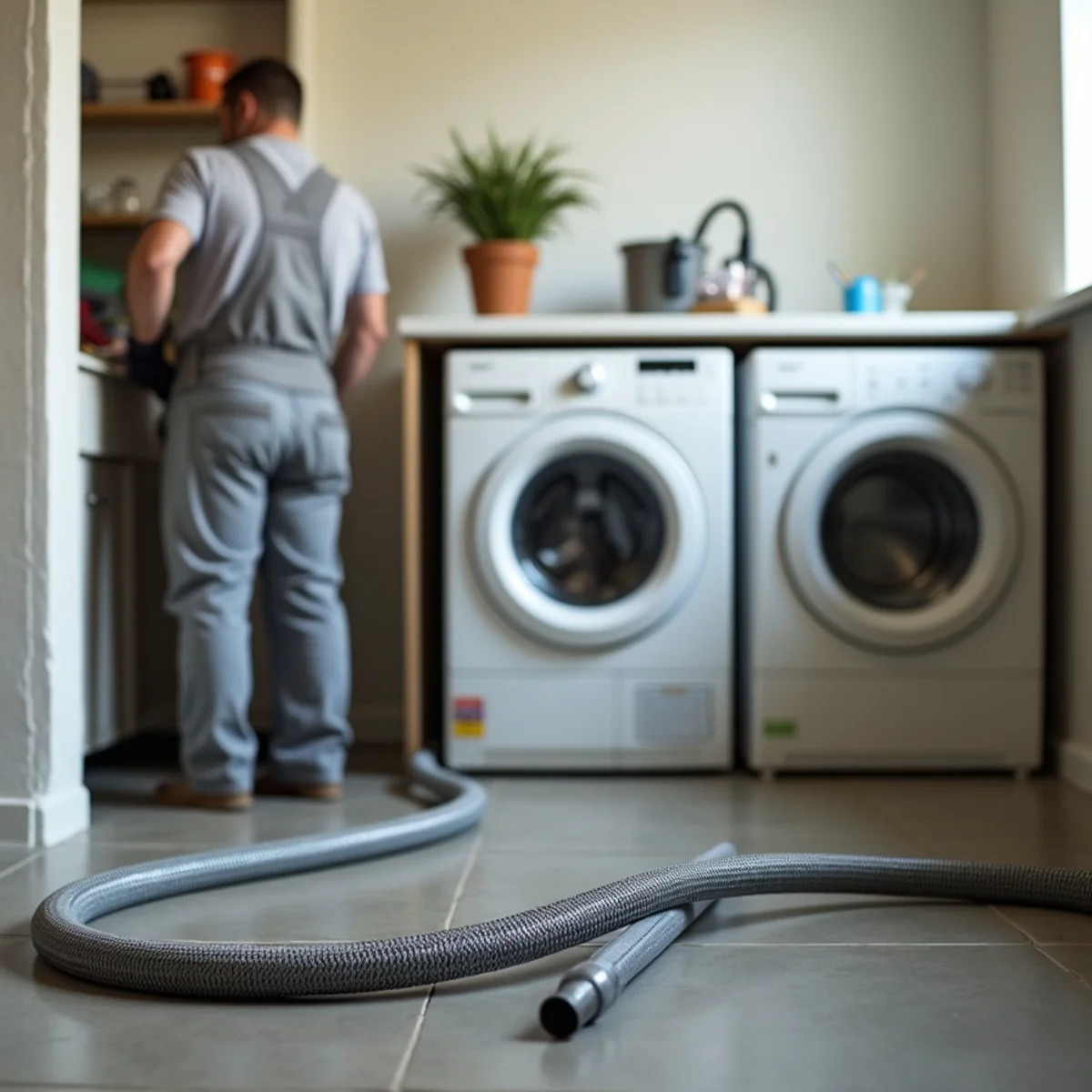
Most of the floods we clean up in Chino Hills don't start with a dramatic pipe burst behind a wall. They start with a part that was original to the house, well past its realistic service life, and finally gave out — a rubber washing machine hose, a water heater that had quietly been corroding from the inside for a decade, or an angle stop under a sink nobody had touched since the home was built. None of these failures are surprising once you know the ages involved.
The fix isn't complicated. A handful of components in every home have a predictable window before failure risk climbs sharply, and replacing them on a schedule — instead of waiting for them to fail — is one of the cheapest insurance policies available to a homeowner. Here's the age-based calendar worth following.
Washing machine hoses: 3–5 years for rubber, longer for braided steel
The two black rubber hoses behind a washing machine stay under full household water pressure 24 hours a day, whether or not the machine is running. That constant pressure is what makes them one of the most common sources of sudden, high-volume flooding in a house. Standard rubber hoses have a realistic service life of about 3 to 5 years before the rubber starts to degrade from the inside, and most manufacturers now recommend replacing them on that schedule regardless of how they look on the outside.
The upgrade worth making is braided stainless-steel supply hoses. They cost only a little more than rubber, resist bursting under the same sustained pressure, and hold up for considerably longer — many homeowners treat a braided-hose swap as a one-time fix rather than a recurring maintenance item. If your washer still has its original builder-installed rubber hoses, that's the single highest-value five-minute project you can knock out this weekend.
Water heaters: the 8–12 year window
A residential water heater holds 40 to 50 gallons, and when the tank finally corrodes through, that entire volume ends up on the floor — usually in a garage or closet, and often while nobody's home to catch it early. Most tanks in this region last somewhere between 8 and 12 years, and hard Inland Empire water shortens that window by leaving mineral sediment that accelerates corrosion from the inside of the tank.
You don't have to guess where your water heater falls in that range. The manufacture date is usually encoded in the serial number on the rating label near the top of the tank, and once a unit passes year eight, it's worth budgeting for replacement rather than waiting for a rupture to force the decision. Annual tank flushing to clear out sediment buildup can stretch the working life somewhat, but it doesn't stop the clock entirely. If yours has already let go, our water heater leak cleanup team can tell you exactly how far the water traveled before anything gets repaired or replaced.
Angle stops and supply lines: the parts everyone forgets
Every sink, toilet, and appliance in the house has a small shut-off valve — an angle stop — feeding it, plus a short supply line connecting the valve to the fixture. These are easy to ignore because they're small, usually hidden behind or under something, and rarely touched between the day the house was built and the day one fails. Older multi-turn compression valves are especially prone to seizing up or weeping around the stem after 10 or more years of sitting untouched.
A good rule: if you can't remember the last time you turned a given angle stop, that's a sign to test it. Turn each one a quarter turn and back, once a year, so you know it still functions and isn't leaking around the packing nut. Braided stainless supply lines on toilets and sinks are worth the same upgrade logic as washing machine hoses — cheap insurance against the flexible rubber or plastic lines that came standard in older construction.
Toilet fill valves and flappers: the slow leak nobody notices
These don't cause floods the way a burst hose does, but a worn flapper or a fill valve that won't fully shut can run water continuously for weeks, quietly driving up your water bill. Toilet fill valves typically hold up for 4 to 5 years before the internal seals degrade enough to cause a slow leak or a tank that keeps running. If you hear your toilet cycling on its own with no one using it, that's worth a look before it turns into a bigger problem.
A simple replacement calendar worth keeping
- Every year: Test angle stops and the main shut-off valve; flush the water heater tank if your model allows it.
- Every 3–5 years: Replace rubber washing machine hoses (or upgrade once to braided steel and skip this cycle going forward).
- Every 4–5 years: Check toilet fill valves and flappers for wear.
- At year 8: Start budgeting for water heater replacement, and have it inspected annually from here on.
- At year 10+: Replace aging angle stops and supply lines proactively, especially compression-style valves that have never been touched.
Why this matters more in hard-water areas like Eastvale
Water hardness varies across the Inland Empire, and homes in harder-water pockets — including Eastvale — see faster mineral buildup inside water heater tanks and around valve seats and washers. That accelerates the exact failure modes this schedule is designed to catch early. If you're on a known hard-water supply, or you notice heavy scale on faucet aerators and showerheads, it's worth shortening these intervals rather than stretching them.
When the schedule comes too late
If a hose, heater, or supply line has already failed and water is spreading, none of this maintenance advice matters right now — get the water shut off first. Once it's stopped, the real question is how far the water traveled before anyone caught it, since carpet pad, baseboards, and subfloor can hold moisture long after the surface looks dry. A professional crew checks that with moisture meters rather than guesswork, and ours runs 24/7 across Chino Hills and the surrounding cities.
Not sure how old your water heater or hoses are, or dealing with a failure right now? Call (201) 277-9344 — we can talk you through it or get a crew moving immediately.
Frequently asked questions
How do I know how old my water heater is?
Do braided stainless-steel hoses ever fail?
Is it worth replacing angle stops that aren't leaking?
Water Damage Chino Hills
A local, IICRC-certified restoration team serving Chino Hills and the Inland Empire 24/7. Water damage right now? Call (201) 277-9344.