
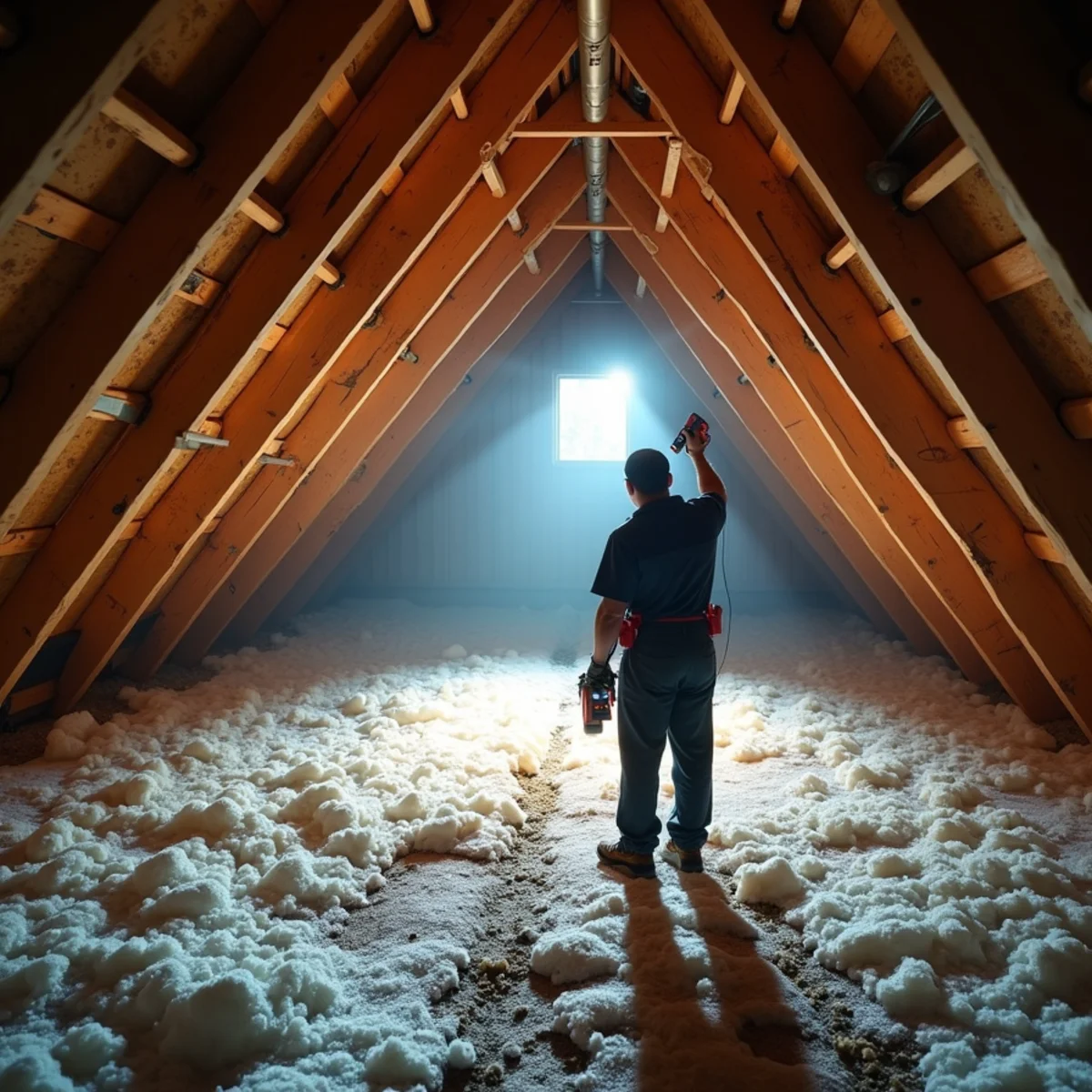
24/7 Emergency · Chino Hills, CA
Roof Leak Water Damage Restoration in Chino Hills, CA
Roof leaks in Chino Hills usually trace back to wind and rain working together — Santa Ana gusts lift or crack shingles and tiles in the fall, then the first winter storms find every opening. Water runs down the framing, soaks the attic insulation, and shows up as a ceiling stain sometimes far from the actual leak.
Serving Chino Hills & the Inland Empire · Open 24 hours — 7 days a week
We stop the intrusion with emergency tarping, dry the attic and ceilings to standard, and restore the interior damage — then coordinate the roof repair so it doesn't come back with the next storm.
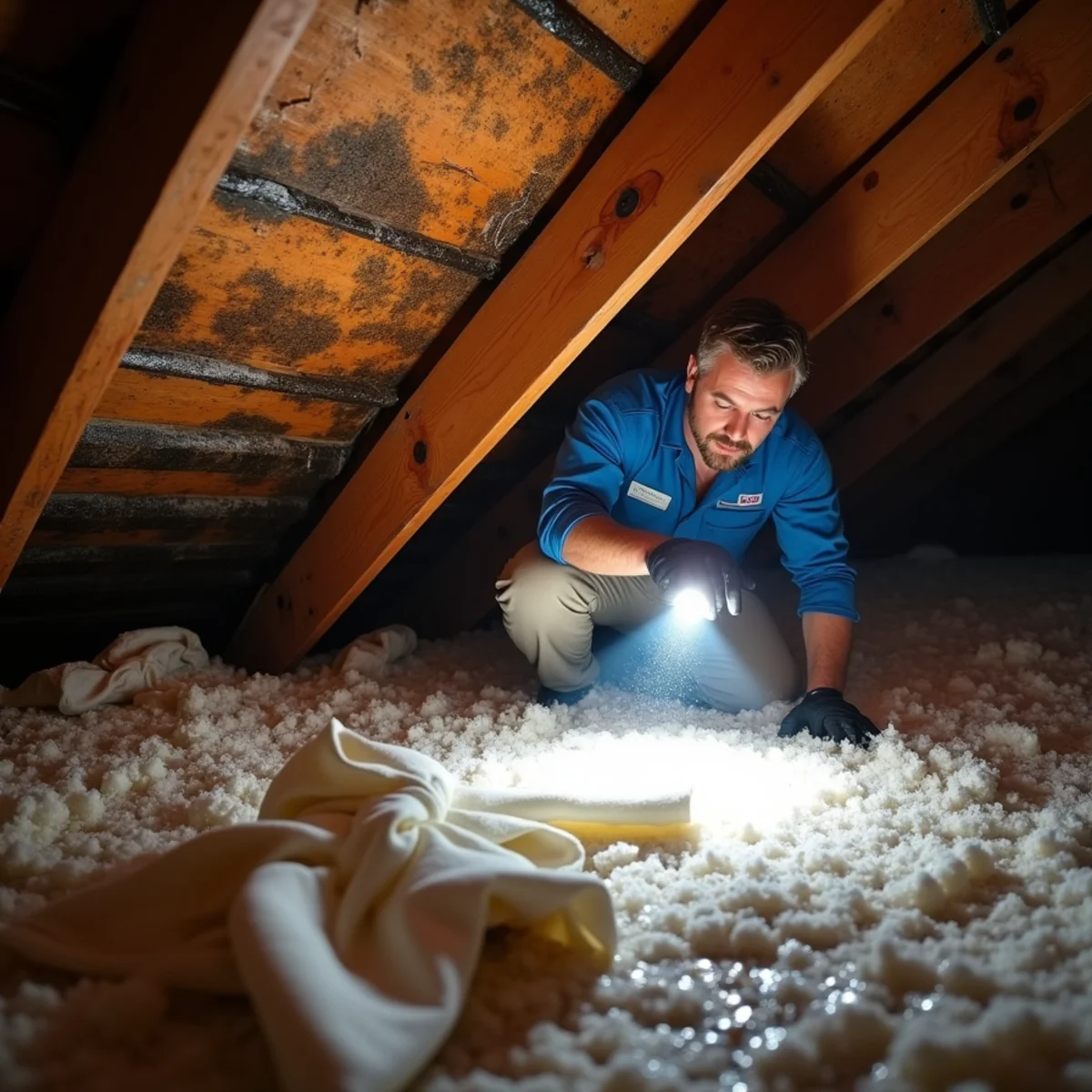
Roof leak signs inside the home
- Water stains or active drips on a ceiling, especially after rain
- Damp or matted attic insulation
- Peeling paint or bubbling on an upstairs ceiling or wall
- A musty smell in the attic or top-floor rooms
- Daylight or water marks visible on the underside of the roof deck
Our roof leak damage process
Roof-leak restoration handles the inside while stopping the outside:
- 1
Emergency tarping
We tarp the compromised roof to stop water coming in while permanent repairs are arranged.
- 2
Attic & ceiling drying
Wet insulation is removed where needed; the attic, ceiling cavity, and walls are dried to standard.
- 3
Interior restoration
Stained or damaged drywall and paint are repaired and the stain sealed so it won't bleed through.
- 4
Roof repair coordination
We coordinate the roofing fix and document the loss for your insurance claim.

What affects the cost
Roof-leak restoration cost tracks:
- Interior spread
- How far water traveled through the attic, ceilings, and walls sets the drying and repair scope.
- Insulation damage
- Saturated attic insulation usually has to be removed and replaced.
- Emergency tarping
- Stopping active intrusion is an immediate first step, separate from the repair.
- Ceiling finish
- Matching texture and paint on a restored ceiling adds finishing labor.
We never quote a water loss sight-unseen. Call (201) 277-9344 for an honest, on-site assessment.
Need roof leak damage in Chino Hills?
Tell us what happened — a live person answers any hour and gets a crew moving.
Answering 24/7 60-min response target Licensed & insured
Common entry points beyond missing shingles
A roof doesn't need obvious damage to leak. Flashing around skylights, chimneys, and vent pipes is one of the most common failure points we find, because it relies on caulking and metal seams that degrade quietly over years of sun and wind rather than an obvious event like a missing shingle. A roof that looks completely intact from the driveway can still be letting water in at one of these transition points during a hard, wind-driven rain off the hills.
Nail pops, cracked pipe boots around vent stacks, and gaps where two roof planes meet are the other usual suspects, and they're often on a section of roof that's otherwise in good condition. That's why, when we're tracing a leak, we don't stop at "the shingles look fine" — we check every penetration and transition on the roof, because that's statistically where most leaks that don't match any visible surface damage actually turn out to start from. A five-minute check up there can save days of guessing at the ceiling stain down below.
What happens to attic insulation once it's wet
Wet insulation doesn't just need to dry — in a lot of cases it needs to be replaced, because saturated fiberglass batt compresses and mats down in a way that permanently reduces how well it insulates, even once it's technically dry again. Blown-in insulation behaves a little differently and sometimes recovers better if it wasn't soaked for long, but both types lose some effectiveness, and both give mold a place to grow on the underside of the roof deck if left wet too long.
We check the insulation type, how saturated it actually got, and how long it sat before deciding what to recommend — not a blanket rule that any wet insulation automatically gets replaced. Lightly damp blown-in that's caught quickly sometimes just needs to dry in place. Fully soaked batt insulation almost always needs to come out, since it rarely regains its original loft once compressed. Either way, you'll get a straight answer about which one applies to your attic and what it means going forward.
Active drip versus an old stain: how urgent is your roof leak
Water actively coming through a ceiling during a storm is always a call-now situation — get a container under it, move anything valuable out of the way, and call while it's still happening so we can tarp before the next round of rain. A stain that appeared after a past storm but isn't currently dripping, with no new water since, has more flexibility; it still needs attention, but a next-day inspection is usually reasonable rather than an after-hours emergency crew.
Where it gets trickier is a stain that only appears during certain storms and seems to dry out between them. That pattern doesn't mean it's not serious — it usually means water is finding a specific path only under certain wind directions or rainfall intensities, and it's still doing damage every time it happens, even if the ceiling looks fine in between. If it's happened more than once, treat the next storm as the deadline, not something to wait out indefinitely.
Working through your home without adding a second mess
Getting to a roof leak from the inside usually means going through an attic hatch, which is often in a hallway or closet ceiling. We protect the floor along that path and lay drop cloths below the hatch, since attic insulation and debris tend to fall the moment that access panel opens, whether or not we're the ones who bump it. That first look is also when we get our clearest read on how far water traveled across the joists, so we treat it as an inspection step, not just a way in.
If we need to open the ceiling below the leak to dry the cavity or assess the framing, that work gets its own containment — plastic sheeting, sealed off from the rest of the room — so dust and debris from the ceiling don't settle on your furniture and flooring while we're up there. Outside, tarping work stays contained to the roof and the immediate work area, and we're careful with landscaping and gutters while ladders and equipment are in place.
Why Chino Hills chooses us for roof leak damage
When roof leak damage is on the line, the details decide the outcome. Here’s what you get with our local crew:
24/7 live response
A real person answers any hour, with a 60-minute arrival target across Chino Hills.
Licensed, insured & IICRC-certified
A California restoration contractor with trained technicians and full coverage.
Dried to a verified standard
Daily moisture logs prove the job was done right — not dried by guesswork.
Insurance claim advocates
We document the loss and deal with your adjuster directly, Xactimate estimates included.
Local to Chino Hills
We know these hillside slab homes, the hard water, and the Santa Ana storms firsthand.
Where we provide roof leak damage
We’re based in Chino Hills and deliver roof leak damage across the Inland Empire and North Orange County — from Chino Hills and Chino to Diamond Bar, Corona, Yorba Linda, Brea, and the neighborhoods in between. Fast local dispatch means the water spreads less and your loss stays smaller.
Roof Leak Damage FAQs
The stain is in one spot but you're checking the whole attic — why?
Can you handle both the inside and the roof?
My roof looks fine from the ground — why is water still getting in?
Does wet attic insulation need to be replaced, or can it just dry out?
Can wet attic insulation be dried, or does it need replacing?
Will you check my gutters and downspouts as part of the roof leak inspection?
Related Services
Need roof leak damage in Chino Hills?
Our Chino Hills crews are on call 24/7 with a 60-minute response target. Call now or request your free estimate.