
24/7 Emergency · Chino Hills, CA
Leak Detection Services in Chino Hills, CA
Some of the worst water damage comes from leaks you never see — a line inside a wall, under the slab, or out in the yard, quietly soaking the structure for weeks. If your water bill jumped, you hear running water with everything off, or a spot on the floor is warm, you may have a hidden leak.
Serving Chino Hills & the Inland Empire · Open 24 hours — 7 days a week
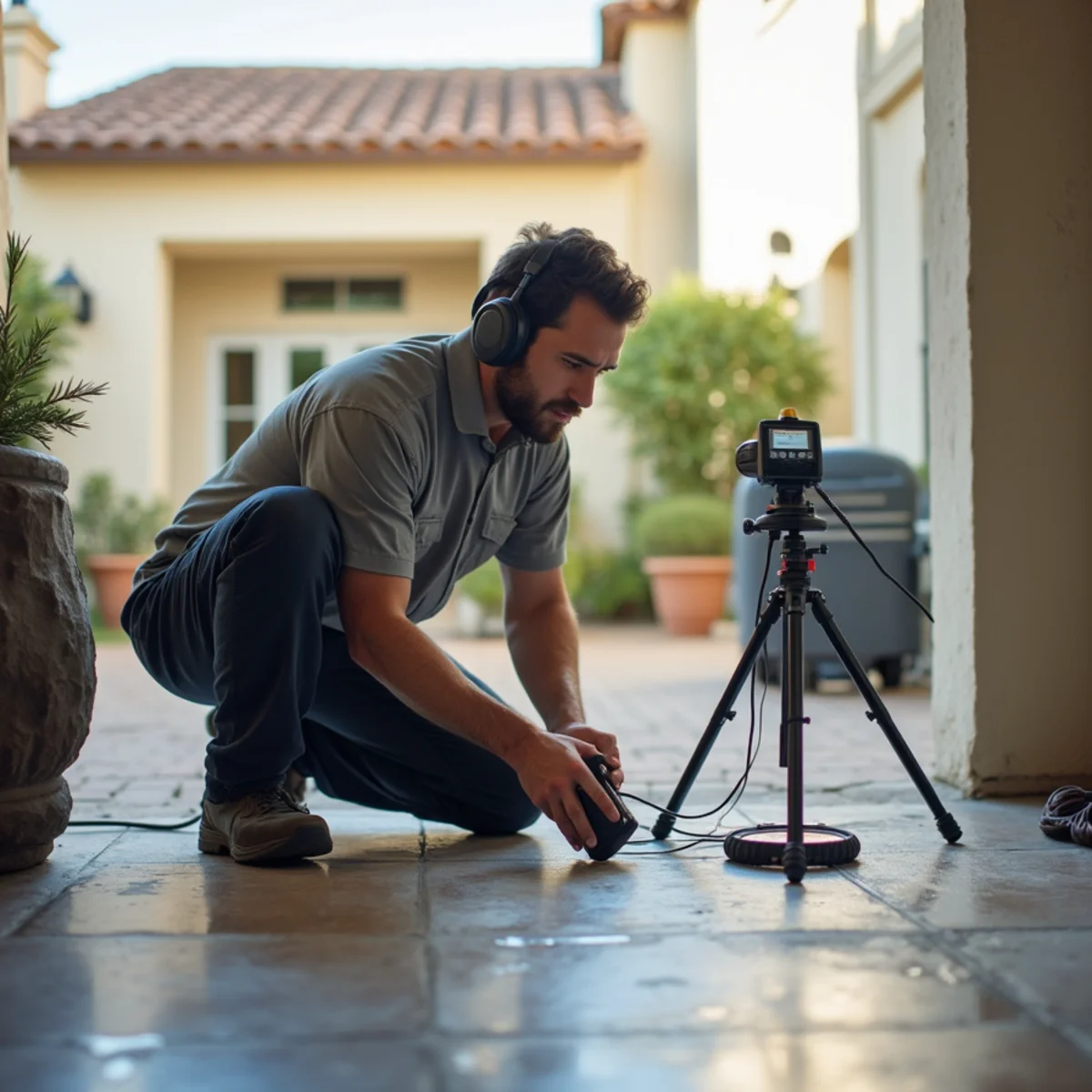
We locate leaks without tearing your home apart. Acoustic sensors, thermal imaging, and pressure testing let us pinpoint the source first, so any opening is small and precise — then we coordinate the repair and dry out the damage the leak already caused.
Signs of a hidden leak
- A water bill that climbed with no change in usage
- The sound of running water when everything is shut off
- A warm spot on the floor (a hot-water slab leak)
- Damp, discolored, or bubbling drywall with no obvious source
- Low water pressure, or a water meter that spins with all taps off
- Mildew smell or persistent moisture in one area
Our leak detection process
Detection is about precision — find it exactly before opening anything:
- 1
Interview & meter check
We review the symptoms and check the water meter for movement with fixtures off to confirm an active leak.
- 2
Non-invasive location
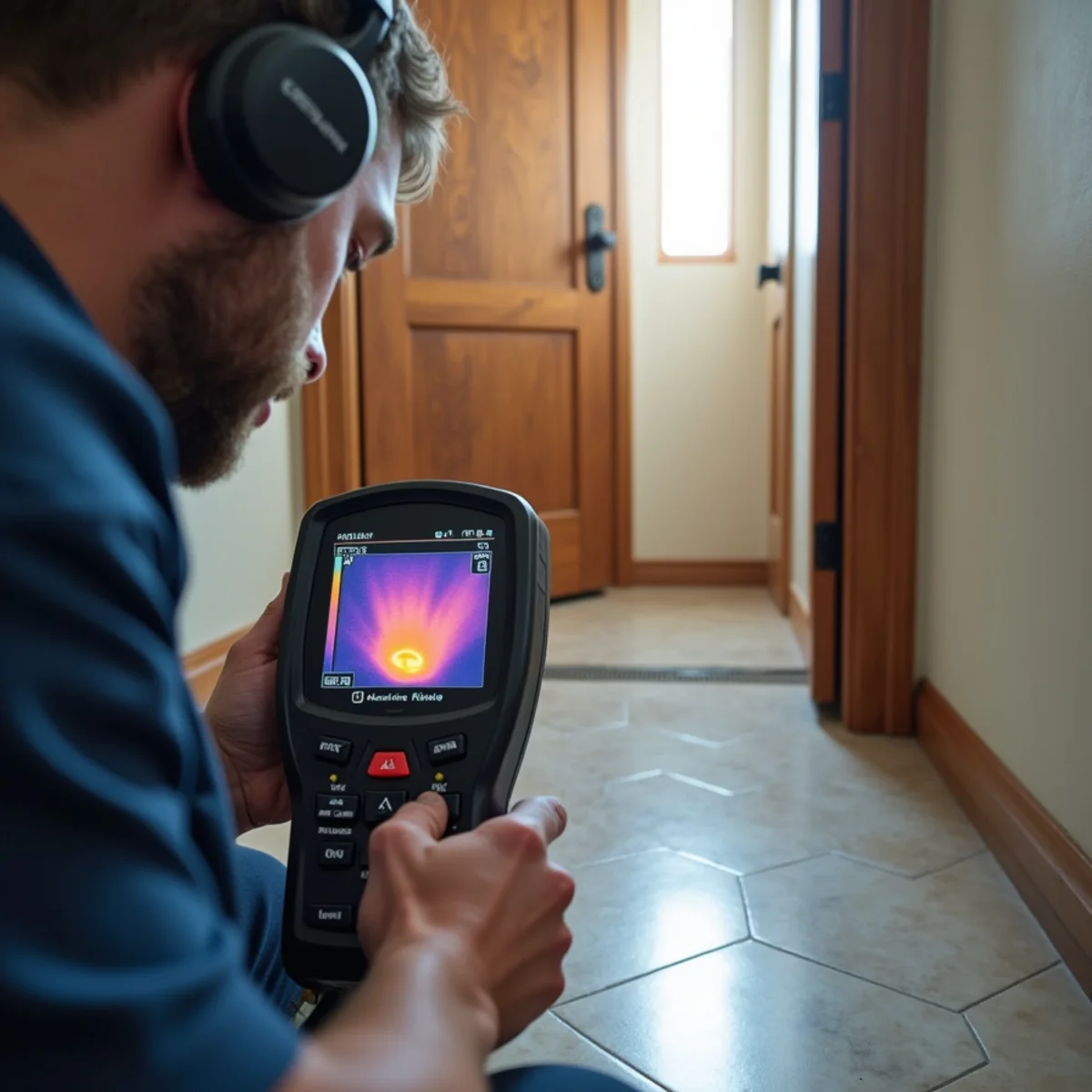
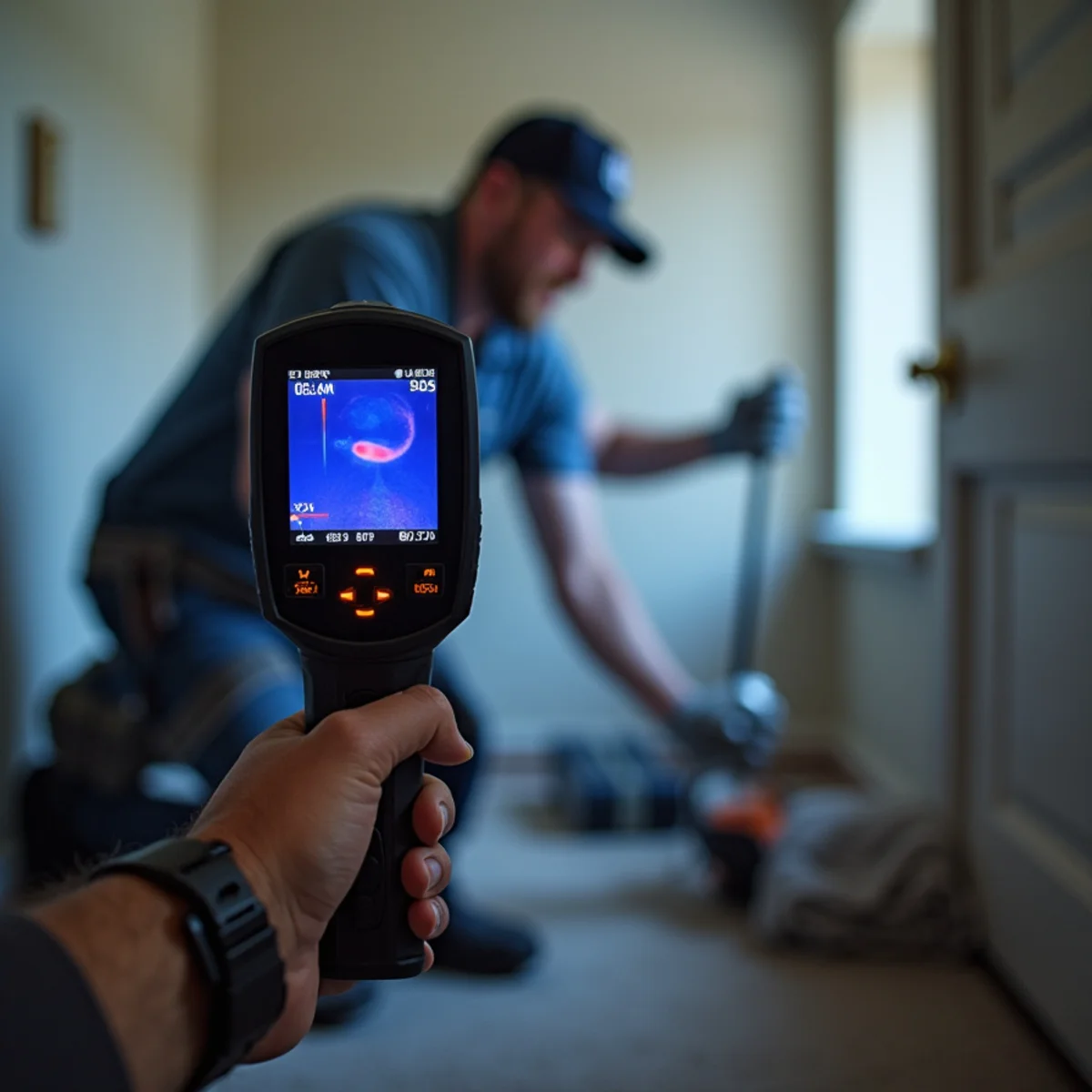
Acoustic listening equipment, thermal cameras, and moisture meters narrow the leak to a precise spot.
- 3
Pressure testing
Where needed, we isolate and pressure-test lines to distinguish supply leaks from drain leaks.
- 4
Repair coordination & drying
We pinpoint access, coordinate the plumbing repair, and dry out the water damage the leak caused.
What affects the cost
Leak detection scope depends on the type and location:
- Leak type
- Supply, drain, and slab leaks call for different detection methods and time.
- Location & access
- A leak under a slab or in a second-story wall is harder to isolate than an exposed line.
- Extent of existing damage
- A leak that ran for weeks means more drying and repair on top of detection.
We never quote a water loss sight-unseen. Call (201) 277-9344 for an honest, on-site assessment.
Need leak detection in Chino Hills?
Tell us what happened — a live person answers any hour and gets a crew moving.
Answering 24/7 60-min response target Licensed & insured
The damage a hidden leak causes before you ever call
A leak inside a wall or under a slab doesn't announce itself. By the time a stain appears, a floor feels warm, or the water bill finally gets your attention, water may have been wicking into subfloor, framing, or drywall for weeks. That's the frustrating part of hidden leaks — the damage started long before there was anything to see, and mold doesn't wait for you to notice a symptom before it gets started in a wall cavity that's been damp the whole time.
That's exactly why we treat detection and damage assessment as one visit, not two separate problems. Once we pinpoint the leak, we check how far the moisture already traveled — up the wall, under adjoining flooring, into a neighboring room — because the leak itself is often the smaller part of the job by the time it's found. Catching it today still stops it from getting worse tomorrow, even if some drying and repair is already needed for what already happened.
Not every hidden leak is plumbing
A warm spot, a running-water sound, or a damp wall doesn't automatically mean your supply line. Irrigation lines, pool or spa equipment, HVAC condensate drains, and even a neighboring unit in a townhome or condo can produce the same symptoms as a slab or wall leak. We rule sources in and out with the water meter, pressure testing, and acoustic equipment before pointing at a specific pipe, because a wrong guess means opening the wrong wall or slab for nothing.
This matters most in attached housing, common throughout Chino Hills' townhome communities, where water can migrate from a shared wall or the unit above without your own plumbing being the source at all. When that's a possibility, we say so plainly rather than assuming it's your pipe, and we document what we find so the conversation with a neighbor or HOA starts from evidence, not guesswork. We'll tell you when the honest next step is involving them, or a different specialist, instead of digging into your own walls for something that isn't there.
Deciding if a suspected leak is urgent
A warm spot on the floor that's been there for months and isn't spreading is worth scheduling detection soon, not panicking over tonight. A warm spot that's new, growing, or paired with dropping water pressure or a spiking bill is a different story — that combination usually means an active leak losing real volume, and it's worth calling same-day. The signal we watch closest is sound: running water you can hear with every fixture off means it's moving right now.
If you're not sure, the water meter settles it in fifteen minutes. Shut off every fixture and appliance, note the meter reading, wait, then check it again. Any movement means water is going somewhere it shouldn't, and that's worth a same-day call regardless of how minor the visible symptoms look. No movement doesn't rule out every kind of leak, but it usually means you have at least a day or two to schedule rather than an emergency tonight. Write the two readings down before you call — it's the first thing we'll ask about.
How leak patterns differ between older copper and newer PEX plumbing
Chino Hills homes from the 1980s and '90s were mostly plumbed in copper, and copper fails in a specific way: pinhole corrosion from the inside out, often after decades of exposure to hard Inland Empire water. Those leaks tend to be small and slow at first, which is exactly why they're often already extensive by the time a homeowner notices — a small, steady leak is quieter on a meter and easier to miss for weeks than a sudden failure.
Newer homes plumbed in PEX behave differently — the tubing itself rarely corrodes, but the fittings, manifolds, and connection points are where leaks tend to show up instead. That means detection on a newer home is often less about scanning open runs of pipe and more about checking every connection systematically. We adjust our approach based on what's actually running through your walls, not a generic leak-detection routine applied the same way to every house. Knowing which era of plumbing we're dealing with before we even open our equipment case saves real time on the inspection.
Why Chino Hills chooses us for leak detection
When leak detection is on the line, the details decide the outcome. Here’s what you get with our local crew:
24/7 live response
A real person answers any hour, with a 60-minute arrival target across Chino Hills.
Licensed, insured & IICRC-certified
A California restoration contractor with trained technicians and full coverage.
Dried to a verified standard
Daily moisture logs prove the job was done right — not dried by guesswork.
Insurance claim advocates
We document the loss and deal with your adjuster directly, Xactimate estimates included.
Local to Chino Hills
We know these hillside slab homes, the hard water, and the Santa Ana storms firsthand.
Where we provide leak detection
We’re based in Chino Hills and deliver leak detection across the Inland Empire and North Orange County — from Chino Hills and Chino to Diamond Bar, Corona, Yorba Linda, Brea, and the neighborhoods in between. Fast local dispatch means the water spreads less and your loss stays smaller.
Leak Detection FAQs
How do you find a leak without breaking walls?
Do you fix the leak too?
How do I know if it's a slab leak?
What if you can't find the leak on the first visit?
My water bill jumped but I don't see any damage yet — could there still be a leak?
Do you give us a written report of exactly where the leak is, for our plumber or insurance company?
Related Services
Need leak detection in Chino Hills?
Our Chino Hills crews are on call 24/7 with a 60-minute response target. Call now or request your free estimate.