
How It Works
Why Shop-Vaccing a Flooded Carpet Isn't Enough (What Professional Extraction Pulls Out)
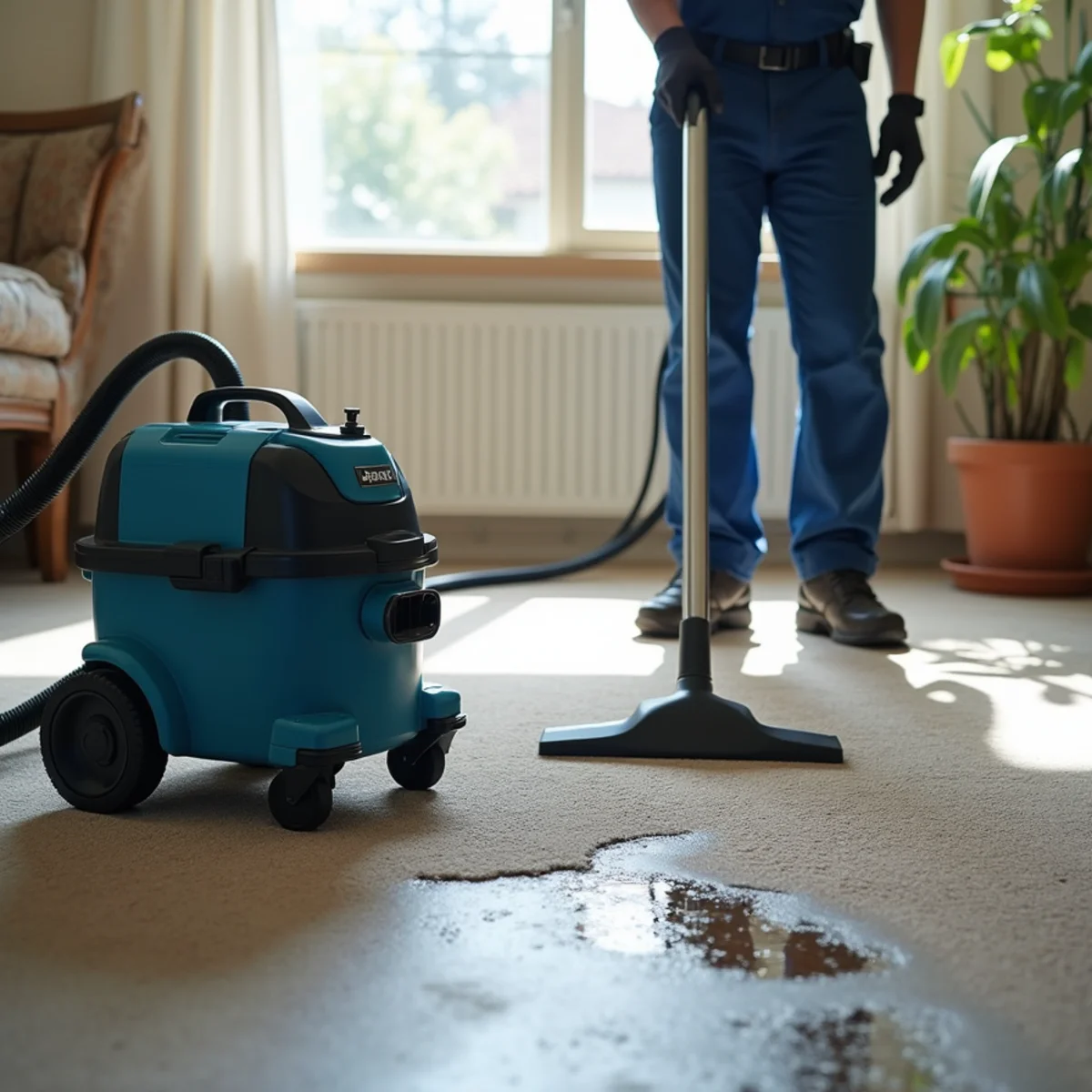
The instinct after a supply line lets go or a water heater dumps its tank is to grab whatever's in the garage — a wet/dry shop vac, a mop, a stack of towels — and start pulling water off the carpet. That's not a bad first move. But if the carpet stayed wet for more than an hour or two, a shop vac has already reached its limit, and what's left behind is exactly what causes the expensive problems down the road.
Here's what a shop vac actually removes, what professional water extraction pulls out that it can't, and how to tell which situation you're in.
What a Shop Vac Can and Can't Reach
A wet/dry shop vac is built to lift standing water off a hard surface or skim the top layer off carpet fiber. What it isn't built for is pulling moisture out of carpet backing, the padding underneath, or the subfloor beneath that. Carpet padding is essentially a sponge — foam or fiber cushion designed to hold its shape under foot traffic, which also makes it very good at holding onto water once it's saturated. A shop vac's suction, run across the surface, skims the fibers and leaves the pad doing exactly what it was built to do: hold moisture.
There's also a safety issue worth naming directly: running any vacuum near outlets or a wet electrical cord is a real electrocution risk. If there's any question about power in the room, that gets shut off at the breaker before anyone touches a vacuum to the floor.
Why Carpet and Pad Hold So Much More Water Than They Look Like They Do
A soaked carpet-and-pad system can hold several times its dry weight in water, most of it invisible once the surface stops looking wet. That water doesn't stay put, either — it wicks sideways through the pad and up into the tack strip, baseboards, and the bottom few inches of drywall, extending the affected area well past where the water first landed. This is why a room can look dry a day after a leak and still be actively damaging the structure underneath.
What Professional Extraction Equipment Does Differently
Truck-mounted and portable extraction units generate far more vacuum lift than a shop vac, and the tools built specifically for carpet — weighted extraction wands and walk-behind extractors — press down on the carpet as they pull, forcing water out of the pad rather than just skimming what's sitting on top of the fibers. A technician will typically make several passes in overlapping directions, because a single pass never gets everything the pad is holding. On a real loss, this is the difference between removing gallons of water and removing a fraction of a gallon.
Why the Pad Is Usually the Real Decision Point
Carpet itself often survives a clean-water event if it's extracted and dried quickly. The pad is a different story. Once it's saturated, padding is slow to release moisture even under strong airflow, and if the water sat for more than a day or came from a contaminated source, the pad is one of the first things removed rather than dried — it's cheap to replace and expensive to gamble on. A restorer will pull back a corner of carpet, check the pad's condition and how long it's been wet, and make that call before drying equipment ever goes in.
Verifying With a Meter, Not a Guess
After extraction, the carpet may feel dry to a bare foot and still be holding significant moisture in the pad or subfloor. Moisture meters — pin-type for direct readings, non-penetrating for scanning larger areas — tell us what's actually happening under the surface, and that reading is what determines whether the room needs a few days of structural drying equipment or is genuinely finished. Guessing by feel is how homes end up with mold growing under carpet that looked fine.
What Happens If You Stop at the Shop Vac
The risk isn't dramatic in the first day or two — it shows up about a week later as a musty smell, a soft spot underfoot, or a stain creeping up the baseboard. Mold can begin colonizing damp organic material within 24 to 48 hours, and a shop-vacced carpet with a still-wet pad underneath is exactly the environment it needs. By the time it's visible, the fix usually costs a lot more than professional extraction would have on day one.
When to Call Instead of DIY-ing It
A small spill you caught immediately is fine to handle yourself. Anything that covered more than a small area, sat for more than an hour, came from an appliance or a backed-up drain, or reached the pad is worth a professional look — even just to check the pad and confirm the room is actually dry. We see this exact call regularly in homes throughout Brea, where a lot of housing stock has carpet laid directly over slab, and slab means there's nowhere for wicked moisture to go but sideways and up.
If you've got a flooded carpet right now, don't wait to see how it looks tomorrow. Call Water Damage Chino Hills at (201) 277-9344 — we run trucks 24/7 and can get real extraction equipment on your floor before the pad becomes a total loss.
Frequently asked questions
Is it ever okay to use a shop vac on a small spill?
How do I know if the pad under my carpet is still wet?
Can wet carpet always be saved?
Water Damage Chino Hills
A local, IICRC-certified restoration team serving Chino Hills and the Inland Empire 24/7. Water damage right now? Call (201) 277-9344.