
How It Works
Black Mold vs. Mildew: How to Tell the Difference and When to Call a Pro
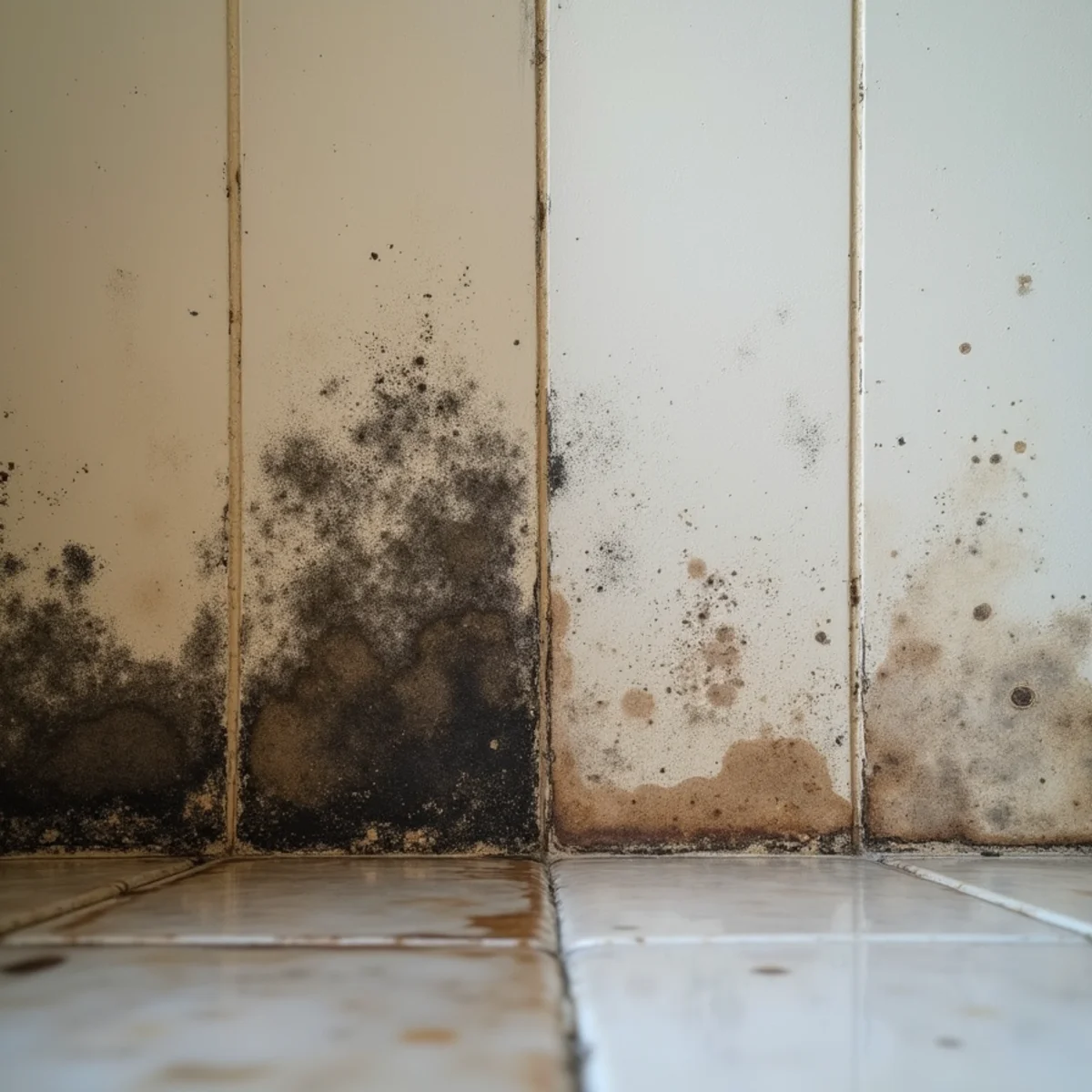
A dark ring around the shower grout, a black speck on the window sill, a smudge on the bathroom ceiling — the first thought is almost always "black mold." Most of the time, it isn't. It's mildew, a much more common and far less serious surface fungus, and mixing the two up means you either panic over something a spray cleaner handles in ten minutes, or you underestimate something that actually needs a professional.
Here's how to tell them apart, and how to know which situation you're actually looking at.
What mildew is
Mildew is a surface-level fungus that feeds on moisture and the thin film of soap scum, skin oils, or organic dust that builds up on damp surfaces. It's common anywhere humidity sits — shower tile, grout lines, window tracks, a bathroom ceiling with weak ventilation. Mildew typically looks powdery or flat, ranging from white or gray to light black or yellow, and it stays on the surface rather than growing into the material underneath it.
What mold actually is
"Mold" is a broad term covering hundreds of species, including the notorious Stachybotrys chartarum that people mean when they say "black mold." Unlike mildew, mold grows into porous materials — drywall paper, wood, carpet backing — not just on top of them. It usually needs a more sustained moisture source than surface humidity, which is why it tends to show up after an actual water event: a slow leak, a flood that wasn't fully dried, chronic condensation inside a wall. Mold tends to look fuzzy, slimy, or raised, in darker greens and blacks, and it spreads in irregular blotches rather than a uniform film.
A simple way to tell them apart
Texture and response are the two best clues. Mildew is flat and powdery, and a damp cloth or diluted cleaner usually wipes it away without staining. Mold is often fuzzy or slightly raised, and wiping it tends to smear the color rather than remove it, because the growth extends below the surface you're touching. Smell matters too — a persistent musty odor, especially one that's stronger in one specific area or gets worse when the AC or heater runs, points toward mold with a moisture source feeding it from somewhere you can't see.
Where each one tends to show up
Mildew sticks to places with routine humidity and little else: shower surrounds, grout, window tracks that collect condensation, a bathroom ceiling above a shower that runs hot without a fan. Mold shows up where there's been an actual water problem — behind a baseboard after a slow leak, under carpet that stayed damp, around a water heater or appliance connection that's been seeping, or inside a wall cavity fed by a hidden pipe. If you're finding dark growth somewhere with no obvious humidity source, the real question isn't "is this mold or mildew" — it's "where is the water coming from," which is exactly what leak detection is built to answer.
When to handle it yourself and when to call a pro
Small, surface mildew in a well-used bathroom is usually a cleaning and ventilation problem — a mold-rated cleaner, better airflow, and staying on top of it solves it. Call a professional when growth returns to the same spot again and again no matter how much you clean it, when it covers more than roughly a square yard, when it's inside a wall, ceiling cavity, or under flooring, or when you can't identify a humidity source and it keeps coming back anyway. Growth tied to an actual water event should always get a proper look, because mold remediation that doesn't find and fix the moisture source just buys you a repeat problem in the same spot a few months later. A good rule of thumb: if you've cleaned the same spot more than twice, cleaning was never actually the fix.
What professional testing actually involves
When a visual inspection isn't conclusive, testing can help settle the question. Surface samples — a swab or tape lift — or air samples get sent to a lab to confirm whether what you're looking at is mold and, in some cases, identify the species. For remediation purposes, though, the species usually matters less than two other things: how far the growth has spread, and what's feeding it. Two different molds behind the same wet baseboard get treated the same way — contained, removed, and the moisture source fixed — so testing is often more useful for documentation and peace of mind than for changing the actual remediation plan.
Why guessing wrong gets expensive
This is a familiar pattern in Rowland Heights homes: the same bathroom corner gets bleached three or four times and keeps coming back, because bleach kills surface growth without touching the moisture problem underneath it — condensation inside a wall, a slow supply line, ventilation that never got fixed. Treating real mold like ordinary mildew doesn't just fail to solve the problem; it buys the moisture source more time to spread into materials that now have to be cut out and replaced instead of simply cleaned.
Not sure which one you're looking at? That's a fair question to ask a professional rather than guess. Call Water Damage Chino Hills at (201) 277-9344 for an inspection — we'll tell you straight whether it's a simple cleaning fix or a moisture problem that needs to be traced and fixed.
Frequently asked questions
Can I test at home whether it's mold or mildew?
Does bleach kill black mold?
Is all black-colored growth dangerous?
Water Damage Chino Hills
A local, IICRC-certified restoration team serving Chino Hills and the Inland Empire 24/7. Water damage right now? Call (201) 277-9344.