
Insurance & Cost
Flood Insurance vs. Homeowners Insurance: Why Storm Flooding Usually Isn't Covered
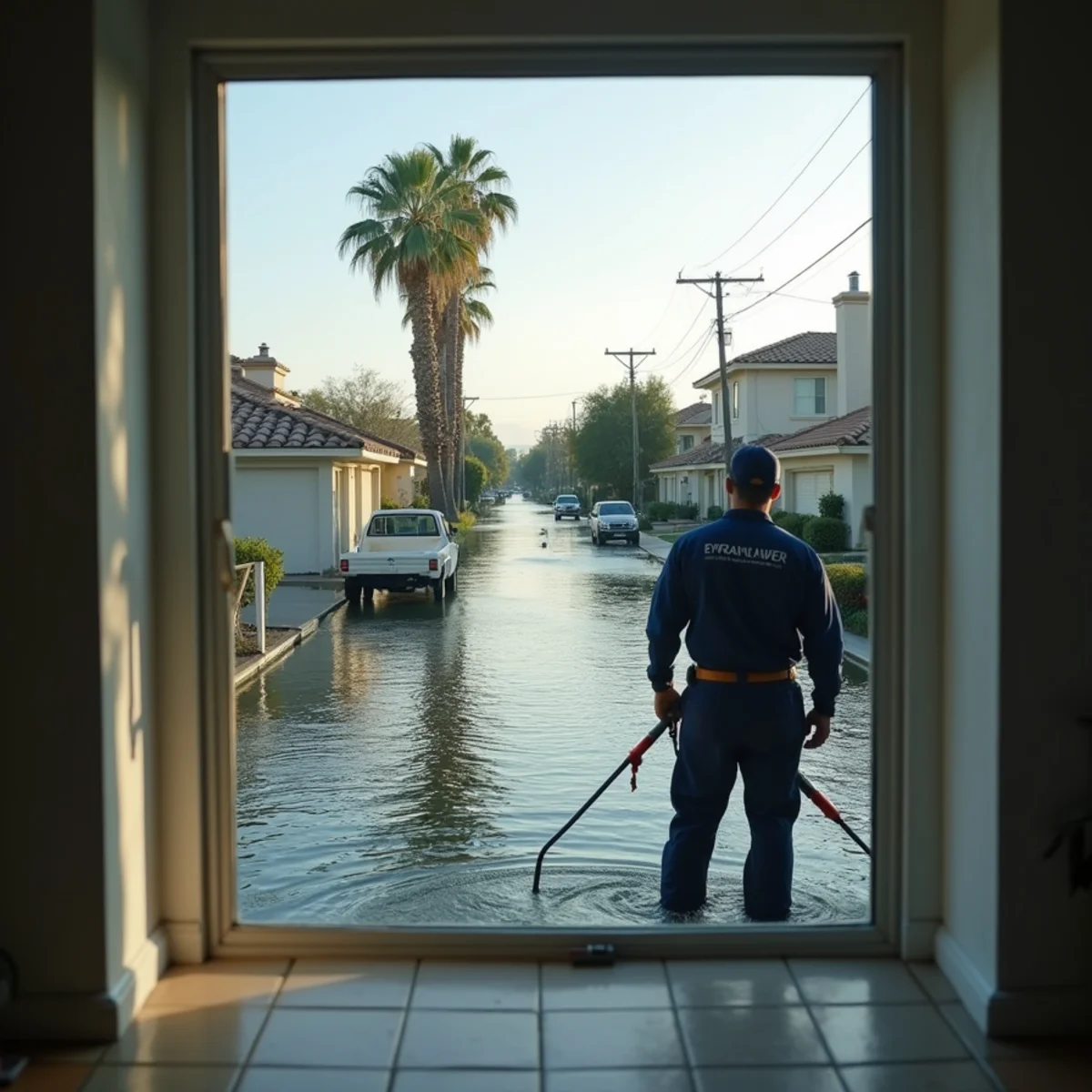
Every winter, storm water gets into homes that have never flooded before, and every year some of those homeowners are surprised to learn their homeowners insurance doesn't cover it. This isn't a loophole or bad faith on the insurer's part — it's how the entire property insurance system is built. Flood is treated as a separate risk with a separate policy, and understanding that split before a storm hits is the only way to actually be covered when it matters.
The Core Distinction: Where the Water Came From
Insurance doesn't ask how much damage water did — it asks where the water started. Water that originates inside your home from a failure, such as a burst pipe, a failed water heater, or an overflowing appliance, falls under your homeowners policy. Water that enters your home from outside — storm runoff, a swollen creek, water pooling against the foundation and seeping in, general surface flooding — almost always falls outside it. Two homes can take on the exact same amount of water in the exact same storm and have completely different coverage outcomes, purely based on whether the water came from a pipe or from the yard. There's one specific carve-out worth knowing about locally: federal flood policies define flood broadly enough to include mudflow — the fast-moving mud and debris that follows heavy rain on a burned hillside — even though it isn't plain water. A standard homeowners policy generally treats that the same as any other flood exclusion.
What Homeowners Insurance Actually Covers in a Storm
Standard policies do cover a meaningful amount of storm-related damage — just not flooding itself. Wind damage that lifts shingles or opens the roof, and the rain that then gets in through that opening, is typically a covered peril, because the water's immediate cause was wind damage to the structure, not rising water. The same goes for a tree limb that punctures the roof during a storm. This is why storm damage cleanup after wind and rain events is often a very different insurance conversation than cleanup after standing floodwater, even when both happened during the same storm. The distinction gets fuzzier with seepage — water that works its way in slowly around a window or through a roof line over several storms rather than through one sudden opening. That pattern looks more like a maintenance or construction issue to an insurer, and it's handled very differently than a roof that failed suddenly during a single storm.
What It Almost Never Covers: Flood
Water that enters at ground level from outside — under a door, through a foundation crack from standing water, or across a yard during heavy rain — is textbook flood, and it's excluded from virtually every standard homeowners policy sold in California. This surprises people because it feels like the same kind of bad luck as a burst pipe: sudden, unplanned, and out of their control. Insurers don't see it that way. Flood is underwritten separately because it affects entire neighborhoods and watersheds at once rather than one house at a time, and the risk math doesn't fit inside a standard homeowners policy.
What Flood Insurance Actually Is
Flood insurance is a distinct policy, available through the National Flood Insurance Program or a growing number of private carriers, that specifically covers this excluded category of water. A few things catch people off guard: it typically has to be purchased separately from your homeowners policy, it commonly carries a waiting period before coverage takes effect, so buying it the week a storm is forecast usually doesn't help, and it's priced based on your property's specific flood risk rather than bundled into your homeowners premium. If you don't already have it, the right time to look into it is during a dry season, not while water is in the driveway. Flood policies also typically separate structure coverage from contents coverage, and homeowners sometimes assume one automatically includes the other — if you're pricing a policy, ask specifically what's covered on each side, since a policy that protects the building but not your belongings only covers part of the loss.
Who Actually Needs It
Being outside a FEMA-mapped high-risk flood zone doesn't mean you're free of flood risk — it just means the mandatory-purchase requirement doesn't apply if you have a mortgage. In hillside communities and areas near canyon drainage, including neighborhoods around Yorba Linda, runoff during a strong atmospheric-river storm can overwhelm street drainage and push water toward homes that have never taken on flood water before. Flood maps are built on historical data; they don't always account for a recent wildfire upstream that stripped hillside vegetation, or for unusually intense storm patterns. If your property sits below a slope, near a wash, or in a low point relative to its street, it's worth pricing flood insurance even if a map says you're not required to carry it. Renters face a version of this gap too: a landlord's policy may cover the building, but a renter's own belongings during a flood typically need a renter's flood policy or endorsement, since a standard renters policy carries the same flood exclusion as a homeowners policy.
What to Do If Storm Water Gets Into Your Home
Regardless of which policy ends up paying, the immediate steps are the same: get people safe, stay out of standing water that could be electrically charged, and document everything — the water level, the source if you can identify it, and every affected room — before cleanup begins. Then call for professional flood cleanup quickly; flood water is rarely clean, and the sanitizing and drying timeline matters for your health regardless of how the claim resolves.
If storm water is in your home right now, call (201) 277-9344. We'll help you sort out the water damage immediately and give you a clear read on whether what you're dealing with looks like a homeowners claim, a flood claim, or both.
Frequently asked questions
I'm not in a flood zone — do I really need flood insurance?
If wind damages my roof and rain gets in, is that a flood claim or a homeowners claim?
How fast does flood insurance take effect after I buy it?
Water Damage Chino Hills
A local, IICRC-certified restoration team serving Chino Hills and the Inland Empire 24/7. Water damage right now? Call (201) 277-9344.