
Emergency Response
Standing Water in the House: Is It Safe to Stay, and Who Do You Call First?
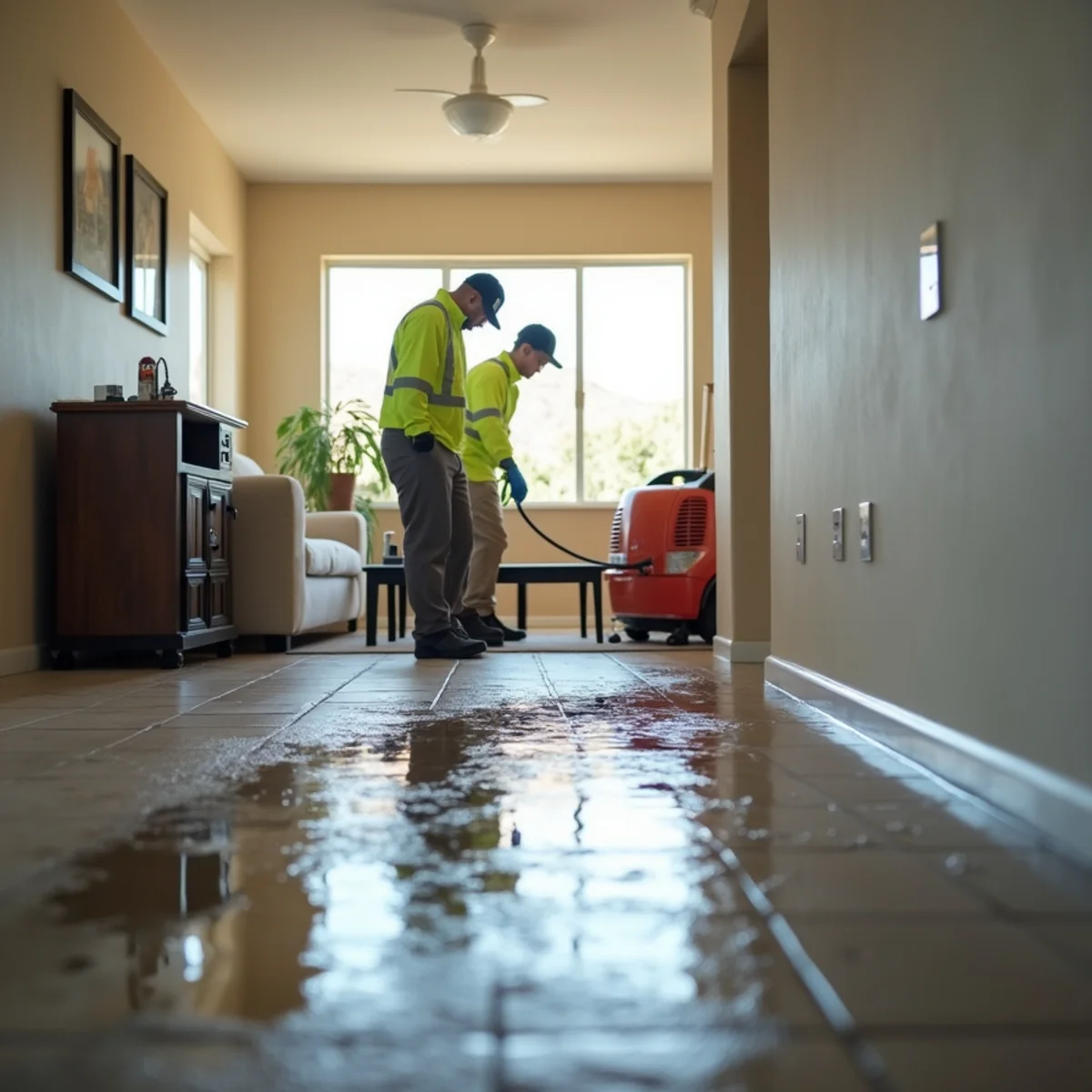
When water is covering part of your floor, the first question isn't "how do I clean this up" — it's "should everyone leave right now." That decision depends on a few specific factors, and getting it wrong in either direction is a real risk: leaving unnecessarily delays the response, while staying in an unsafe situation is genuinely dangerous. Here's how to make that call quickly, and who to contact once you have.
First, check for these three hazards
Before anything else, walk the perimeter of the affected area — without stepping into the water yet — and check for:
- Electrical exposure. Is the water near outlets, power strips, or a floor-level appliance that's still plugged in? Water conducts electricity, and standing water touching a live outlet or cord is a serious shock risk.
- The water's source and color. Clean water from a supply line is a very different situation than gray water from an appliance drain or black water from a sewage backup. Discolored water, a strong odor, or water that backed up from a drain rather than a supply line should be treated as contaminated.
- Structural signs. A sagging ceiling, buckling floor, or water pouring from a light fixture suggests structural saturation, not just surface flooding — those situations call for getting everyone clear of the room.
When it's generally safe to stay
If the water is clean (a supply line or appliance failure), not near electrical, and confined to a hard-surface floor without any structural sag, you can typically stay in the home while you manage the situation — just avoid the affected room until it's extracted. Keep pets and small children away from the area regardless, since wet floors are a slip hazard even when the water itself is harmless.
When you should get everyone out
Leave the affected area, and the home entirely if needed, when:
- Water is contaminated. Sewage backups or floodwater that's touched the ground outside can carry bacteria and pathogens. This isn't a space to occupy normally until it's been professionally cleaned and treated.
- Electrical hazards are present and you can't isolate them. If you can't safely reach the breaker panel without walking through water, don't try — leave and call for help.
- There's visible structural damage. A sagging ceiling or floor means the structure itself may be compromised, and that's not something to wait out.
- Gas is involved. If you smell gas anywhere near the flooded area, leave immediately and call your gas utility from outside the home before doing anything else.
Who to call, and in what order
Once you know the situation is either safe to manage or requires everyone out, the calls go in this order:
- 911, only if there's an active safety threat — gas smell, electrical fire risk, or anyone injured.
- Your restoration company, to start water extraction and drying before the damage spreads further into the structure. The longer standing water sits, the more it wicks into drywall, baseboards, and flooring — this is a race against time, not a next-week project.
- Your insurance company, once mitigation is underway. Most policies expect you to take reasonable steps to prevent further damage, and starting extraction promptly actually supports your claim rather than complicating it.
Our flood cleanup team handles both the immediate water removal and the safety assessment — including checking for contamination and confirming what's actually safe to keep versus what needs to go. If the source is still active or you're not sure it's fully stopped, our emergency water removal crews can address that at the same time.
What to do with your belongings while you wait
Once you've made the safety call and the right people are on the way, use the time productively rather than anxiously watching the water rise or spread. Lift furniture legs onto blocks, foil, or plastic caps to stop staining and wicking. Move rugs, electronics, and anything irreplaceable — photos, documents, keepsakes — up and out of the affected area entirely, not just onto a slightly higher shelf nearby. Don't run your HVAC system if water reached a return vent or a duct near the floor, since that can pull moisture and contaminants through the ductwork into the rest of the house. And resist the urge to start running fans across contaminated water before a professional has assessed it — moving air across sewage-affected water spreads airborne contaminants around the room rather than containing them.
A note for hillside and lower-lying properties
Homes in low-lying pockets of Chino and similar flatland areas can see water intrusion from outside during heavy storms, in addition to internal plumbing failures — and exterior floodwater should always be treated as contaminated, since it's picked up whatever was on the ground, in the gutters, and in the street on its way to your door. Don't assume storm water is "just rainwater" once it's been on the ground.
Don't wait to see if it gets better on its own
Standing water doesn't resolve itself — it either gets extracted professionally or it keeps soaking further into your home's structure. Every hour of delay increases both the physical damage and the odds of mold setting in within the 24-to-48-hour window that follows most water events.
If you're standing in water right now and aren't sure what to do next, call (201) 277-9344. We're available 24/7, and we can help you assess the safety question over the phone while a crew heads your way.
Frequently asked questions
How can I tell if standing water is contaminated?
Is it safe to walk through standing water in my house?
How quickly does standing water need to be removed?
Water Damage Chino Hills
A local, IICRC-certified restoration team serving Chino Hills and the Inland Empire 24/7. Water damage right now? Call (201) 277-9344.