
Emergency Response
How to Find and Shut Off Your Home's Main Water Valve (Before You Ever Need To)
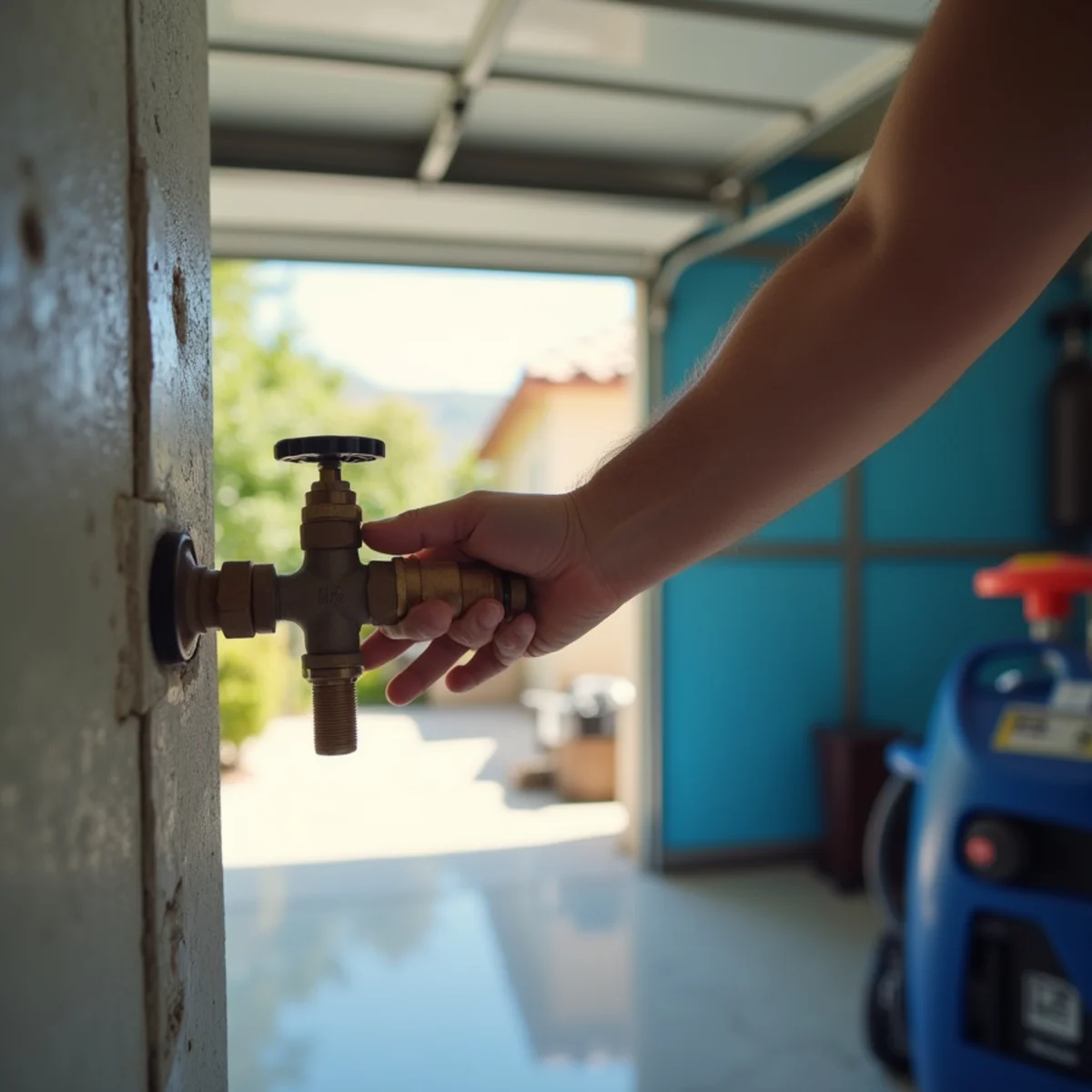
Every year, we get calls from homeowners standing in an inch of water who spend the first five critical minutes of a plumbing emergency searching for a valve they've never had to touch before. Those five minutes are the difference between a wet floor and a soaked subfloor. This is a five-minute project you do on a calm Saturday, not during a flood — so let's find yours right now.
Where to look first
In most Chino Hills homes built from the 1980s onward, the main shut-off valve is in one of a few predictable spots:
- The garage. Look along the wall where the water heater sits, or near where the water line enters from outside — this is the most common location in this area.
- An exterior wall. Check outside near the hose bib closest to the street-facing side of the house, low to the ground.
- A utility closet or laundry room. Some floor plans route the main line through an interior utility space before it branches out.
You're looking for a valve on the pipe where it enters the house — before it splits off to the water heater and the rest of the plumbing. It's typically a gate valve (a round wheel handle) or a ball valve (a straight lever handle).
How to tell you've found the right one
The main valve controls water to the entire house, not just one fixture. If you're not sure whether a valve you've found is the main or just a branch line, turn it off and run a faucet somewhere else in the house — if that faucet goes dry, you've found it. Label it once you're sure, with a tag or a piece of tape, so anyone in the household can find it fast.
Don't forget the curb valve
Most homes also have a secondary shut-off out at the street, usually under a small round or rectangular concrete or metal cover near the sidewalk or curb, sometimes marked "water." This valve is typically controlled by the water utility and requires a special key or long-handled tool to turn — it's your backup if the house-side valve is broken, seized, or you can't get to it for some reason. Knowing it exists matters even if you never plan to touch it yourself.
Turning it correctly — and testing it before you need to
- Gate valves (round wheel handles) close by turning clockwise, multiple full rotations until it stops. Don't force it once it's tight — over-tightening an old valve can crack it.
- Ball valves (straight lever handles) close with a quarter turn, so the lever sits perpendicular to the pipe instead of in line with it.
- Test it once a year. Valves that sit untouched for a decade can seize up or start leaking the first time they're moved. Turning yours off and on once annually keeps it functional and tells you now — not during an emergency — if it needs to be replaced.
The main valve isn't your only line of defense
While you're locating the main shut-off, take five more minutes to find the local shut-off valves at each major fixture — these are just as useful day-to-day and let you isolate a single problem without cutting water to the whole house. Under every sink there should be two small valves, one for hot and one for cold. Behind the toilet, there's typically one oval valve on the supply line. Behind the washing machine, there are usually two valves mounted on a wall box. And at the water heater, there's a valve on the cold inlet line. If a single fixture fails — a supply line under a sink, a toilet, a washing machine hose — closing that one local valve solves the problem without shutting down water to the entire household while you sort it out. Test each of these the same way you test the main valve: once a year, so they turn freely the moment you actually need them.
What to do the moment you actually need it
If you're reading this because water is already on the floor, stop reading and go shut the valve off first — come back for the rest afterward. Once the water's stopped, the next call should be for emergency water removal if there's standing water anywhere in the house, since even a quickly-stopped leak can leave enough water behind to soak into flooring, baseboards, and drywall. If the failure was a supply line or fitting, burst pipe cleanup handles both the water and the follow-up drying to prevent mold.
This kind of preparation matters most in neighborhoods like Village Oaks, where many homes share similar plumbing layouts from the same building era — meaning if your neighbor's valve is hard to find, yours probably is too.
Make it a five-minute household project today
Walk the garage and exterior walls with everyone in your household old enough to turn a valve. Show them where it is, which direction closes it, and tape a laminated index card near it with the words "turn clockwise to shut off." This costs nothing and takes less time than reading this article.
If you're dealing with active water damage right now, skip the prep work and call (201) 277-9344 — we're available 24/7 and can talk you through an emergency shut-off over the phone while help is on the way.
Frequently asked questions
What if I turn off the wrong valve during an emergency?
My main valve won't turn. What do I do?
Should I replace an old main shut-off valve even if it isn't leaking?
Water Damage Chino Hills
A local, IICRC-certified restoration team serving Chino Hills and the Inland Empire 24/7. Water damage right now? Call (201) 277-9344.