
Local Chino Hills
Yorba Linda Has Orange County's Hardest Water at 18+ GPG: What It Means for Your Pipes
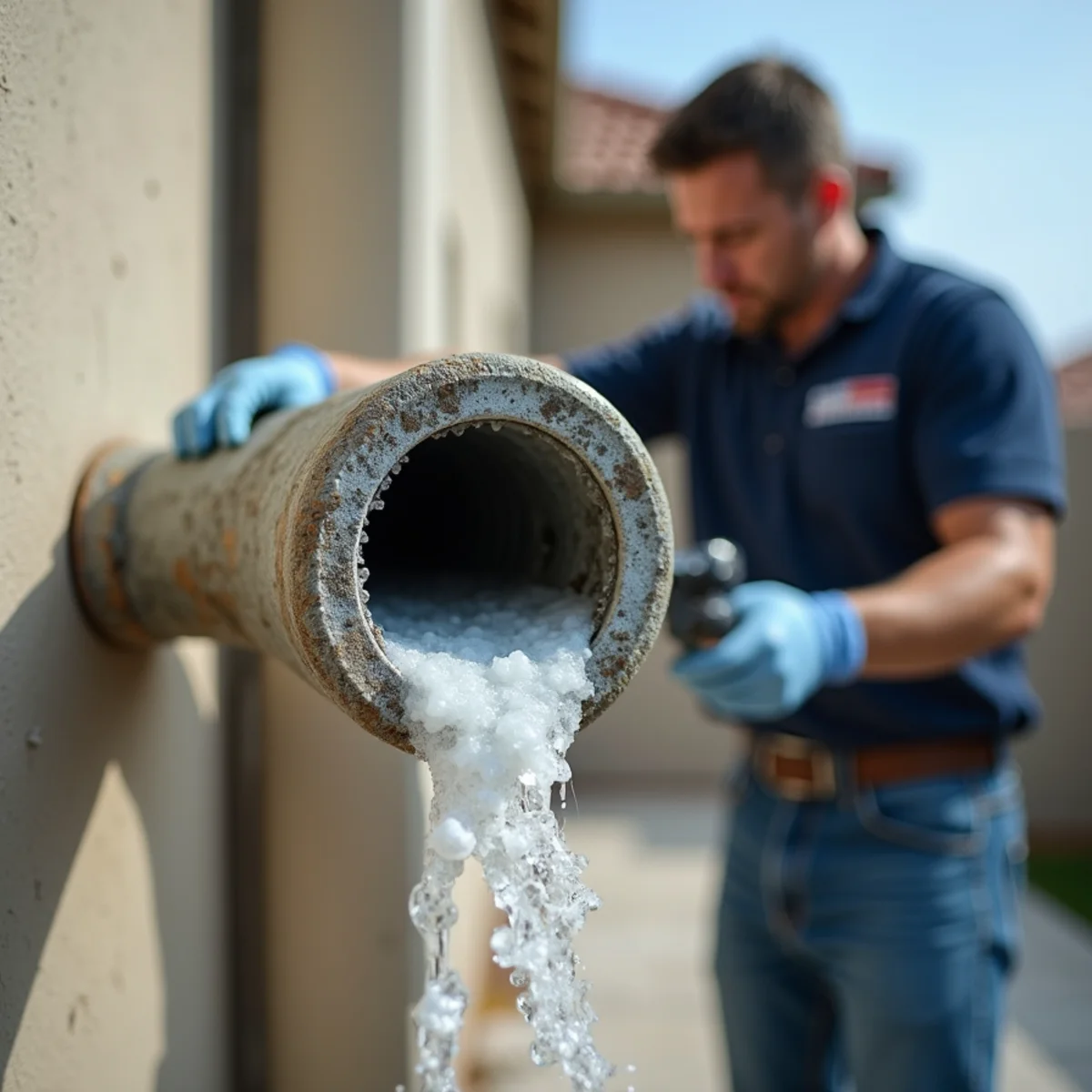
Every Yorba Linda homeowner has seen it: the white crust building up around faucet aerators, the cloudy film on shower glass no cleaner seems to fully remove, the water heater that needs more attention than it should for its age. That's not bad luck — it's chemistry. Yorba Linda has some of the hardest water in Orange County, and it's steadily working against your plumbing whether you notice it day to day or not.
What "hard water" actually means
Water hardness measures dissolved calcium and magnesium, expressed in grains per gallon (GPG). The higher that number, the more mineral content is moving through every pipe, faucet, and appliance in your home. As a general reference point, 0 to 3 GPG is considered soft, 3.5 to 7 moderately hard, 7 to 10.5 hard, and anything above 10.5 is classified very hard. Most of coastal Southern California already sits on the harder end of that scale compared to the rest of the country, which is part of why hard-water wear is such a familiar topic for local homeowners in the first place.
Just how hard is Yorba Linda's water
Yorba Linda's water measures roughly 17.8 to 19.0 grains per gallon, well past the "very hard" threshold and among the highest readings anywhere in Orange County. That's not a marginal difference from a moderately hard city nearby; it's close to double the point where water is classified hard at all, which is why the effects show up faster and more visibly here than in most surrounding communities. A few common signs point directly back to it:
- White or chalky mineral crust around faucet aerators and showerheads
- A persistent cloudy film on shower glass and tile that resists ordinary cleaners
- Soap and shampoo that don't lather well and leave a filmy residue on skin
- Dishwasher and washing machine performance that declines faster than the appliance's age would suggest
What scale buildup does inside your pipes
Every gallon that runs through your plumbing leaves behind a thin mineral deposit. Over years, that buildup narrows the interior diameter of supply lines, roughens interior surfaces in a way that encourages further scale to stick, and adds mechanical stress at fittings, elbows, and valves where deposits concentrate. None of this happens overnight, but it happens continuously, which is why hard-water damage tends to surprise people who assumed their plumbing was fine simply because nothing had failed yet. A pipe narrowed by years of scale also loses pressure and flow gradually enough that many homeowners simply adjust to it, without realizing how much capacity has actually been lost.
Your water heater takes the worst of it
Sediment and scale settle at the bottom of a water heater tank and build up around the heating element, forcing the unit to work harder to reach the same temperature. That extra strain shortens the tank's usable life and is a leading contributor to water heater failures and leaks in hard-water areas. If you've replaced a water heater sooner than its rated lifespan suggested you should have, Yorba Linda's water hardness is very likely part of the reason. A tank that's noticeably noisier than it used to be — a popping or rumbling sound as it heats — is often sediment building up on the bottom, and it's usually one of the earliest warning signs before efficiency and lifespan really start to suffer.
The connection to pinhole leaks
Scale doesn't just narrow pipes — the same mineral deposits that build up on interior surfaces contribute to under-deposit corrosion, one of the mechanisms behind pinhole leaks in copper supply lines. Combine that with a home's plumbing simply aging over the decades, and hard water becomes a real accelerant on top of a process that was already going to happen eventually. In practice, that means Yorba Linda homes can see pinhole leaks appear somewhat earlier in the copper's lifespan than a comparable home in a softer-water city nearby.
What you can actually do about it
A whole-house water softener is the most direct fix, reducing mineral content before it ever reaches your plumbing and appliances. Short of that, regular water heater flushing removes sediment before it accumulates into a real problem, and staying alert to early leak signs — a warm floor patch, an unexplained jump in your water bill, reduced pressure — catches a hard-water-accelerated failure before it turns into a full water loss. Professional leak detection can also confirm a suspected leak non-invasively, and if the damage has already started, slab leak restoration handles both the repair coordination and the water damage.
Serving Yorba Linda homes
We answer calls throughout Yorba Linda regularly for exactly this pattern: hard-water-driven pipe and water heater failures that show up sooner than homeowners expect. Knowing the water chemistry here means we're not guessing at why a relatively young system failed; we already know what's been working against it, and we bring that context into every inspection.
If you're seeing early signs of a leak or a water heater that's struggling, don't wait for hard water to finish the job. Call Water Damage Chino Hills at (201) 277-9344 — we serve Yorba Linda 24/7.
Frequently asked questions
Is Yorba Linda's tap water safe to drink even though it's hard?
Will a water softener stop pinhole leaks in old pipes?
How often should I flush my water heater in a hard-water area?
Water Damage Chino Hills
A local, IICRC-certified restoration team serving Chino Hills and the Inland Empire 24/7. Water damage right now? Call (201) 277-9344.