
Local Chino Hills
Santa Ana Wind Season (Oct–Mar): How Gusts Over 60 MPH Damage Roofs in Chino Hills and North Orange County
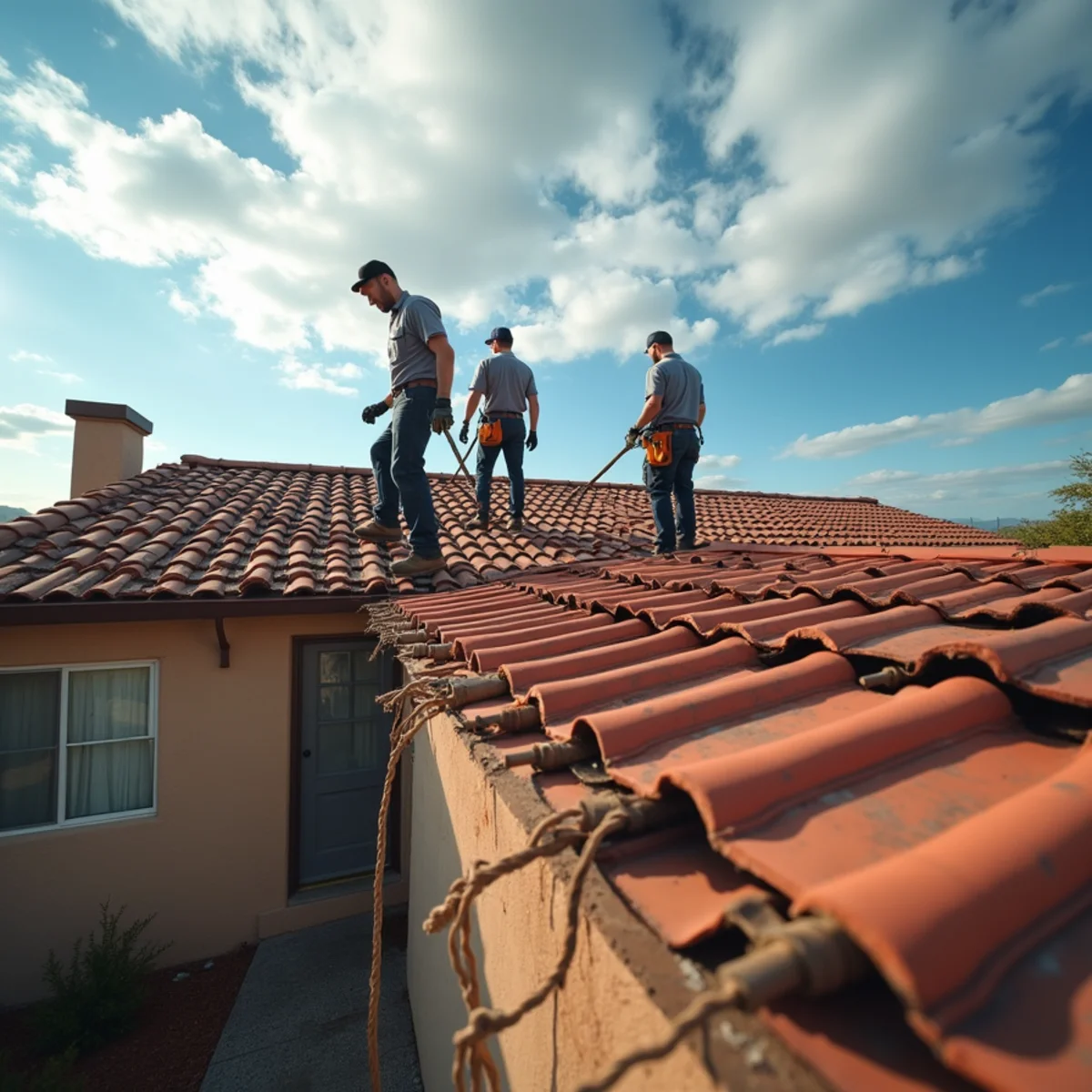
Santa Ana winds get talked about mostly for fire danger, and for good reason — but the same winds quietly damage a huge number of roofs every single season without anyone noticing until the next storm finds the opening. If you own a home in Chino Hills or north Orange County, wind season and roof-leak season are really the same season, just a few weeks apart.
Understanding how the two connect is the difference between catching roof damage while it's still a quick fix and finding out about it as a stained ceiling in the middle of a January storm.
When Santa Ana season actually runs
Santa Ana wind events happen roughly October through March, with the strongest and most frequent windstorms typically clustering in the fall and early winter months. Gusts well over 60 mph aren't unusual during a strong event — more than enough force to do real damage to roofing that looked perfectly fine the week before. These winds also tend to arrive dry, which is part of why the roof damage they cause often goes unnoticed until the season's first real rain finally tests every seal on the house at once.
What that kind of wind actually does to a roof
Wind damage to roofing is mostly about uplift. A strong gust gets under the edge of a shingle or the lip of a tile and lifts it, breaking the seal or adhesive holding it down. Tiles especially can flex, lift, and drop back into place repeatedly during a single windstorm, and each cycle loosens fasteners and widens hairline cracks a little more, even when the tile itself doesn't visibly move out of position. Older roofing is more vulnerable simply because adhesive seals and fasteners weaken with age and sun exposure, so a wind event that a newer roof shrugs off can be the one that finally finds the weak point on an older one.
The damage you can't see from the ground
This is what makes Santa Ana wind damage so deceptive: a lifted shingle edge or a cracked tile usually doesn't look wrong from the driveway. The roof reads as intact because, functionally, it still is, until water shows up and finds the one seal that's no longer sealed. Homeowners routinely have wind-damaged roofing for weeks or months without any indication, because the failure is structural before it's ever visible. Even a professional ground-level look can miss it; the damage that matters is usually only obvious from directly on the roof or inside the attic looking up at the underside of the deck.
Then the rain finds every opening
Wind-driven rain doesn't fall straight down the way roofing is designed to shed water. During a storm, rain drives sideways and can be pushed upward under a lifted shingle edge or through a cracked tile, entering spaces a roof normally keeps dry. That's why the leak often shows up weeks after the windstorm that actually caused it — the damage happened in October or November, and the water didn't find it until the first real winter storm in December or January. This gap is exactly why so many homeowners are genuinely surprised by a leak; nothing changed about the roof recently, as far as they can tell, when in fact the damage has been sitting there waiting for enough rain to exploit it.
Why elevated, hillside homes take the worst of it
Homes at higher, more exposed elevations catch stronger and more sustained gusts than homes in a sheltered valley position, since ridgelines and hilltops don't have surrounding structures or terrain to break the wind before it arrives. In a community like Vellano, sitting at the highest elevation in Chino Hills, that exposure is part of daily life during wind season, which makes a post-windstorm roof check even more worthwhile before the next system rolls through. The same logic applies to any home on a hilltop or ridge lot, even outside a named community — elevation and exposure matter more than which neighborhood you're in.
What to do between wind events and the next storm
After a significant Santa Ana event, a visual check from the ground for obviously displaced tiles or shingles, granules collecting in the gutters, or debris on the roof is a reasonable first step, but don't climb up to inspect closely yourself. A professional roof and attic check is worth arranging if winds were strong enough to make the news. If you suspect damage, getting it looked at and, if needed, temporarily secured before the next storm is far cheaper than dealing with a ceiling that's already stained and an attic full of wet insulation.
If water is already coming through
Once a ceiling stain or an active drip shows up, the priority shifts to stopping the intrusion first. Roof leak water damage restoration covers emergency tarping to stop the water immediately, along with drying the attic, insulation, and ceiling cavity before it becomes a mold problem on top of a wind problem. If a bigger storm caused broader damage across multiple rooms, storm damage cleanup handles the full scope, from extraction through structural drying.
If Santa Ana winds have hit your neighborhood recently, don't wait for the next storm to find out if your roof held. Call Water Damage Chino Hills at (201) 277-9344 — we're available 24/7 for tarping, inspection, and repair.
Frequently asked questions
How do I know if Santa Ana winds damaged my roof?
Does insurance cover Santa Ana wind damage to a roof?
Should I get my roof inspected every wind season?
Water Damage Chino Hills
A local, IICRC-certified restoration team serving Chino Hills and the Inland Empire 24/7. Water damage right now? Call (201) 277-9344.