
How It Works
Tree Roots in Your Sewer Line: Warning Signs to Catch Before the Backup
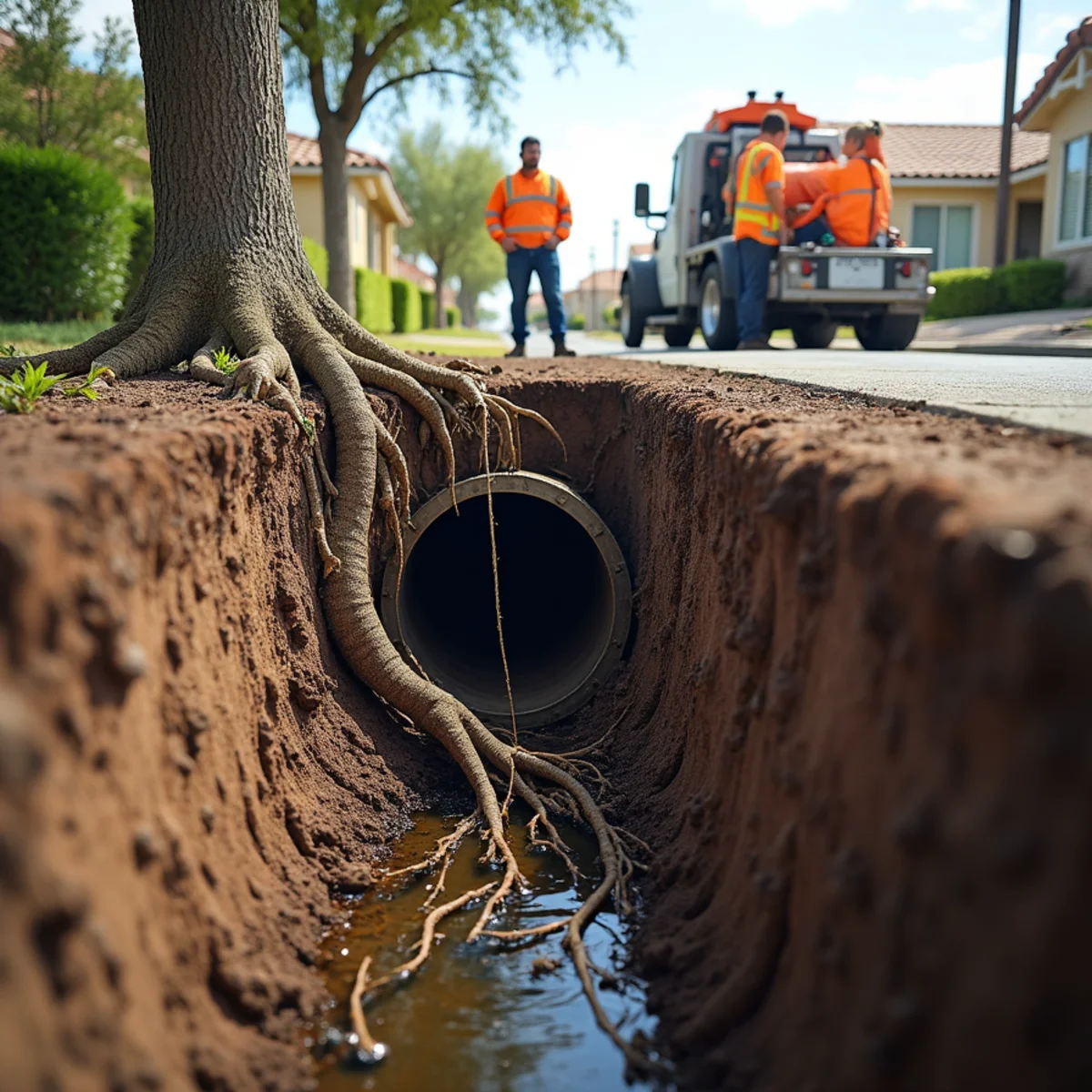
Mature trees are one of the best things about an established neighborhood — and one of the most common causes of a sewage backup nobody saw coming. Roots don't announce themselves; they grow slowly toward moisture and nutrients for years before a homeowner notices anything, and by the time a backup happens, the problem has usually been building for a long time. By the time symptoms are obvious enough to worry about, the roots have often had months or years to establish themselves inside the line. Here's how to catch it earlier.
Why Roots Target Sewer Lines Specifically
Sewer laterals carry a steady supply of moisture, oxygen, and nutrients — exactly what tree roots are wired to seek out. Every pipe joint, and every hairline crack in an aging pipe, releases a small amount of moisture into the surrounding soil, and that's enough for root hairs to sense and grow toward. Once a fine root finds its way into a joint, it doesn't stay fine — it thickens over time, joined by more roots doing the same thing, until what started as a hair-width intrusion is a root mass that catches paper, wipes, and debris moving through the line and gradually closes it off. It's a slow, patient process; it can take a long time for a colony to grow from a first intrusion into something large enough to catch debris and start restricting flow. That's part of why the earliest signs are so easy to miss — the pipe is still mostly open, just no longer clear.
Early Signs Most Homeowners Miss
- Gurgling from a drain or toilet when a different fixture is running or being flushed
- Slow drainage in multiple fixtures at once, rather than just one sink or tub
- A sewer-like odor in the yard, especially near the path the lateral likely runs
- An unusually green, lush strip of lawn over the line — roots feeding on a leak look like healthy grass from above
- Small backups that clear with a plunger or a snake but return every few weeks
Any one of these on its own is easy to dismiss. Together, or repeating, they're a pattern worth taking seriously before it becomes a Saturday-night emergency.
The Sign That Means It's Already Serious
When multiple drains back up at the same time, or water rises in the shower or tub when a toilet is flushed, that's not a fixture problem — it's a main line problem, and roots are one of the leading causes of exactly this pattern in older neighborhoods. At that stage, the blockage is significant enough that normal use of the plumbing is actively pushing wastewater to the path of least resistance, which is usually the lowest drain in the house.
Which Pipes Are Most at Risk
Older clay pipe and Orangeburg — a tar-and-fiber pipe used in some mid-century construction — have the most joints and the least resistance to root intrusion, and homes built before modern PVC lateral lines became standard carry more of this risk. Cast iron holds up better but can still crack or corrode enough to let roots in over decades. Modern PVC and ABS lines with solvent-welded joints are the most root-resistant, though they're not immune if a joint was poorly made or the pipe has settled and cracked. Line age and material are the biggest predictors of whether roots are a realistic concern for a given house. Homes built before the 1980s are more likely to have one of the older, more joint-heavy materials somewhere in the lateral, even if later sections were upgraded — a partial repipe is common enough that a home's age alone doesn't guarantee anything about what's actually in the ground.
How to Actually Confirm It's Roots
Guessing from the symptoms gets you close, but a camera inspection of the line is the only way to confirm roots are the cause, see exactly where and how bad the intrusion is, and rule out a collapse or bellied section that would need a different fix. The camera head often carries a small locating transmitter, or "sonde," that lets a technician trace its exact position and depth from the surface with a receiver — which is what makes a targeted dig possible instead of opening up the whole yard to find the problem spot. This is the same non-invasive approach we use for leak detection elsewhere in a home — find the exact problem before anyone digs or cuts anything.
What Happens If You Wait — and How It Gets Fixed
Root masses don't stop growing on their own, and the pipe doesn't heal. Left alone, the intrusion gradually narrows the line until it blocks completely, which sends wastewater back into the house as a Category 3 sewage event — the kind that needs full sewage cleanup, not just a plumber. In some cases the root pressure itself cracks or collapses the pipe, turning what could have been a targeted repair into a full section replacement. Once roots are confirmed, the fix depends on how much of the pipe is affected: mechanical root cutting and hydro-jetting to clear the line, spot repair or trenchless pipe lining for a damaged section, or full replacement if the pipe has deteriorated beyond repair. None of that is a decision to make from symptoms alone — it comes from what the camera actually shows.
Older Neighborhoods, Older Lines
Established, tree-lined streets in Claremont are exactly the kind of setting where this shows up most — mature trees, older sewer laterals, and decades for roots to find their way in. If you're noticing any of the early signs above, getting a camera inspection now is far cheaper than cleaning up a backup later.
If you're already dealing with a backup, or want to check a line before it becomes one, call (201) 277-9344. We handle both the emergency cleanup and can point you toward getting the actual line problem diagnosed.
Frequently asked questions
How do tree roots actually get inside a sewer pipe?
What's the earliest sign of root intrusion?
Is a camera inspection really necessary, or can you just guess from the symptoms?
Water Damage Chino Hills
A local, IICRC-certified restoration team serving Chino Hills and the Inland Empire 24/7. Water damage right now? Call (201) 277-9344.