
How It Works
Sewage Backing Up Into the Shower: Causes, Health Risks, and Safe Cleanup
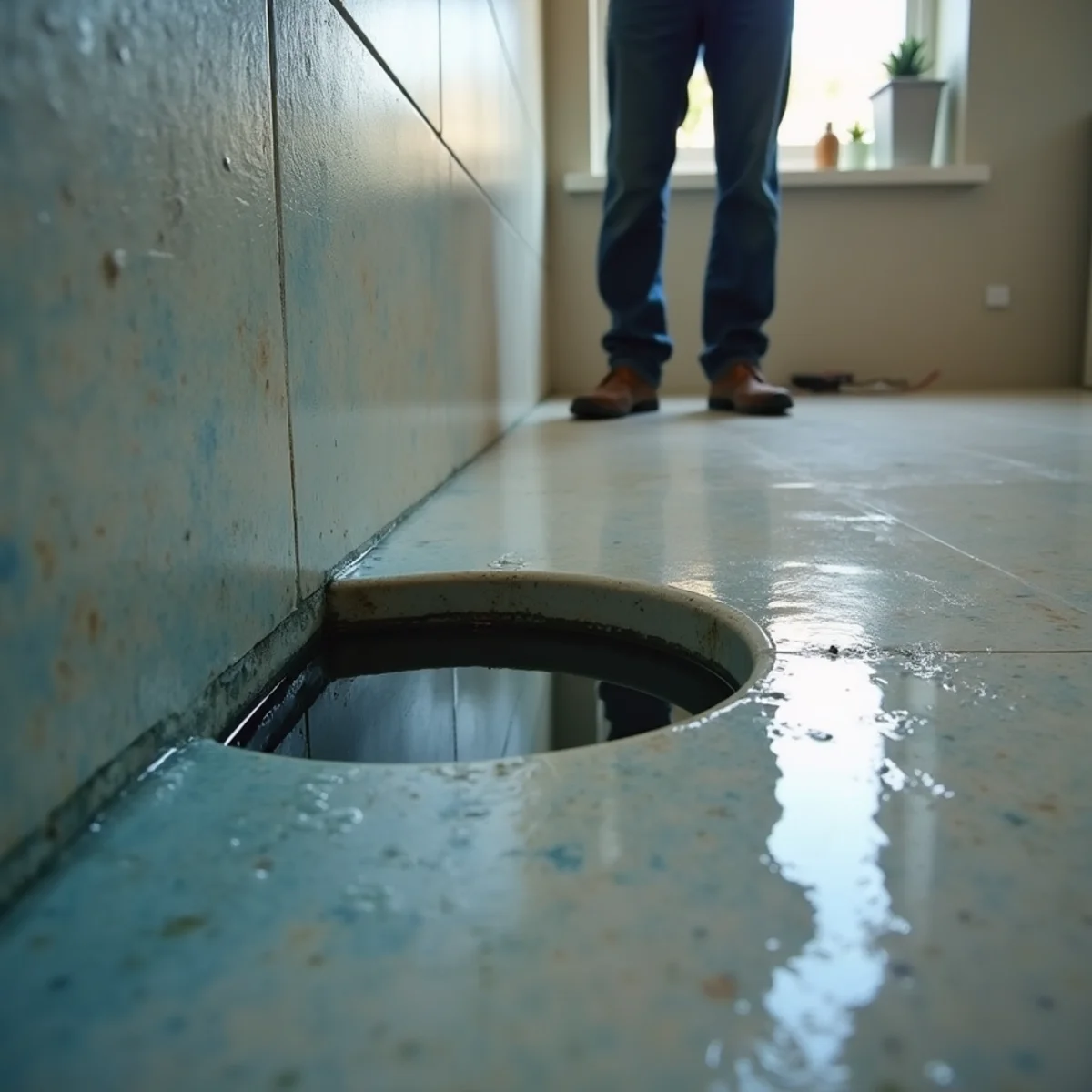
Nothing gets a homeowner's attention like dark water rising out of the shower drain, especially when nobody's running anything upstream. It's alarming, it smells bad, and the instinct is to grab a mop — which is exactly the wrong first move. It's also one of the clearer signals a home's plumbing sends before a much bigger backup, if you know how to read it. Here's why it happens, why it's more serious than it might look, and what a safe cleanup actually involves.
Why the Shower Drain Is Usually the First Place It Shows Up
Drain lines rely on gravity and slope to move wastewater toward the main sewer line — there's no pump involved in a typical residential drain system, just slope, and every fixture in the house ties into that same branch and main line eventually. When that main line is blocked downstream, wastewater backs up and looks for the lowest point it can reach in the system — and in most single-story bathrooms, that's the shower or tub drain, since it typically sits lower in elevation, often flush with the floor, than the toilet's trap and other fixtures. So when you flush a toilet or run a washing machine and the shower drain gurgles or fills instead, that's not a coincidence — it's the system telling you the blockage is downstream of both fixtures, in the main line.
What's Actually Blocking the Line
The usual suspects are grease and soap buildup narrowing the pipe over years, "flushable" wipes and paper products that don't break down the way toilet paper does, and tree roots that have worked their way into a pipe joint and grown into a mass that catches everything moving past it. Older clay sewer laterals are especially prone to root intrusion at their joints. In homes with mature landscaping nearby, roots are often the single biggest contributor over time, since they slowly narrow the pipe's effective diameter long before they cause a complete blockage — which is why a line can go from working fine to backing up with very little warning. A collapsed or bellied section of pipe, or a blockage in the city's main line itself, can also cause backups that show up first inside the house.
Why This Is Category 3 Water, No Exceptions
Water backing up through a drain has been in the sewer system, which means it carries bacteria, viruses, and parasites regardless of how diluted or how "just gray" it looks coming up through the shower. The restoration industry classifies any sewage backup as Category 3 — the same grossly-contaminated classification as raw waste — because the exposure risk doesn't depend on appearance. Disturbing the water, whether by walking through it or agitating it while trying to clean it up, can also aerosolize contaminants into the air, which is one more reason this isn't a job for a mop and a pair of rubber gloves from under the sink. Treat it as hazardous the moment you see it, not after you've confirmed how bad it is.
What Not to Do While You Wait for Help
- Don't run more water or flush other toilets trying to clear it — that adds volume to a system that's already blocked and pushes more contaminated water into the house
- Don't mop or wipe it up with household towels or a bucket without gloves and eye protection
- Don't dump bleach or other cleaning chemicals directly into standing sewage — organic waste inactivates bleach's disinfecting power quickly, and mixing cleaning products can create dangerous fumes
- Keep kids and pets out of the bathroom entirely until it's cleaned and disinfected
- Avoid touching affected surfaces bare-handed, including the tub, floor, and anything the water reached
The Safe Cleanup Sequence
Cleanup starts with stopping use of every fixture that feeds the blocked line, so nothing adds to the backup while work is underway. Contaminated water and waste get extracted with equipment built for it, not household tools. Porous materials the water touched — bath mats, some baseboards, and in cases of standing contact, grout and caulk lines — typically get removed rather than cleaned, because sewage contamination isn't something you can reliably scrub out of a porous surface. Everything that stays gets disinfected with hospital-grade antimicrobial treatment, and HEPA air scrubbers run to clear aerosolized contaminants and odor from the air — the odor itself is a sign of airborne contaminants, not just an unpleasant smell, which is exactly what those scrubbers are addressing. Our sewage cleanup crews handle this from full protective gear through final disinfection, and we treat it as the health hazard it is at every step.
Fixing the Actual Cause, Not Just the Symptom
Cleaning up the backup without addressing what caused it just guarantees a repeat performance. A camera inspection of the line identifies whether it's roots, a collapse, or a simple clog, and that determines whether the fix is hydro-jetting, mechanical root cutting, or a section repair. A line that backs up once because of roots will back up again on roughly the same timeline unless the roots are actually cleared or the section is repaired — cleanup alone doesn't change what's growing into the pipe. This step matters — we've seen homeowners clean up the same backup twice in a year because nobody ever looked at why it happened.
If It's Happening Right Now
This isn't a wait-and-see situation — it needs the same urgency as any emergency water removal call. Homes throughout Montclair with older sewer laterals see this pattern often enough that it's worth knowing the warning signs before the first backup, not after. If sewage is coming up in your shower or tub right now, keep everyone away from it and call (201) 277-9344 — we answer 24/7 and treat every sewage call as the emergency it is.
Frequently asked questions
Why does sewage come up through the shower instead of the toilet?
Is it safe to clean up a small sewage backup myself?
What stops it from happening again?
Water Damage Chino Hills
A local, IICRC-certified restoration team serving Chino Hills and the Inland Empire 24/7. Water damage right now? Call (201) 277-9344.