
Insurance & Cost
What Drives Mold Remediation Costs Up (or Down) in an Inland Empire Home
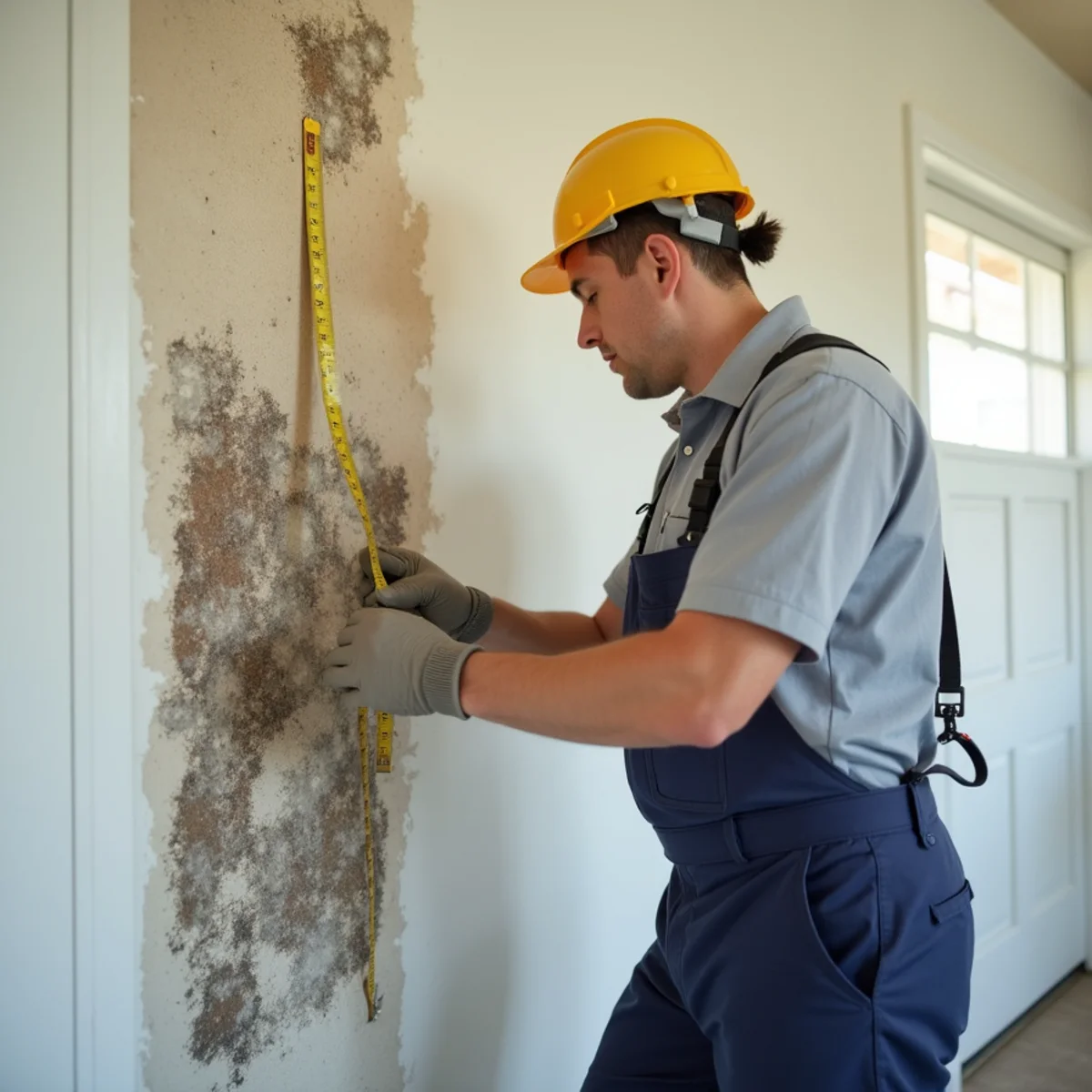
"Mold remediation cost per square foot" is one of the most common questions we get, and it's also one of the hardest to answer honestly with a single number. Mold jobs vary more than almost any other type of water-damage-related work, because the price isn't really about the mold itself — it's about where it's growing, what it's growing on, and how hard it is to fix the moisture feeding it.
Here's what actually moves the needle on an Inland Empire mold remediation bill, from a small closet patch to a whole-wall-cavity job.
Why There's No Single Price-Per-Square-Foot Answer
Unlike straightforward water extraction, where square footage and water category get you close to a real range, mold remediation pricing depends more on access and containment than raw area. A 20-square-foot patch of mold in an open, easily accessible closet can cost less than a much smaller patch hidden inside a wall cavity behind cabinetry. Anyone quoting a flat per-square-foot mold number without seeing the job is guessing, which is exactly why we won't do it here either. Phone estimates in this category tend to go one of two ways: a lowball number that changes once the crew opens a wall, or a padded number meant to cover that same uncertainty. An in-person walk-through avoids both. What we can do here is walk through the specific factors that push a real quote up or down.
Size and Location of the Growth
Total affected area still matters — more square footage generally means more containment, more removal, and more labor hours. But location changes the multiplier. Mold on a section of drywall in an open room is a contained, fairly efficient job. The same square footage of mold inside a wall cavity, in an attic with limited clearance, or in a crawl space requires more setup, more time working in awkward positions, and sometimes partial demolition just to reach it. Mold inside HVAC ductwork is its own category again — the system has to be isolated and cleaned by technicians comfortable working inside ducts, and the household often can't run central air or heat until that work is finished.
What the Mold Is Growing On
Porous materials — drywall, insulation, carpet, some subfloor — usually can't be fully cleaned once mold takes hold; they need to be removed and replaced. Non-porous surfaces like tile, sealed concrete, and metal framing can often be cleaned and treated in place, which is faster and cheaper. A job involving mostly non-porous surfaces will generally cost less than one requiring the same square footage of drywall and insulation removal, disposal, and rebuild. Contents in the room — furniture, boxes, stored belongings — are evaluated separately from the structure; some can be professionally cleaned and kept, while heavily porous or long-exposed items typically can't be saved.
The Moisture Source: The Step That's Easy to Skip
Removing visible mold without fixing what's feeding it isn't remediation — it's a temporary fix that returns, often within weeks. Finding and correcting the moisture source is part of a legitimate remediation job, and depending on the cause, that can mean anything from re-sealing a small gap to full structural drying of the surrounding area. Skipping this step to save money on the invoice is the single most common reason homeowners end up paying for the same mold job twice.
How Mold Cost Relates Back to the Original Water Damage
Most residential mold jobs in the Inland Empire don't start as mold jobs — they start as water damage that wasn't dried fast enough or thoroughly enough. Mold can begin establishing within 24 to 48 hours of a wet material staying wet, which means a delayed or incomplete drying job is often what turns an ordinary water damage repair into a water damage repair plus a separate mold remediation invoice. If you catch water damage early and get it professionally dried with structural drying and dehumidification, you're not just protecting your floors and walls — you're avoiding the mold line item entirely. We see this pattern often in Corona and across the Inland Empire, where summer humidity and closed-up homes give any missed moisture extra time to turn into growth.
Insurance and Mold: A Real Nuance
Mold coverage under homeowners insurance is one of the more restrictive areas of a policy. Mold that results directly from a sudden, covered water loss — say, mold that develops because a burst pipe wasn't caught for a few days — is often covered as part of that claim, sometimes subject to a mold-specific sub-limit written into the policy. Mold that develops from a long-term, unaddressed moisture problem, high humidity, or poor ventilation is frequently excluded as a maintenance issue, the same way a gradual leak would be. If mold shows up after a water event, documenting the original loss and the timeline connecting the two matters just as much for the mold portion of the claim as it did for the water damage itself.
Getting an Accurate Number
Every factor above — size, location, materials, and the moisture source — has to be seen in person to price correctly. A real quote starts with an inspection, not a phone estimate, because two rooms with the same square footage of visible mold can require completely different scopes of work once someone opens a wall or checks behind the baseboard.
For a larger job, it's also worth asking whether clearance testing is included or available — air or surface sampling after the work is done that confirms spore counts in the treated area are back in line with the rest of the home. It costs a bit more, but it turns a subjective "looks clean" into documented proof, which matters if you ever need to show a buyer's inspector the work was verified.
If you're seeing or smelling mold in your home, don't wait for it to spread further — call (201) 277-9344 for a mold remediation inspection and a straight assessment of what you're actually dealing with.
Frequently asked questions
Is DIY mold cleanup ever appropriate?
Why did my mold come back after I had it cleaned?
How much of my house needs to be tested, versus just the visible area?
Water Damage Chino Hills
A local, IICRC-certified restoration team serving Chino Hills and the Inland Empire 24/7. Water damage right now? Call (201) 277-9344.