
How It Works
How Long Does Structural Drying Take? A Room-by-Room Timeline
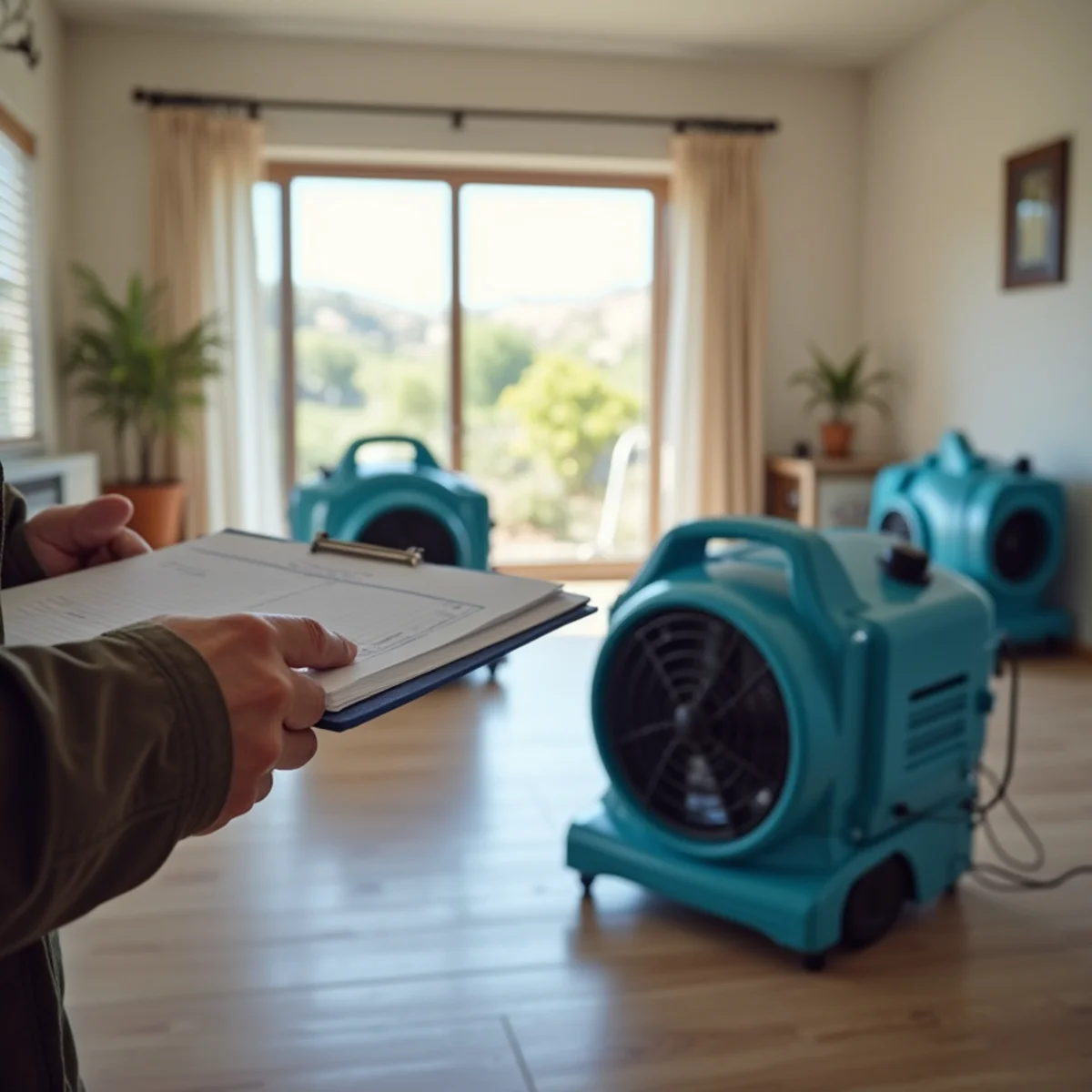
Everyone asks the same question after a leak: how many days until this is over? The honest answer isn't a number of days — it's "until the materials hit dry standard," which sounds evasive but is actually the more useful answer, because a calendar guess and an actual dry structure are two different things. Once water extraction has pulled the standing water out, drying is the phase that follows, and it runs on its own timeline.
Here's how drying time really gets determined, and what changes it room by room.
Dry Standard, Not a Countdown
Before equipment ever runs, we take a moisture reading from an unaffected area of the same material — a dry baseboard in another room, an untouched section of subfloor — and that becomes the target, the "dry standard," for the affected material. Drying isn't finished on a schedule; it's finished when the wet material's reading matches that unaffected reading. Two identical-looking rooms can take different amounts of time because one started wetter, has denser materials, or has worse airflow, and a fixed day count would get one of them wrong.
The Physics: Why Air Movers and Dehumidifiers Work Together
Drying runs on simple physics. Air movers speed evaporation by moving air across wet surfaces, which pulls moisture out of the material and into the air. On its own, that just raises the humidity in the room — which slows evaporation right back down once the air is saturated. The dehumidifier's job is to pull that moisture out of the air continuously, keeping humidity low enough that evaporation from the wet material can keep happening. Run air movers without dehumidification and you're just humidifying the room; run dehumidification without air movement and drying crawls. Both have to be sized and balanced for the space. What a dehumidifier is really doing is lowering the specific humidity of the air — the actual amount of moisture it holds — rather than just the relative humidity percentage a thermostat display shows. That distinction is why a properly sized commercial dehumidifier out-dries a small portable unit by a wide margin: it's pulling far more moisture out of the air per hour, which is what actually draws water out of a wet material.
Typical Timelines by Material
Rough ranges, assuming the water was clean and extraction happened promptly. A job with multiple rooms, deeper saturation, or a delayed start should be expected to run longer than any of these numbers:
- Carpet and pad (not removed): often 1 to 2 days with focused airflow underneath, longer if the pad wasn't extracted well
- Drywall dried in place: typically 2 to 3 days
- Hardwood flooring: commonly 5 days to two weeks, sometimes with specialized drying mats that pull moisture through the wood from the surface
- Subfloor plywood or OSB: several days to a week depending on how saturated it got before drying started
- Concrete slab: the slowest of all — slabs hold moisture deep in the material and can take a week or more to release it, even though the surface reads dry almost immediately
What Changes the Timeline Room by Room
A bathroom is small and enclosed, which actually helps — it's easy to saturate the air with equipment and hold humidity low, but tile and grout leave few paths for moisture trapped underneath to escape. A kitchen is often the slowest room in the house because water gets under cabinet toe kicks and behind base cabinets where airflow barely reaches; that sometimes means pulling toe-kick panels to aim air movers directly into the gap. A garage on bare, unsealed slab dries relatively fast; a sealed or coated garage floor traps moisture underneath the coating and drags on. Bedrooms and living rooms with open floor plans and good airflow access are usually the most predictable.
What Slows a Job Down
Closed doors and blocked airflow are the most common self-inflicted delay — drying equipment needs air to move through the space, not just sit in it. Southern California's morning marine layer and any stretch of humid weather raise the ambient moisture equipment has to work against. A wall cavity that's never opened for airflow, or furniture and belongings left blocking a wet section of carpet, both extend the timeline. So does starting late: water that sits an extra day before extraction begins has that much more moisture to remove before drying can even start.
Why Pulling Equipment Early Costs More Later
The surface of a material reads dry well before the core does — a wall can feel bone dry to the touch while the meter shows the middle of the stud cavity still elevated. Shutting down equipment because a room "feels done" is the single most common way a drying job turns into a mold job a few weeks later. We don't pull equipment on a schedule; we pull it when the numbers match the dry standard, and we document those readings daily so there's a record, not just our word for it.
Getting an Honest Timeline for Your Home
Homes around Walnut run the full range of what drives drying time — hillside properties on slab foundations, older homes with plaster walls that hold moisture longer than drywall, and plenty of tile-over-slab flooring that looks dry from day one but isn't. Plaster in particular surprises people: it's denser than drywall and releases moisture much more slowly, so a plaster wall can still be reading wet well after a drywall wall in the next room has already hit dry standard. After the first inspection we can give you a realistic range for your specific rooms and materials, not a generic number.
If you're mid-leak and want structural drying started correctly the first time, call (201) 277-9344 — we're on 24/7 and we bring moisture meters to every job, not guesses.
Frequently asked questions
What's a normal drying time for a typical water loss?
Why do fans and dehumidifiers need to run so long?
Can I speed up drying myself with box fans?
Water Damage Chino Hills
A local, IICRC-certified restoration team serving Chino Hills and the Inland Empire 24/7. Water damage right now? Call (201) 277-9344.