
Commercial & Property
Property Manager's Guide to HOA Water Damage: Who's Responsible in Chino Hills Master-Planned Communities
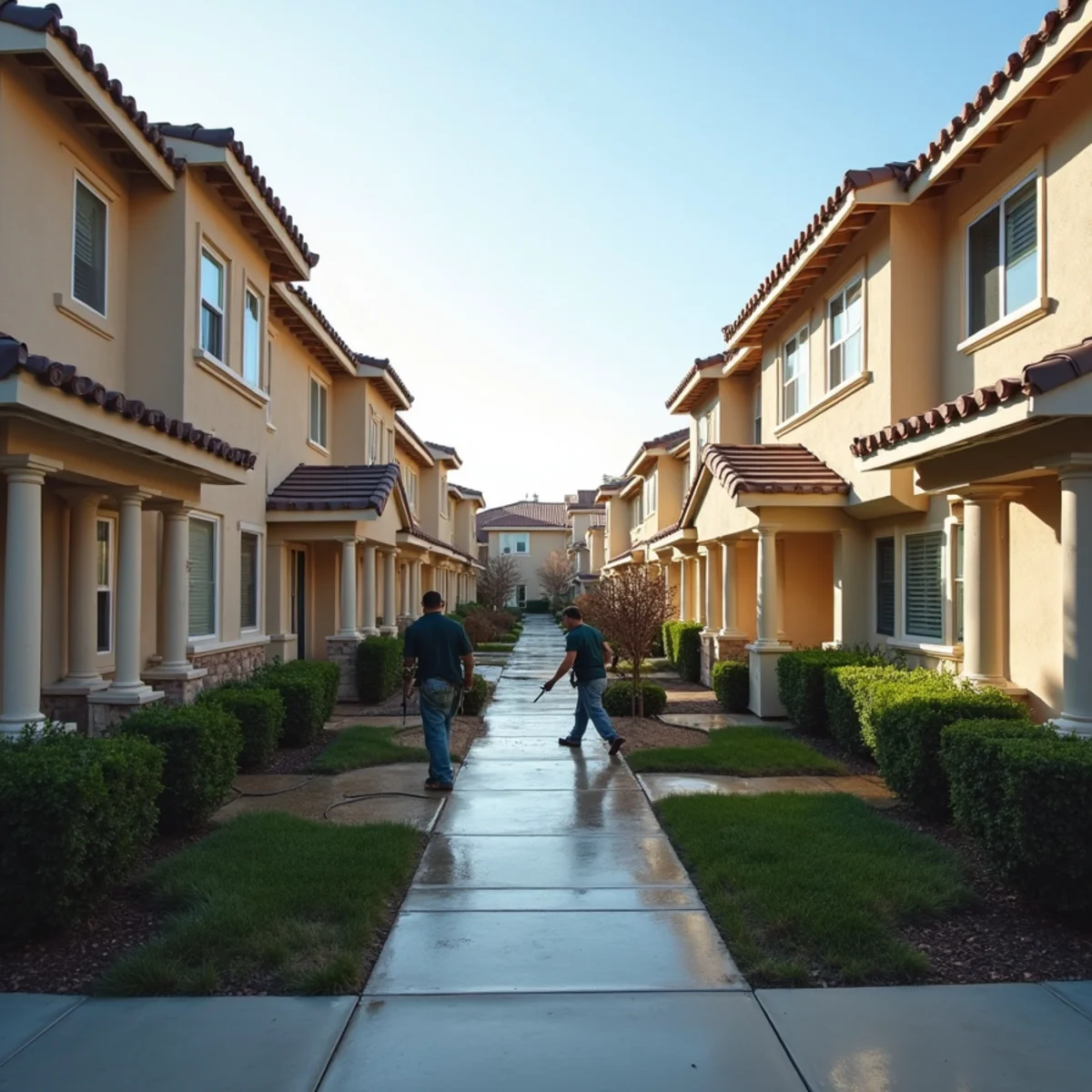
Chino Hills has an unusually high share of master-planned communities and HOA-governed neighborhoods, and when water damage hits a condo, townhome, or attached property in one of them, the first question is rarely "how do we fix this" — it's "whose responsibility is this." That question determines who files a claim, whose policy pays, and who's on the hook for the deductible, and getting it wrong can delay mitigation by days while everyone argues about it. Here's a practical framework for property managers, HOA boards, and unit owners — though the specific answer always comes down to your governing documents and your policies, not a general rule.
This is general guidance, not legal or insurance advice. Your community's CC&Rs and the specific language in your HOA's master policy and your own HO-6 policy govern the actual answer — when in doubt, involve your insurance agent and, if needed, an attorney familiar with your association's documents.
The general split: structure vs. everything inside it
Most HOA master policies follow a version of the same basic logic: the association's policy covers the building's shared structure — the roof, exterior walls, common-area plumbing risers, and shared systems — while the unit owner's HO-6 policy covers everything inside the unit's walls, including their own fixtures, personal property, flooring, and interior finishes. Where a specific pipe or fixture falls in that split depends heavily on your association's declaration, which is why one HOA's master policy can mean genuinely different coverage than the next community's.
This matters immediately after a loss, because the source of the water often determines which side of that line the damage falls on. A leak from a shared roof or a common-area riser pipe usually starts as an association responsibility. A leak from a fixture entirely inside one owner's unit — their own water heater, a supply line under their own sink — usually starts as that owner's responsibility, even though the water may travel into a neighboring unit or a common hallway.
When water crosses from one unit into another
One of the most common disputes in attached housing is water that originates in one unit and damages the one below or beside it. In many CC&Rs, the unit where the water originated bears responsibility for the damage it caused, regardless of whether it was an accident — but some governing documents shift responsibility differently, especially if the originating owner can show the failure was sudden and not the result of deferred maintenance they knew about. This is exactly the kind of situation where the specific language in your declaration matters more than any general rule, and it's worth having your board or management company review it in advance, before a loss happens, rather than during the dispute.
What HOA boards and property managers should document immediately
- The exact source of the water — which unit, which fixture or system, and whether it's a shared or exclusive-use component under your declaration.
- Which units and common areas were affected, with photos taken before cleanup starts in each location.
- A timeline of when the leak was discovered, when it was stopped, and when each affected owner and the association's insurer were notified.
- Prior knowledge of the issue — if there's a maintenance history suggesting the failure wasn't sudden, that can affect which policy responds and how.
Getting a restoration crew on site quickly to document the loss professionally helps regardless of how the responsibility question eventually shakes out — moisture readings, photos, and a clear scope of affected units and materials are useful to every party's insurer, not just one side's.
Why speed matters more than resolving responsibility first
Boards and managers sometimes delay authorizing mitigation while ownership of the cost is still being sorted out, which is close to the worst option available. Standing water and wet building materials don't wait for a coverage determination — mold risk starts within 24 to 48 hours regardless of whose policy eventually pays. Most governing documents and insurance policies actually expect the association or affected owners to take reasonable steps to prevent further damage, so authorizing extraction and drying promptly tends to support everyone's claim rather than complicate it. The cost-allocation conversation can continue in parallel; it doesn't need to hold up the water coming out of the building.
Newer construction doesn't mean lower risk
It's a common assumption in communities built in the 2000s — like Fairfield Ranch — that newer construction means the responsibility question comes up less often. In practice, these communities are now old enough that builder-grade supply lines, water-heater fittings, and appliance connections across many units are reaching first-failure age around the same time, which means the same responsibility questions apply, just on a newer building. Age doesn't change the framework — it just changes when it starts coming up.
How we support HOAs and property managers through this
We document the source and the affected areas clearly and objectively from the first visit, which is exactly the information a board, a property manager, and multiple owners' insurers all need to sort out responsibility without relying on guesswork. We coordinate directly with management companies, work across multiple affected units on the same timeline, and provide the kind of detailed reporting a commercial or multi-unit claim requires. Our commercial water damage restoration team handles HOA and multi-unit losses regularly across Chino Hills' master-planned communities.
Managing a water loss across multiple units or an HOA property right now? Call (201) 277-9344 — we can get mitigation started immediately and document it in a way that supports whatever the responsibility conversation ends up looking like.
Frequently asked questions
Does the HOA or the homeowner pay for water damage in a condo?
What if a leak in my unit damages my neighbor's unit below me?
Should we wait until responsibility is determined before starting cleanup?
Water Damage Chino Hills
A local, IICRC-certified restoration team serving Chino Hills and the Inland Empire 24/7. Water damage right now? Call (201) 277-9344.