
Commercial & Property
Water Damage in Equestrian Properties: Special Considerations for Chino Hills and Norco Horse Facilities
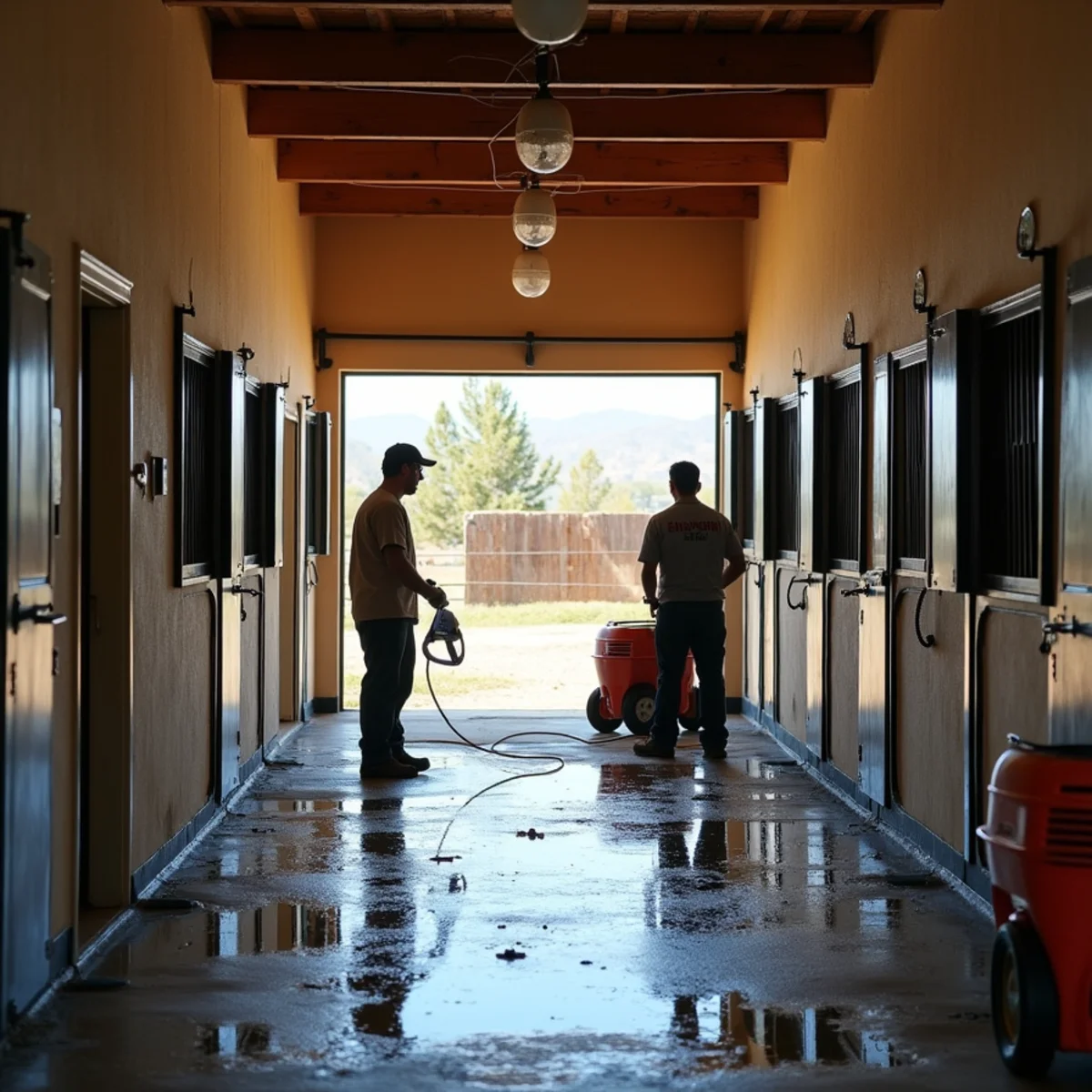
Equestrian properties carry a water-damage risk profile that's genuinely different from a standard home, and most restoration companies treat them the same way anyway — which is a mistake. Between barns, tack rooms, feed storage, and the sheer scale of a typical horse property's irrigation and well systems, there's more square footage, more specialized contents, and more ways for water to cause expensive damage than most residential jobs involve. Whether you're on acreage in Chino Hills or in Norco — known throughout the region as Horsetown USA for its deep concentration of horse properties, riding trails, and equestrian zoning — the considerations below are worth knowing before you need them.
Feed storage: the most time-sensitive risk on the property
Water-damaged hay and grain aren't just a financial loss — they're a health hazard if fed to horses. Wet hay molds quickly and can cause serious respiratory and digestive issues, and grain that's absorbed moisture is prone to dangerous fermentation and mold growth that isn't always obvious from the outside of a bag or bin. If water reaches a feed room or hay storage area, the standard rule is to treat anything visibly wet, or stored in direct contact with wet flooring or a wet wall, as a loss rather than trying to dry and salvage it. This is the one category on an equestrian property where speed and a conservative call matter more than trying to save the material.
Tack rooms: leather, electronics, and humidity don't mix
Tack rooms hold some of the most expensive contents on the property — saddles, bridles, and leather goods that are both costly to replace and sensitive to both direct water contact and the humidity that follows it. Leather that's been soaked can crack, mildew, and lose shape even after it looks dry again if it isn't dried and conditioned correctly, and many tack rooms also house electronics — clippers, fans, sound systems, security equipment — that are a shock hazard if water reaches outlets or wiring. After any water intrusion in a tack room, get humidity under control fast, since leather goods that survive the initial water often don't survive weeks of elevated humidity afterward.
Barns and stalls: drainage has to keep working, not just look fine
A flooded barn aisle or stall is more than an inconvenience — standing water and saturated bedding create footing hazards for horses and a fast-developing ammonia and bacterial problem in stall footing that wasn't designed to handle standing water. Barn drainage systems, French drains, and sloped aisle flooring need to actually function, not just be present, and it's worth checking them the same way you'd check a home's gutters — before the rainy season, not during the first storm. A barn built on a slab or a compacted base can trap water underneath in ways that aren't obvious until footing starts breaking down or a persistent smell develops.
Well systems and irrigation: a different failure mode than municipal water
Many equestrian properties, especially larger parcels in Norco and unincorporated pockets of the region, rely on well water and extensive irrigation systems to support pastures, arenas, and livestock needs — infrastructure a typical residential restoration job never has to consider. A well pump failure, a pressure tank rupture, or a broken irrigation main can release a large volume of water continuously, sometimes for hours before anyone notices it on a large property where the failure point isn't near the house. If your property runs on a well, it's worth knowing where the pressure tank and main shutoff are located with the same clarity you'd want for a home's main water valve — and checking on them periodically, since they tend to be even more out of sight than a typical house's plumbing.
Large-lot drainage and arena footing
Equestrian lots are often larger and less uniformly graded than a standard residential parcel, with arenas, paddocks, and multiple structures all needing water to move away from them in different directions. Arena footing in particular is engineered to drain in a specific way, and runoff from an adjacent structure or a failed drainage channel can compromise footing consistency, creating both a maintenance cost and a safety issue for riding. Walking the property's drainage paths after a hard rain — the same way you'd check a hillside home's swales — is the most reliable way to catch a developing problem before it becomes a footing replacement or a barn flood.
Why this calls for a commercial-scale response, not a residential one
The combination of specialized contents, larger structures, and property-wide systems means an equestrian water loss usually needs the equipment capacity and documentation approach of a commercial job, even on what's technically a residential property. Our commercial water damage restoration team scales crews and equipment to match acreage and multiple structures — barn, tack room, main house, and outbuildings — rather than showing up with a residential-sized response for a property that needs considerably more.
Documentation matters here too, arguably more than on a standard homeowner's claim: feed and tack losses need to be itemized and valued accurately, well and irrigation system damage needs a clear cause-and-effect record, and multiple structures on one property need to be scoped separately so nothing gets missed or undervalued in a claim.
Prevention worth doing before the next storm
- Elevate feed storage off the floor on pallets or shelving, away from exterior walls where wind-driven rain can reach it.
- Check barn drainage, French drains, and aisle slopes annually, not just when a problem is already visible.
- Know your well system's pressure tank and shutoff location, and inspect it periodically.
- Walk arena and paddock drainage after storms to catch footing and grading issues early.
- Keep a basic contents inventory of tack and equipment for faster claims documentation if a loss happens.
Dealing with water in a barn, tack room, or anywhere on an equestrian property in Chino Hills or Norco? Call (201) 277-9344 — we run 24/7 and bring the crew size and equipment these properties actually need.
Frequently asked questions
Can wet hay or grain be dried out and used instead of thrown away?
How is water damage on an equestrian property different from a home?
What should I check on my well system after a storm?
Water Damage Chino Hills
A local, IICRC-certified restoration team serving Chino Hills and the Inland Empire 24/7. Water damage right now? Call (201) 277-9344.