
Local Chino Hills
Chino Valley Unified School District: Water Damage Response for Schools and District Facilities
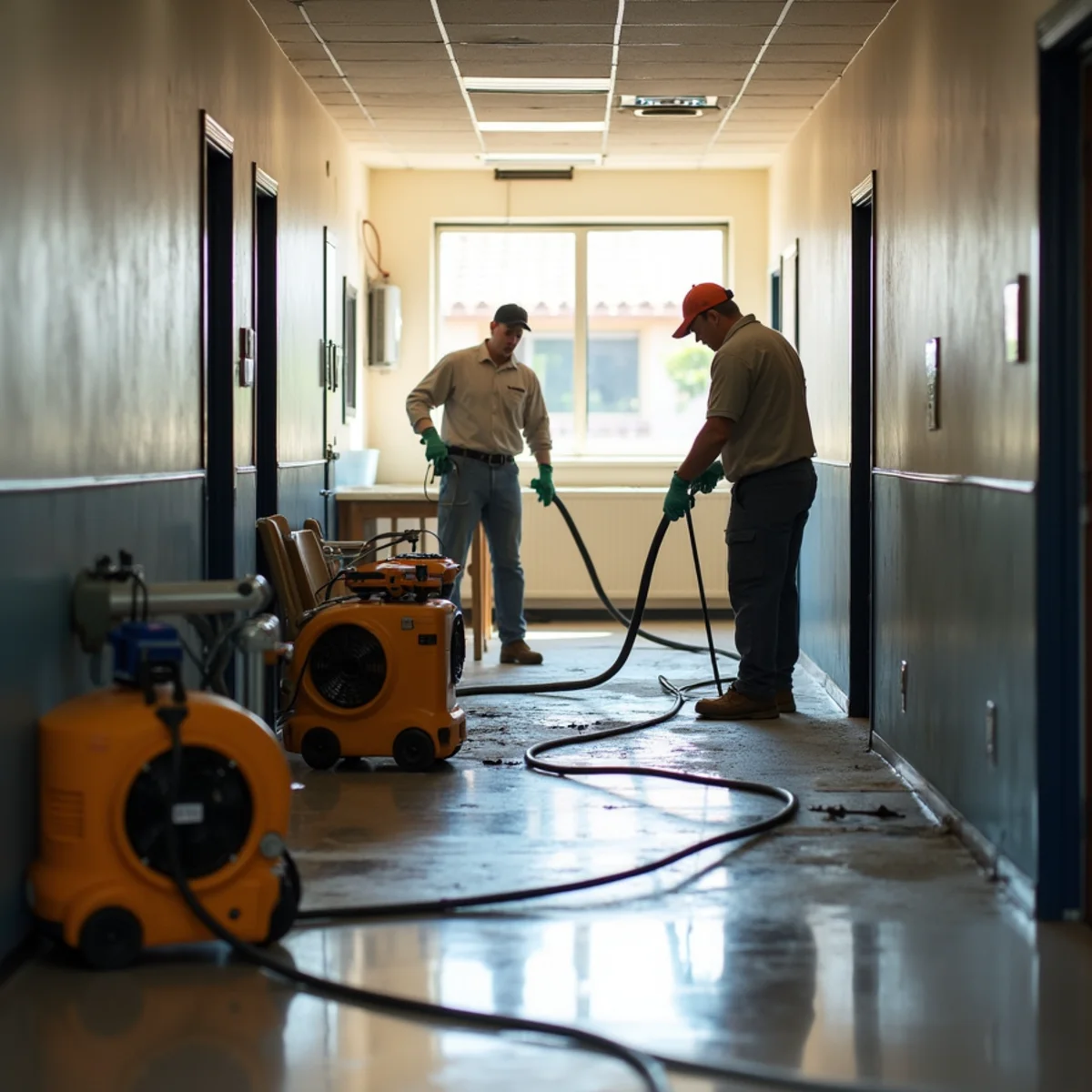
A burst pipe in a home usually gets discovered within hours. A burst pipe in a school building over a three-day weekend can run for 60-plus hours before anyone finds it — and by Monday morning, what would have been a contained cleanup is now a wet subfloor across two classrooms, saturated ceiling tile in a hallway, and a maintenance director trying to figure out how to reopen by Tuesday. School facilities aren't just bigger versions of a residential water loss. They're a different category of risk, with a different clock.
Chino Valley Unified School District serves Chino, Chino Hills, and surrounding communities with a large number of elementary, middle, and high school campuses — one of the bigger districts in this part of San Bernardino County. Every one of those campuses carries the same structural water-damage exposure as any large commercial building, plus a few risks that are specific to schools.
Why School Buildings Carry Unique Water Damage Risk
Most school campuses combine several high-risk features under one roof: large flat or low-slope roofs with drains and scuppers that clog with leaves and debris, rooftop HVAC units with condensate lines that back up, banks of restrooms with dozens of supply lines and shutoffs, cafeteria and kitchen equipment with its own plumbing, and, on many campuses, relocatable or portable classrooms with plumbing connections that see more wear than a permanent building's. Older campus buildings add aging pipe and roofing materials to the mix. Any one of these can fail on its own; a large campus has all of them running at once, across multiple buildings.
Scale is the other factor that separates a campus from a typical commercial building. A single elementary school can span multiple structures, portable classroom clusters, a multipurpose room, and a separate administration building, each with its own roof, plumbing, and drainage. A response that only addresses the room where water was first spotted can miss damage spreading through a shared attic space or wall cavity into the building next door.
The Weekend and Break Problem
The single biggest factor separating school water damage from a typical business loss is timing. Offices are usually empty overnight and on weekends too, but schools add long, predictable empty stretches — winter break, spring break, and summer — when a slow roof leak, a failed water heater, or a cracked line can run for days or weeks completely undetected. A leak that starts Friday afternoon before a three-day weekend has had nearly three full days to spread through ceiling tile, insulation, and flooring before a custodian or teacher finds it Tuesday morning. That head start is what turns a small repair into a five-figure structural drying and mold-prevention job.
What Fast Response Actually Means for a Campus
For a school, "fast" isn't just about arrival time — it's about getting a facility back to safe, usable condition before the next school day whenever possible. That means:
- After-hours and weekend response, since that's when most failures are discovered or need to be addressed to avoid disrupting instruction
- Coordinating directly with facilities and maintenance staff, who know the building's systems and shutoffs better than anyone
- Sectioning off and drying affected classrooms or wings while keeping the rest of the campus operating normally
- Working around instructional schedules, testing windows, and events rather than a typical 9-to-5
- Following the safety and access protocols every campus requires for anyone working on school grounds
The goal on every campus loss is the same: protect the structure, protect indoor air quality for students and staff, and keep the disruption to instruction as small as possible.
Documentation for District and Institutional Insurance
Public school facilities are typically insured through a district's own policy or a joint powers authority pool shared with other districts, and both come with more rigorous documentation expectations than a typical homeowner's claim. That usually means detailed moisture mapping, drying logs showing equipment placement and daily readings, photo documentation at each stage, and a clear scope of loss tied to specific rooms, materials, and square footage. Getting this right the first time matters — institutional claims move slower than residential ones, and clean documentation is what keeps a district's claim moving instead of stalling on questions.
Common Failure Points Worth Knowing About
- Roof drains and scuppers clogged with leaves, blocking water that should drain off a flat roof
- Aging water heaters or boilers serving restroom banks and kitchens
- Supply lines and shutoffs in older restroom wings that have seen decades of use
- Portable and relocatable classroom plumbing connections
- Irrigation and backflow-prevention devices near building foundations
- HVAC condensate lines that back up and overflow onto ceiling tile
Facilities Near Village Oaks and Across the District
Campuses throughout Chino Hills, including those near Village Oaks, share the same building-age and roofing profile as the rest of the district's facilities. Whether it's a single classroom wing or an entire building, the response needs the same combination of speed, large-capacity equipment, and documentation any commercial facility manager should expect.
If a district facility, charter school, or private campus in the area has a water emergency, our commercial water damage restoration team is available 24/7 and used to working directly with facilities staff to get buildings dried, restored, and reopened with minimal disruption. Call (201) 277-9344 — day, night, or over a break weekend when it matters most.
Frequently asked questions
Can you respond over a weekend or school break before students return?
How is documentation different for a school district claim versus a homeowner's claim?
Can you dry one classroom or wing while the rest of the campus stays open?
Water Damage Chino Hills
A local, IICRC-certified restoration team serving Chino Hills and the Inland Empire 24/7. Water damage right now? Call (201) 277-9344.