
Local Chino Hills
Carbon Canyon Mudslides: Why Homes on Steep Hillsides Face Dual Water and Debris Risks
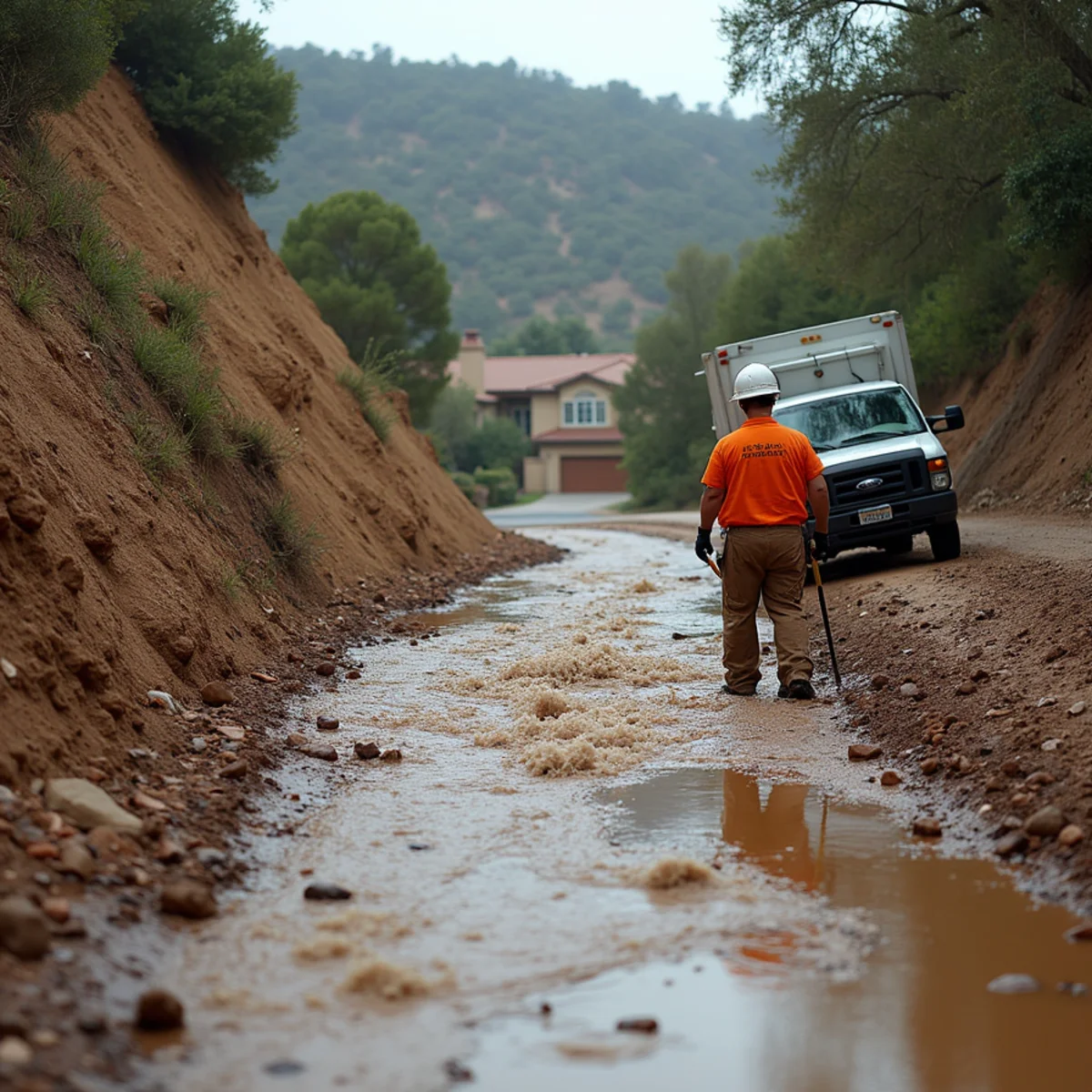
Carbon Canyon is one of the more scenic drives in the area — a winding two-lane corridor along SR-142 that cuts through steep, undeveloped hillside to connect Chino Hills with Brea. It's also one of the more demanding pieces of terrain in the region when a real storm moves through, because homes here face two separate hazards at once: water intrusion and mud or debris flow. Treating Carbon Canyon like an ordinary hillside neighborhood misses half the problem.
The canyon has a long history with water and land, going back to the natural springs that gave the historic Carbon Canyon Mineral Springs resort its name. That same landscape — narrow, steep, and cut by a single road — is exactly what makes modern storm response here more complicated than in a typical graded subdivision.
A Canyon Is Not the Same as a Hillside Tract
Most hillside neighborhoods in Chino Hills are graded pads — engineered lots with retaining walls and drainage systems designed as a package. Carbon Canyon is older, wilder terrain: steep canyon walls rising on both sides of a single road, with homes tucked along the canyon floor or cut into the slope itself. Rain that falls anywhere on those walls has one direction to go — down, toward the canyon bottom, the road, and the properties along it. There's no subdivision-scale storm drain system spreading that load out; the canyon does the routing, and it routes everything to the same low points.
Risk One: Water Finds the Low Ground Fast
During a heavy storm, runoff from the canyon walls reaches the bottom quickly because the grade is steep and the distance is short. Culverts and cross-drains under SR-142 are designed to handle normal storm flow, but an intense storm system can push more water through the canyon than that infrastructure was sized for. Homes near the canyon floor, near creek crossings, or downhill of a driveway culvert are the first to see water pooling, backing up, or finding its way toward a garage or ground-floor room.
Because the canyon is narrow, there's also less room for water to spread out and lose energy before it reaches a structure. On flatter ground, a surge of runoff disperses across yards and streets. In a canyon, it stays channeled and keeps moving at speed, which is part of why the same rainfall total causes more noticeable trouble here than it would a few miles away on open, flat terrain.
Risk Two: What Comes Down With the Water
Steep, undeveloped slopes shed more than water. Loose soil, rock, and vegetation debris move with the runoff, especially on slopes that have been recently disturbed by grading, erosion, or — the highest-risk scenario — wildfire. Carbon Canyon sits in a recognized wildfire zone, and a burned hillside upstream sheds debris at a much higher rate than an intact one for a year or more after a fire. That combination — steep grade, concentrated drainage, and a debris source upslope — is what turns a heavy rain in Carbon Canyon into a mudslide event rather than ordinary storm flooding.
Why Both Risks Hit at the Same Time
In a flat neighborhood, a bad storm is usually a water problem: drains can't keep up, water pools, it gets into low spots. In Carbon Canyon, the same storm is a water problem and a debris problem simultaneously, because the terrain that concentrates runoff is the same terrain that's most prone to erosion and slope failure. A property can take on clean rainwater through one entry point and mud or debris through another, in the same storm. That's why cleanup here often looks different from a standard flood response — it's extraction, drying, and debris removal together, not just one of the three.
Signs Your Property Carries Elevated Risk
- Your lot sits below a steep, sparsely vegetated, or recently burned slope
- You're near a creek crossing, culvert, or low point along SR-142
- Previous storms have left silt, rock, or debris lines on your property, even if water didn't reach the house
- Retaining walls, slopes, or drainage channels near your home show cracking, slumping, or erosion
None of these mean a mudslide is coming. They mean it's worth having drainage and grading checked before the season's first heavy storm, and knowing in advance what you'd do if water or debris did reach the house. A five-minute walk around your property on a dry day, looking specifically for these signs, is worth far more than waiting to see what a storm reveals.
If Water or Mud Reaches Your Home
Move quickly, and don't try to manage a debris-laden flood the way you'd handle a simple appliance leak — mud and silt work into flooring, drywall, and insulation differently than clean water does, and they need to come out before drying can even start. Our flood cleanup team handles combined water-and-debris losses across Carbon Canyon and the rest of Chino Hills, with equipment sized for exactly this kind of job.
If you live along Carbon Canyon, don't wait until the road's washing out to think about your drainage. Call (201) 277-9344 any time, day or night — for prep advice before the storm, or for emergency cleanup the moment water or mud gets in.
Frequently asked questions
What makes Carbon Canyon riskier than other Chino Hills neighborhoods?
Does a wildfire nearby make Carbon Canyon's flood risk worse?
Is debris-flow cleanup different from regular flood cleanup?
Water Damage Chino Hills
A local, IICRC-certified restoration team serving Chino Hills and the Inland Empire 24/7. Water damage right now? Call (201) 277-9344.