
Prevention
The 10-Minute Monthly Leak Inspection: Everywhere Water Hides in Your Home
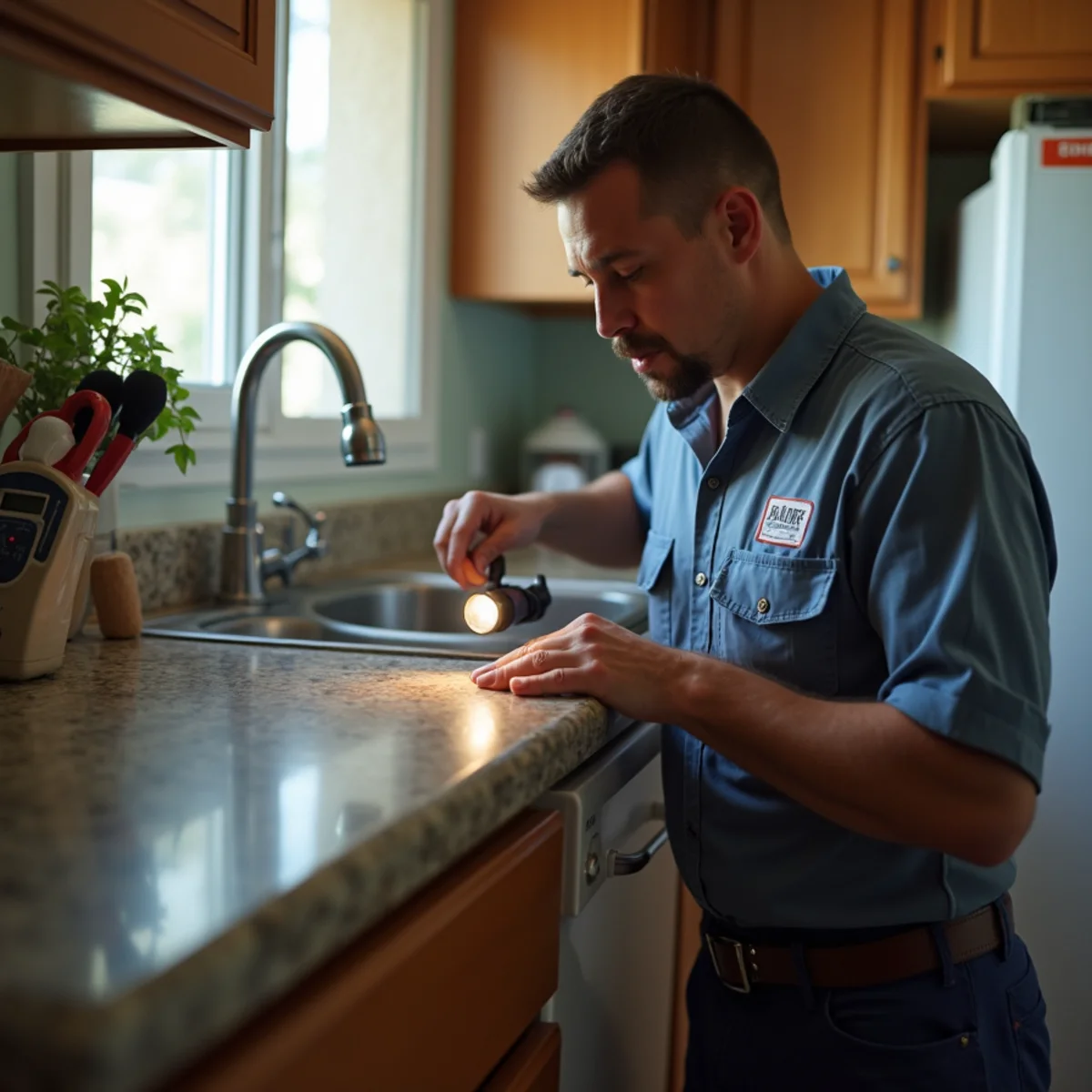
The leaks that do the most damage are rarely dramatic. A burst pipe gets noticed in minutes. A slow drip under a sink, a toilet that's been running quietly for a month, or a water heater fitting that's barely weeping — those run for weeks before anyone spots them, and by then they've soaked subfloor, grown mold behind a cabinet, or quietly inflated a water bill nobody's looked at closely. A ten-minute walk-through once a month catches nearly all of it while it's still a cheap fix.
Here's exactly where to look, room by room.
Under Every Sink
Open every cabinet — kitchen, bathrooms, wet bar, laundry sink — and feel for dampness at the base of the supply lines, the shutoff valves, and the P-trap under the drain. Look for water stains, swollen or discolored cabinet wood, and mineral crust around any fitting, which is a sign of a slow weep even if it's dry when you check. Give the shutoff valves a quarter-turn while you're there; a valve that's seized from years of never being touched won't help you in an emergency.
The Water Heater
Check the floor around the base of the tank for moisture, rust-colored staining, or a musty smell. Look at the flex connectors and fittings at the top of the tank, and check the temperature-pressure relief valve and its discharge pipe for drips. If your water heater is past 8-10 years old, treat any moisture at all as worth investigating immediately rather than watching it — tanks near the end of their life can go from a slow weep to a full failure with very little warning.
Every Toilet
- Listen for water running or refilling when no one has flushed recently — a constantly cycling fill valve wastes water and often signals a worn flapper
- Check the floor around the base for softness, discoloration, or a slight give underfoot, which can mean the wax ring seal has failed
- Give the toilet a gentle wobble test — movement at the base means the mounting bolts have loosened, which stresses the wax seal over time
- Look at the tank's water line and connections for mineral buildup or dampness
Washing Machine Hoses and Outdoor Spigots
Pull the washing machine out enough to see both hoses fully, and check for bulging, cracking, kinks, or brittleness, especially if they're the original rubber hoses rather than braided stainless steel. Rubber supply hoses are one of the most common sources of sudden, high-volume flooding in a home, because they fail without warning after years of constant pressure. If yours are original to the machine and more than five years old, replacing them with braided stainless lines is cheap insurance against a laundry-room flood.
While you're checking hoses, walk the exterior too. Check hose bibs for drips at the handle or where the pipe enters the wall, and look at irrigation valve boxes for standing water when the system hasn't run recently. An irrigation leak underground can run for a long time before it surfaces as a soggy patch of lawn or a spike in your water bill.
Ceilings and Walls Below Wet Areas
Once a month, look up. Check ceilings directly below bathrooms, the kitchen, and the laundry room for new stains, bubbling paint, or soft spots — these are signs of a leak that's already been running for a while above. Also check walls that back up to plumbing, especially around a water heater closet or a shared wall with a bathroom, for discoloration near the baseboard.
The Water Meter Test
This is the single most reliable way to catch a hidden leak anywhere in your plumbing system, including underground or inside a slab. Turn off every fixture and appliance that uses water, including the icemaker and any irrigation timer, then find your water meter and note the reading, including the small leak-indicator dial or triangle if your meter has one. If that indicator is spinning with everything off, water is moving somewhere in your system. For a longer check, note the exact reading, wait one to two hours without using any water, and check again — any change means a leak, and it's worth having it professionally located rather than guessing.
When the Meter Test Says Something's Wrong
If the meter test confirms a leak but you can't find it in any of the obvious spots, the water is likely moving somewhere you can't see — inside a slab, behind a wall, or underground between the meter and the house. That's not a wait-and-see situation; a hidden leak keeps causing damage every day it runs. Our leak detection team finds these without tearing out flooring or walls to search, using equipment that locates the sound and moisture of a leak precisely.
If a monthly check ever turns up active water damage instead of just a warning sign, don't wait for it to dry on its own — call for water damage restoration before it spreads further into flooring and framing. Homeowners in Chino and throughout the area can reach us anytime at (201) 277-9344 for either a suspected hidden leak or active water damage.
Frequently asked questions
How often should I really check for leaks?
What's the fastest way to check my whole house at once?
Are rubber washing machine hoses really that risky?
Water Damage Chino Hills
A local, IICRC-certified restoration team serving Chino Hills and the Inland Empire 24/7. Water damage right now? Call (201) 277-9344.