
Emergency Response
Dishwasher Leaked Overnight and Flooded the Kitchen — Now What?
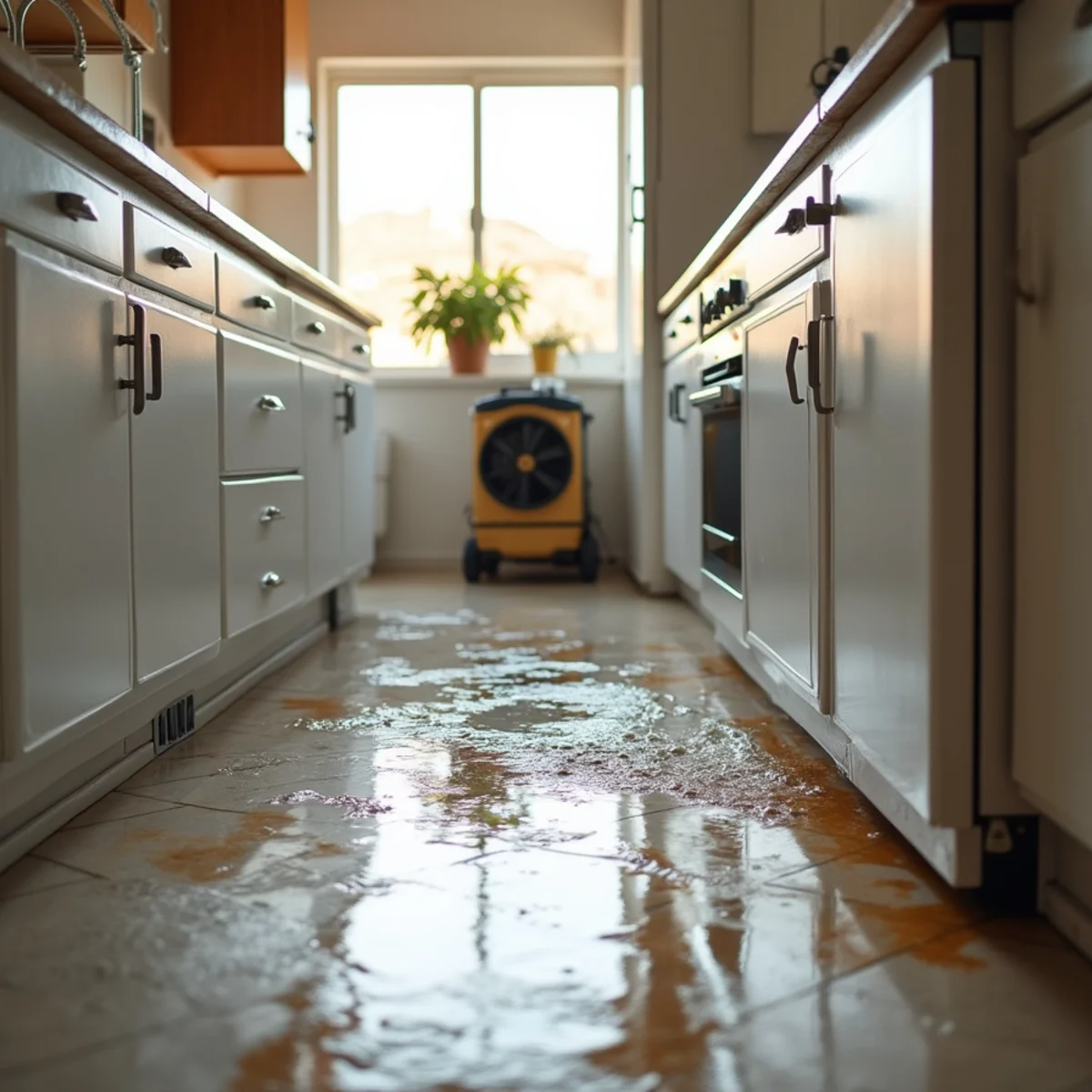
A dishwasher leak overnight is one of the sneakier household floods, because it often runs quietly for hours before anyone finds it. Unlike a burst pipe that announces itself immediately, a failed door seal, cracked hose, or bad water inlet valve can leak slowly across an entire cycle and keep dripping afterward — which means by morning, water has had all night to spread under cabinets, into the toe-kick, and across the floor. Here's how to handle it once you find it.
1. Shut off the water supply to the dishwasher
The dishwasher's water line usually branches off the shut-off valve under the kitchen sink — look for a separate valve dedicated to the dishwasher line, distinct from the sink faucet valves. Turn it off. If you can't identify which valve feeds the dishwasher, or the leak seems to be coming from the water line itself rather than the machine, shut off your home's main water valve instead.
2. Unplug it or cut the breaker
Most dishwashers are hardwired or plugged in behind the unit itself, which makes unplugging it awkward once there's water around it. If you can access the plug without touching standing water, unplug it. Otherwise, go to your breaker panel and switch off the circuit for the kitchen appliances. Don't reach under or behind a wet dishwasher to find a cord.
3. Pull the dishwasher out if you can do it safely
Water from a dishwasher leak concentrates directly underneath the unit and in the cabinet base next to it — spots you can't see or reach without moving the machine. If the dishwasher isn't hardwired and you're comfortable doing it, carefully slide it forward to check underneath. If it's hardwired to the electrical and plumbing, leave that part to a professional and focus on what you can reach around it instead.
4. Check the cabinets on both sides — this is where the real damage hides
Kitchen cabinets sit directly against most dishwasher installations, and the particleboard used in most cabinet construction absorbs water fast and doesn't recover well — it swells, delaminates, and the shelving sags. Open the cabinet doors adjacent to the dishwasher and check the floor of each cabinet, plus the toe-kick area running along the base of the entire run of cabinetry, since water travels sideways along the subfloor further than most people expect.
5. Check for water under the flooring, not just on top of it
Kitchen floors are often tile, vinyl, or laminate over a plywood subfloor, and water that sat overnight has had plenty of time to find seams and grout lines to get underneath. A floor that looks dry on the surface can still have water trapped below it — this is especially true with laminate and engineered hardwood, which can swell and buckle days after a leak if the moisture underneath isn't fully extracted. This is exactly the kind of hidden moisture our water extraction team checks for with moisture meters rather than guesswork.
6. Get air moving, but don't assume fans alone will fix it
Open cabinet doors, point a fan into the space, and run your kitchen exhaust fan if you have one, to start surface evaporation while you wait for help. But an overnight leak that soaked cabinet bases and subflooring usually needs more than air movement — it needs structural drying and dehumidification equipment that pulls moisture out of the building materials themselves, not just the air in the room. Cabinets and subfloors dry from the surface inward, and surface-dry doesn't mean structurally dry.
Common causes worth knowing about
The most frequent culprits behind an overnight dishwasher leak are a worn door gasket that no longer seals properly, a cracked or loose water inlet hose, a failed water inlet valve that lets water trickle in even when the cycle isn't running, or a clogged drain that backs water up and out during the drain cycle. If your dishwasher is more than 8 to 10 years old, a leak like this is often a sign the unit itself is nearing the end of its service life rather than a one-off fluke.
This is a common call from kitchens throughout Fairfield Ranch and similar neighborhoods with original builder-grade dishwashers still in service well past a decade old.
A few minutes of prevention that catches this early next time
Most overnight dishwasher leaks give some warning before the big one. A door that needs to be slammed a little harder to seal, a faint musty smell from inside the cabinet below the unit, or a thin water stain at the base of the toe-kick are all signs worth investigating before they turn into an overnight flood. Once a year, pull out the bottom kick plate on the dishwasher and look for rust, mineral buildup, or dampness around the water inlet valve and hose connections. If your dishwasher is original to the house and pushing a decade or more of service, budgeting for a replacement before it fails on its own schedule is usually cheaper than the cabinet and flooring repair that follows a middle-of-the-night leak.
If you woke up to a flooded kitchen, don't wait to see how bad it gets under the cabinets — call (201) 277-9344. We run 24/7 and can get a crew out fast to check what's actually wet before it turns into swollen cabinets and a buckled floor.
Frequently asked questions
Why did my dishwasher leak only overnight and not during the day?
Can I keep using my dishwasher after a leak like this?
How do I know if water got under my kitchen flooring?
Water Damage Chino Hills
A local, IICRC-certified restoration team serving Chino Hills and the Inland Empire 24/7. Water damage right now? Call (201) 277-9344.