
Prevention
Gutters, Downspouts, and Yard Drainage: A Pre-Rainy-Season Checklist for Hillside Homes
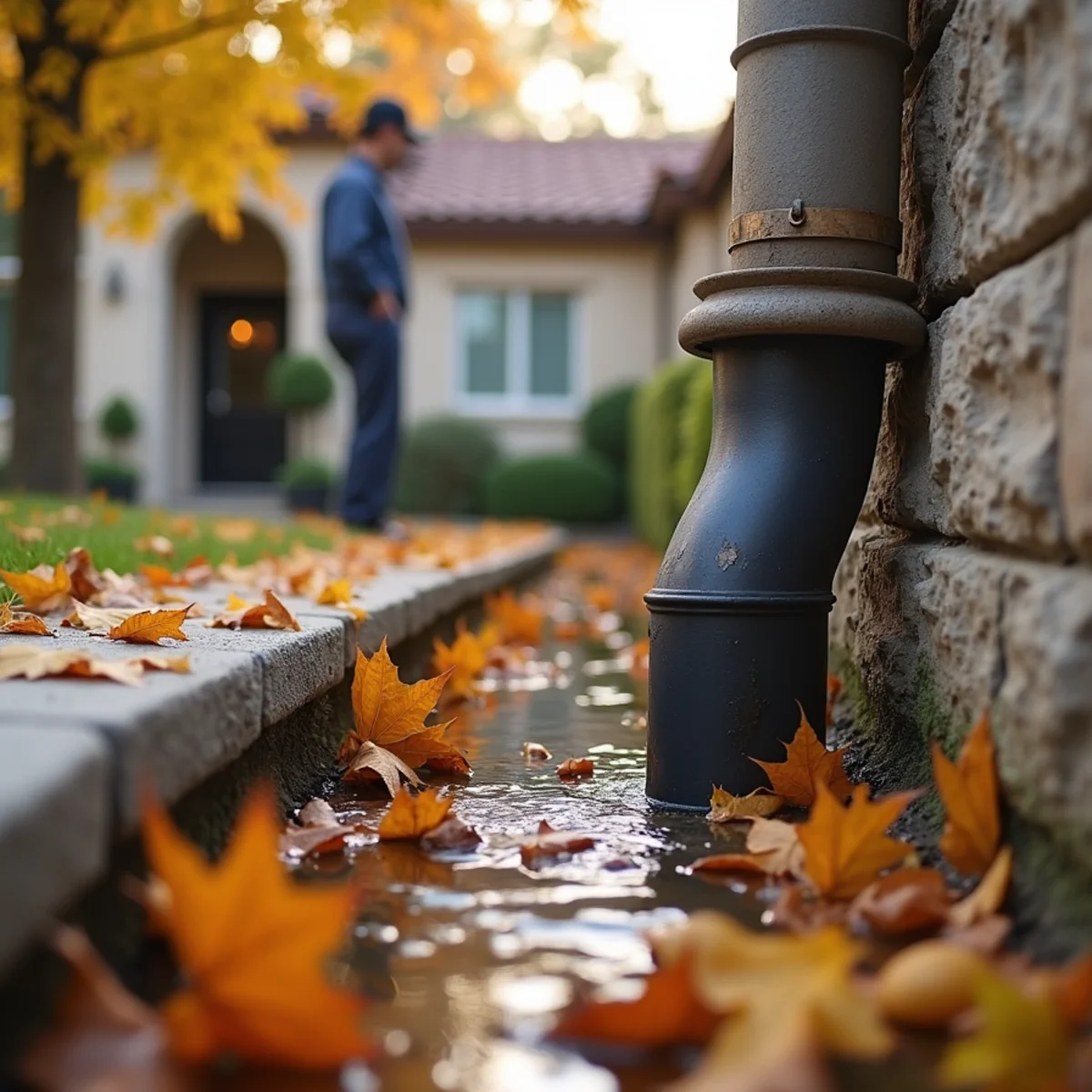
Chino Hills homes are built into a hillside, and that terrain does exactly what hillsides do: it sends water downhill, fast, toward whatever sits in its path. When your gutters, downspouts, and yard grading are working the way they're supposed to, that water moves past your house and into the street or a drain. When any one of those pieces fails, it moves into your garage, under your slab, or against a foundation wall instead.
Most of the storm-related calls we get every winter trace back to something that could have been caught in an afternoon of prep work each fall. Here's the checklist worth running before the rain starts.
Clear the gutters — all the way, not just what you can see from the ladder
Leaves, roof grit, and debris build up in gutters year-round, but the real problem usually shows up at the downspout outlets and inside corners, where debris compacts into a dam you can't see from below. A gutter that's 80% clear still overflows if the last few feet before the downspout are blocked. Walk the roofline and check every run, not just the sections that look obviously full, and pay particular attention after Santa Ana wind events, which strip a surprising amount of debris onto the roof between cleanings.
Confirm downspouts actually discharge away from the house
A clear gutter doesn't help much if the downspout dumps water four inches from your foundation. Every downspout should end with an extension that carries water at least 4 to 6 feet away from the house, angled so it doesn't just recreate the same puddle a little further out. On sloped Chino Hills lots, that discharge point also needs to land somewhere the water can actually keep moving downhill — not into a low spot against a fence line or a neighbor's slab.
Splash blocks alone often aren't enough on a hillside lot; a rigid or flexible extension that directs water to a real drainage path does more work. If a downspout extension is missing, crushed, or was never installed to begin with, that's a fast, cheap fix worth doing before the first storm.
Check the grading and swales around the foundation
The ground immediately around your house should slope away from the foundation for at least the first several feet — a common guideline is roughly a 5% grade, or about 6 inches of drop over the first 10 feet. Over years of landscaping, mulch top-dressing, and settling, that slope can flatten out or even reverse, especially near planter beds built up against the house. If water pools against a wall after rain instead of running off, the grading nearby has likely drifted.
Many Chino Hills lots also rely on swales — shallow graded channels that intercept runoff coming down from a neighbor's yard or a slope above you and redirect it around the house. These need to stay clear of mulch, plants, and debris that can dam them up right when you need them working hardest.
Look at where hillside runoff actually wants to go
On a hillside lot, water arrives from above your property as well as from your own roof, and it's worth walking your yard during or right after a storm to see where it actually flows — not where you assume it flows. Areas near retaining walls, side-yard drainage channels, and the low corner of a sloped lot deserve a specific look, since these are the points where concentrated runoff is most likely to find a way toward a garage slab or a crawl space vent.
If you've had water intrusion into a garage or lower level before, that's the strongest signal of where to focus prep work this year — the same path tends to repeat unless something changes upstream of it.
Check crawl space vents and window wells
Homes with a crawl space or a below-grade window need their vents and window wells kept clear and, ideally, slightly raised above the surrounding grade. A window well that fills with runoff during a storm is a direct path for water into the house, and a clogged or low crawl space vent can let hillside runoff pool underneath the structure where it's easy to miss until a musty smell shows up weeks later.
Do a dry-weather test before the storms arrive
You don't have to wait for a storm to check whether your prep work is holding. Run a hose at each downspout and along suspect grading for several minutes and watch where the water actually goes. This takes an afternoon and tells you, on your schedule, exactly where a real storm will cause problems — instead of finding out at 11 p.m. during the season's first atmospheric river.
When prep wasn't enough
Even a well-maintained system can be overwhelmed by a hard atmospheric-river storm, and older neighborhoods with mature landscaping — Los Serranos among them — see extra complexity from irrigation systems and established trees interacting with drainage that was designed decades ago. If storm water does make it into your garage, crawl space, or lower level this season, don't wait to see if it dries on its own; standing water against a foundation or under a house needs to come out, and the area needs to dry to a verified standard. Our storm damage cleanup team runs 24/7 through the winter and handles both the water and the follow-up drying.
Want a second set of eyes on your drainage before the rain hits, or already dealing with water where it shouldn't be? Call (201) 277-9344 — we're available any hour, all season.
Frequently asked questions
How often should gutters be cleaned in Chino Hills?
What's the right slope for grading around my foundation?
My garage floods every winter even though I clean the gutters. Why?
Water Damage Chino Hills
A local, IICRC-certified restoration team serving Chino Hills and the Inland Empire 24/7. Water damage right now? Call (201) 277-9344.