
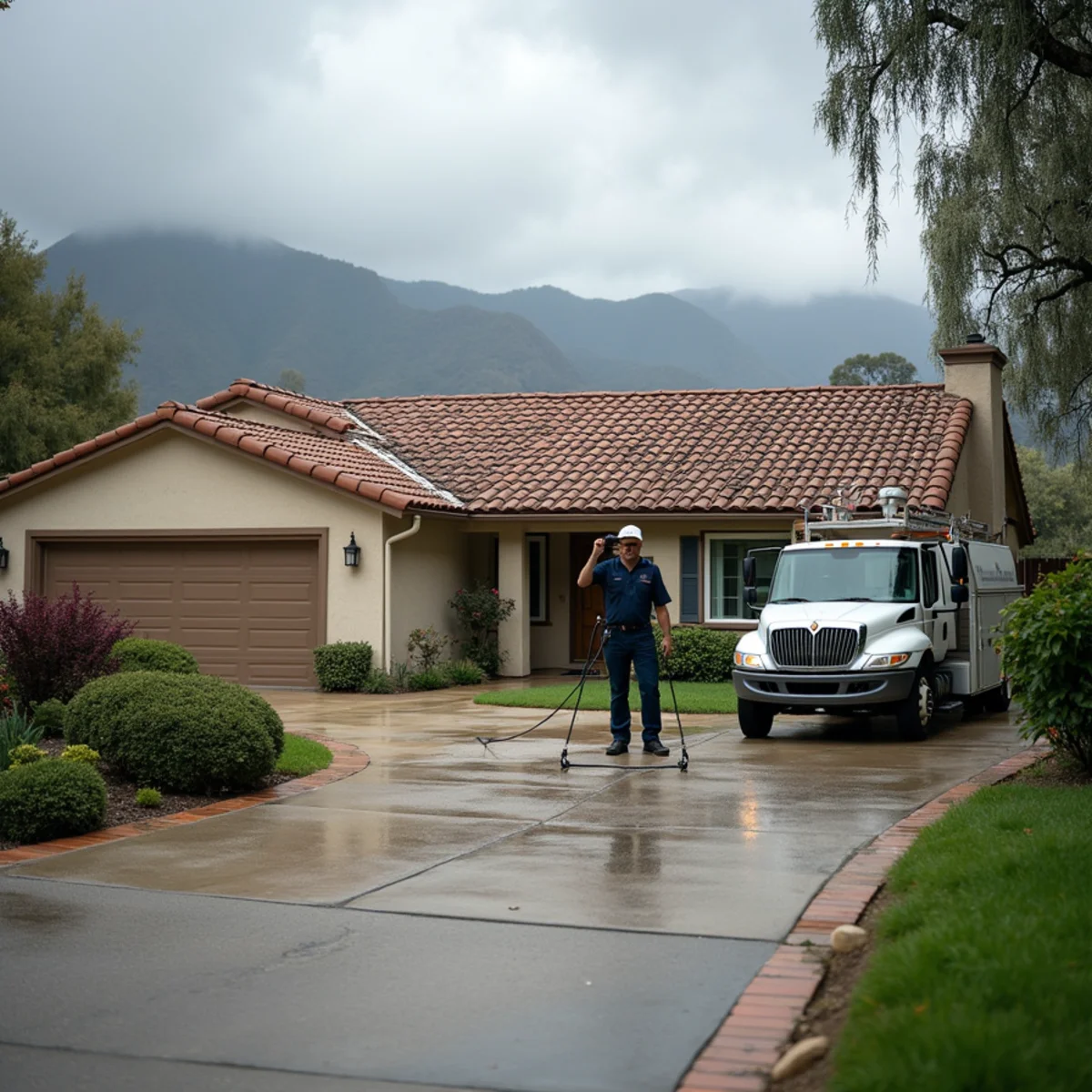
24/7 Water Damage Response
Water Damage Restoration in Glendora, CA
Known as the Pride of the Foothills, Glendora sits against the base of the San Gabriel Mountains, about 25 minutes from our Chino Hills base. It's a longer drive than most of our service area, but we answer 24/7 and dispatch the nearest crew immediately, because hillside homes here can go from a wet spot to a real problem fast.
Serving Chino Hills & the Inland Empire · Open 24 hours — 7 days a week
We bring the same monitored extraction and drying process to Glendora's foothill neighborhoods that we use everywhere else, with extra attention to the storm and drainage issues that come with living this close to the mountains — issues that go back to the citrus-grove era, long before these hillsides were subdivided.
Water damage risks in Glendora
Glendora's defining feature is its position right against the San Gabriel Mountains, and that comes with a hillside-specific risk beyond ordinary plumbing failures: burned slopes shed water and debris fast in the storms that follow a wildfire. The Colby Fire burned foothill terrain above the city in January 2014, and areas below a burn scar like that carry elevated debris-flow and runoff risk for years afterward whenever a strong winter storm moves through.
Big Dalton Dam and the canyon above the city provide flood control for normal storm flows, but homes on the streets closest to the foothills — many of them built well after Glendora's citrus-ranch days gave way to mid-century suburban growth — still see concentrated runoff pushing toward garages, lower rooms, and retaining walls, on top of the ordinary aging-pipe and water-heater failures found in any established community.
Local knowledge you can count on
We respond throughout Glendora, from the historic downtown and Glendora Village area — along the stretch of historic Route 66 that runs through the city — to the foothill neighborhoods closest to the San Gabriel Mountains and Big Dalton Canyon. Storm-driven runoff on the streets nearest the hills is a call we take seriously here, and we extract, dry, and help homeowners think through drainage before the next winter storm arrives.
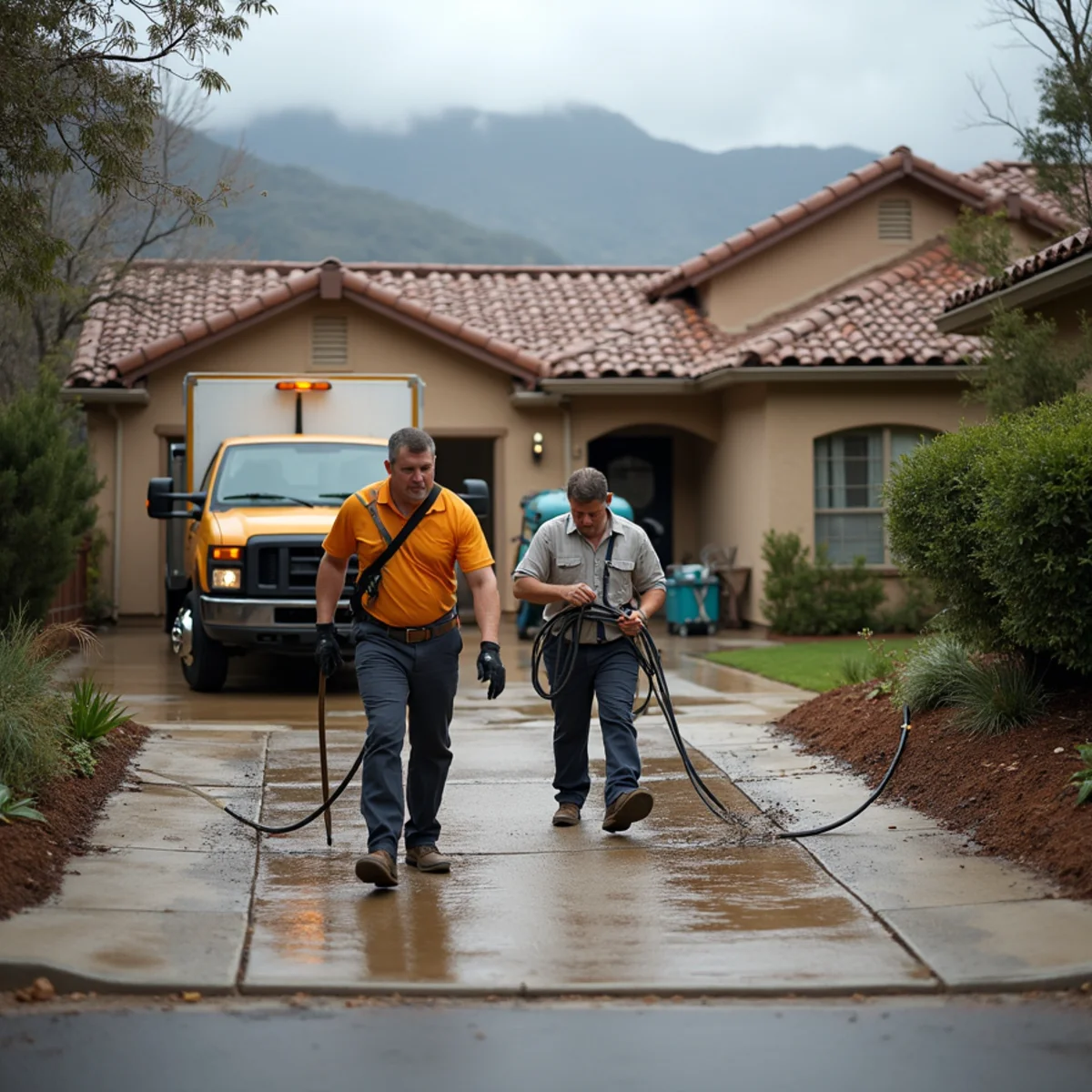
Tree roots and sewer lines in Glendora's older neighborhoods
Glendora's older neighborhoods are heavily planted with mature trees, part of what makes the streets near Glendora Village and the foothill tracts so pleasant to walk — and part of what puts steady pressure on the sewer lines running beneath them. Roots seek out the smallest crack or joint in an aging clay or cast-iron lateral, and once inside, they widen it every year until the line partially or fully blocks.
A blocked lateral doesn't always announce itself with an obvious backup. Sometimes it's a slow drain in the lowest fixture in the house, a damp patch in the yard along the line's path, or sewage surfacing in the cleanout during a heavy-use day. We camera-inspect the line to confirm roots are the actual cause before recommending anything, since the fix for roots is different from the fix for a broken pipe.
What Glendora's dry Santa Ana months do to a roof before winter
The same Santa Ana wind pattern that raises fire concern along the San Gabriel foothills each fall also dries out roofing, caulking, and flashing seals across Glendora faster than a normal summer would. Weeks of hot, bone-dry wind pull the moisture out of rubberized roof seals and stucco caulking until they shrink and hairline crack — damage that's completely invisible and causes no leak at all, because there's no rain yet to find the gap.
That changes the moment the rainy season actually starts. A roof or exterior seal that was fine every month of the dry season can leak in the very first storm, simply because wind, not water, did the damage months earlier. A fall inspection of roof flashing and exterior caulking, done before the rain arrives, catches this kind of damage while it's still a small, cheap fix.
Water damage in Glendora? Don't wait.
A live person answers now and a crew heads your way — about 25 minutes from our Chino Hills base.
Answering 24/7 60-min response target Licensed & insured
Our services in Glendora
Every part of your water loss, handled by one local team:
Why Glendora homeowners call us first
about 25 minutes response
We dispatch from our Chino Hills base and target a fast arrival in Glendora.
Licensed, insured & IICRC-certified
A California restoration contractor with trained technicians and full coverage.
Dried to a verified standard
Monitored drying with daily moisture logs — proof your home was dried right.
Insurance handled for you
We document the loss and work directly with your adjuster on your claim.
Water damage in Glendora only gets worse — and more expensive — by the hour. The sooner we start, the more of your home we save.
Glendora water damage FAQs
Are Glendora's foothill homes really at higher risk after wildfires?
How fast can you get to Glendora?
Are tree roots really a common cause of sewer backups in Glendora?
What actually happens after a root-blocked sewer line causes a backup in the house?
Our Glendora roof never leaked all summer — why did it leak in the first fall storm?
Nearby Areas We Serve
Water damage in Glendora? Call now.
Our crews reach Glendora in about 25 minutes. Available 24/7 at (201) 277-9344 — 4082 Chino Hills Pkwy, Chino Hills, CA 91709.