
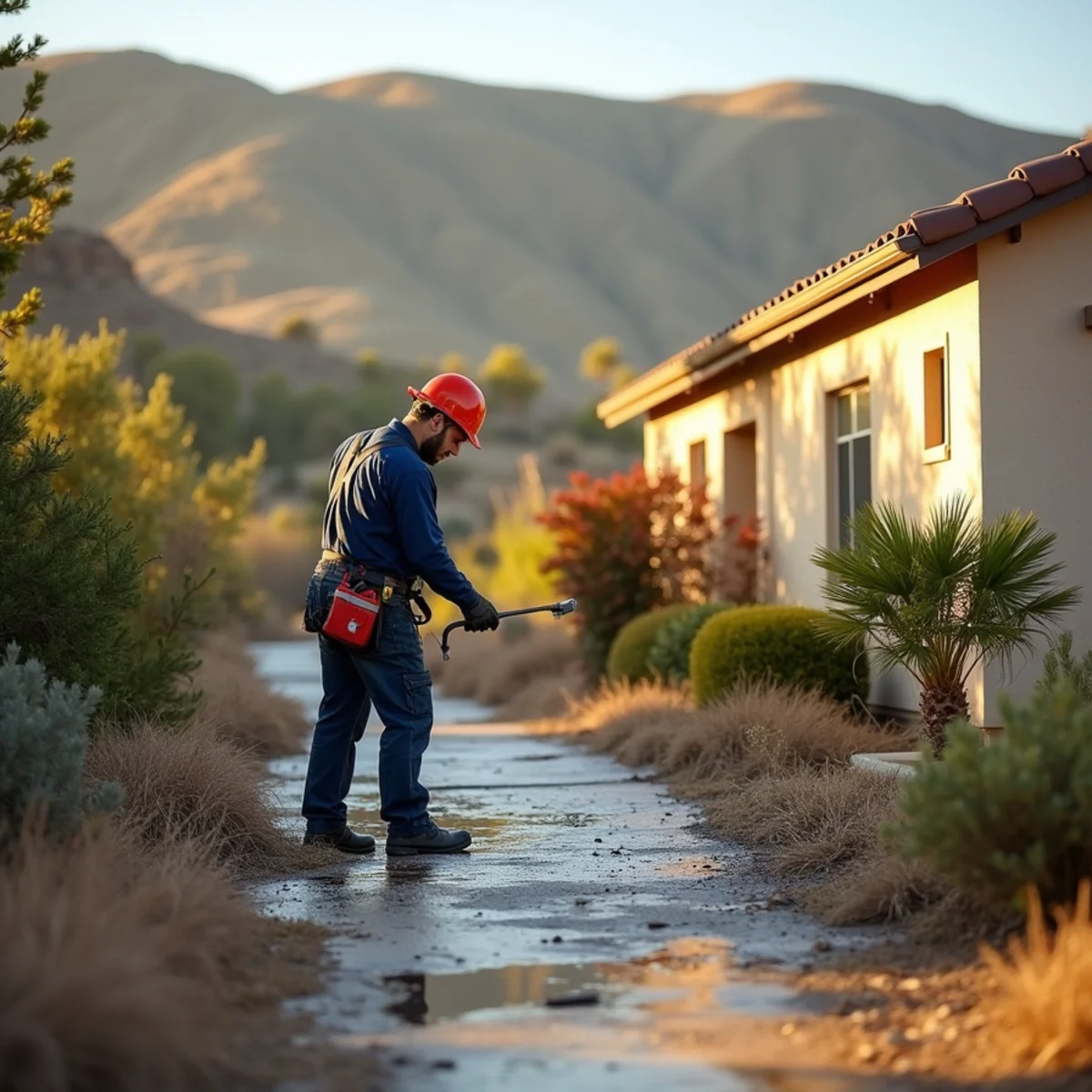
24/7 Water Damage Response
Water Damage Restoration Near Chino Hills State Park
Chino Hills State Park covers more than 14,000 acres of open hillside stretching across four counties, and the homes that back up to it get a level of water-damage risk you won't find in a typical subdivision. We're about 10 minutes from the park's edges and respond to the neighborhoods that border it around the clock.
Serving Chino Hills & the Inland Empire · Open 24 hours — 7 days a week
If your home sits along the park boundary, water damage here often isn't a simple pipe leak — it can be storm damage off open hillside or, after a fire, mud and debris carried by the first hard rain. We handle the water extraction and structural drying either way.
Water damage risks in Chino Hills State Park
The park is a wildland-urban interface by definition — undeveloped, grass-and-oak habitat pressed right against backyard fences. Roughly half of the park burned in the 2020 Blue Ridge Fire, and burned slopes don't absorb water the way healthy chaparral does. For a year or more after a fire, storms on those hillsides can send water, ash, and debris downhill fast, straight toward the homes along the park's edge.
Even without fire in the picture, homes adjacent to open wildland see more storm-driven water intrusion than interior neighborhoods, simply because there's more upstream hillside for rain to run off before it reaches a property line, and less engineered drainage than in a fully built-out subdivision. Insurance treatment of storm and debris damage can also get complicated fast on wildland-adjacent property, and we document the loss thoroughly so the distinction between water damage, earth movement, and fire-related causes is clear from the start.
Local knowledge you can count on
We respond to homes along the Chino Hills State Park boundary, including the neighborhoods that border it in Butterfield Ranch, Carbon Canyon, and the hills toward Brea. Post-storm debris and runoff intrusion are the calls that set this area apart, and after any nearby fire activity we watch the following rainy season closely, since that's when burned-hillside water damage typically shows up.
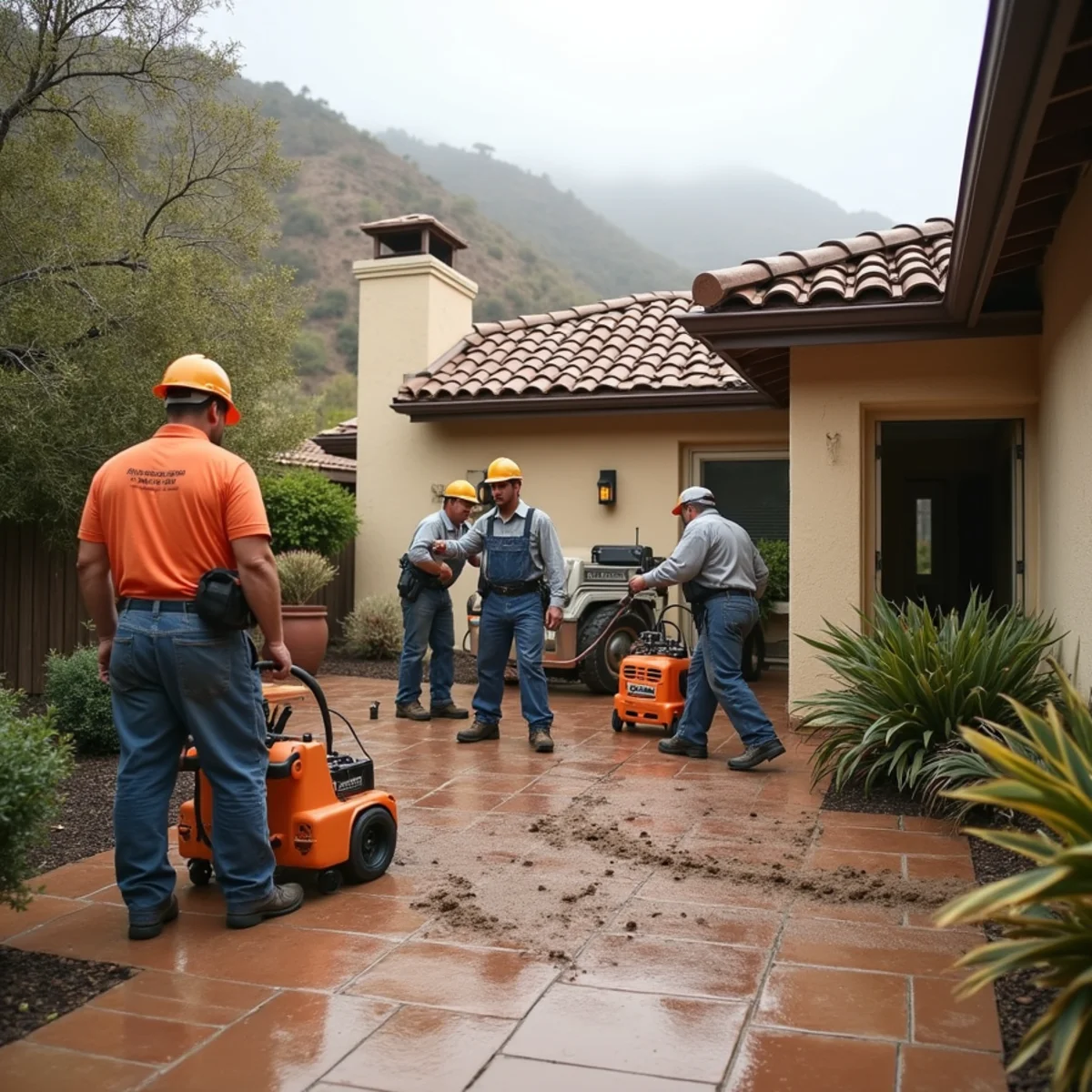
Why Ash-Laden Runoff Isn't Just Muddy Water
When runoff crosses a recently burned hillside above Chino Hills State Park, it carries more than mud — it carries ash, and wet wood ash is alkaline enough to matter. It can etch or discolor certain flooring finishes, stone, and concrete, and it's more irritating to skin and eyes during cleanup than plain storm water. That's a meaningfully different job than a typical rain intrusion, where the water itself is close to neutral and the cleanup is mostly about extraction and drying.
We test and treat ash-contaminated water intrusion differently from a plain storm event, with attention to surfaces that ash can damage and the protective steps a cleanup like that calls for. We also don't treat the risk as over once the first rainy season after a fire passes — burned hillsides can keep shedding loose ash and sediment for a couple of years, until ground cover has genuinely recovered, so we stay alert through more than one winter.
A Pre-Rainy-Season Checklist for Homes Along the Park Boundary
Homes along the Chino Hills State Park boundary sit right where open grass-and-oak hillside meets a backyard fence, and that setting means more falling leaf and brush debris landing on a roof and in gutters than a typical interior neighborhood ever sees. Before the Nov–Mar rainy season starts, we recommend clearing gutters, downspouts, and any yard swales or area drains of that debris, since a clogged drain on a wildland-adjacent lot has more water and runoff to move than one on a flat interior street.
It's also worth having sandbags or other erosion-control materials on hand before the season's first storm rather than shopping for them once rain is already falling, especially in any year following nearby fire activity. None of this replaces professional drainage work where a lot genuinely needs it, but a clear gutter and a clear swale are the cheapest insurance a park-adjacent home has against the season's first hard rain.
Water damage in Chino Hills State Park? Don't wait.
A live person answers now and a crew heads your way — about 10 minutes from our Chino Hills base.
Answering 24/7 60-min response target Licensed & insured
Our services in Chino Hills State Park
Every part of your water loss, handled by one local team:
Why Chino Hills State Park homeowners call us first
about 10 minutes response
We dispatch from our Chino Hills base and target a fast arrival in Chino Hills State Park.
Licensed, insured & IICRC-certified
A California restoration contractor with trained technicians and full coverage.
Dried to a verified standard
Monitored drying with daily moisture logs — proof your home was dried right.
Insurance handled for you
We document the loss and work directly with your adjuster on your claim.
Water damage in Chino Hills State Park only gets worse — and more expensive — by the hour. The sooner we start, the more of your home we save.
Chino Hills State Park water damage FAQs
My home backs up to Chino Hills State Park — does that change my water-damage risk?
Do you handle mud and debris, not just water?
How fast can you respond to homes near the park?
Is ash in floodwater near Chino Hills State Park dangerous or just messy?
How many years after a fire does debris-flow risk near Chino Hills State Park last?
What should homeowners near Chino Hills State Park do before the rainy season starts?
Nearby Areas We Serve
Water damage in Chino Hills State Park? Call now.
Our crews reach Chino Hills State Park in about 10 minutes. Available 24/7 at (201) 277-9344 — 4082 Chino Hills Pkwy, Chino Hills, CA 91709.